Comparative genomic analysis of sifakas (Propithecus) reveals selection for folivory and high heterozygosity despite endangered status
- PMID: 33893095
- PMCID: PMC8064638
- DOI: 10.1126/sciadv.abd2274
Comparative genomic analysis of sifakas (Propithecus) reveals selection for folivory and high heterozygosity despite endangered status
Abstract
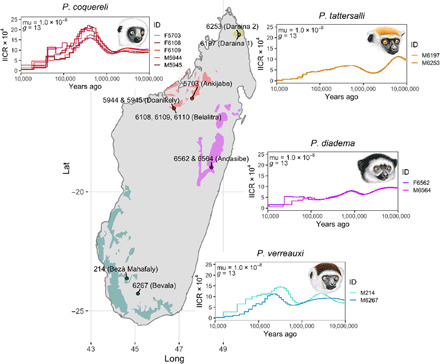
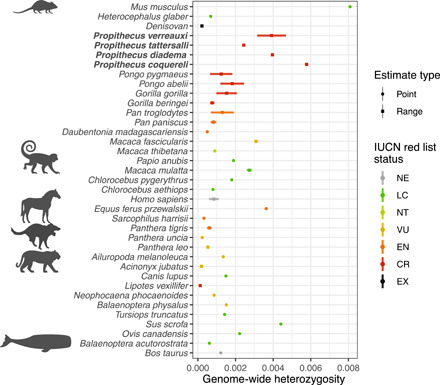
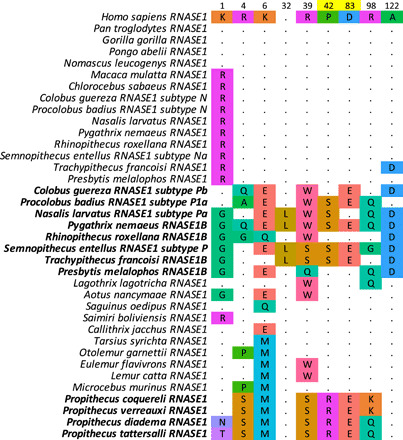
Sifakas (genus Propithecus) are critically endangered, large-bodied diurnal lemurs that eat leaf-based diets and show corresponding anatomical and microbial adaptations to folivory. We report on the genome assembly of Coquerel's sifaka (P. coquereli) and the resequenced genomes of Verreaux's (P. verreauxi), the golden-crowned (P. tattersalli), and the diademed (P. diadema) sifakas. We find high heterozygosity in all sifakas compared with other primates and endangered mammals. Demographic reconstructions nevertheless suggest declines in effective population size beginning before human arrival on Madagascar. Comparative genomic analyses indicate pervasive accelerated evolution in the ancestral sifaka lineage affecting genes in several complementary pathways relevant to folivory, including nutrient absorption and xenobiotic and fatty acid metabolism. Sifakas show convergent evolution at the level of the pathway, gene family, gene, and amino acid substitution with other folivores. Although sifakas have relatively generalized diets, the physiological challenges of habitual folivory likely led to strong selection.
Copyright © 2021 The Authors, some rights reserved; exclusive licensee American Association for the Advancement of Science. No claim to original U.S. Government Works. Distributed under a Creative Commons Attribution NonCommercial License 4.0 (CC BY-NC).
Figures
References
-
- Mittermeier R. A., Ganzhorn J. U., Konstant W. R., Glander K., Tattersall I., Groves C. P., Rylands A. B., Hapke A., Ratsimbazafy J., Mayor M. I., Louis E. E., Rumpler Y., Schwitzer C., Rasoloarison R. M., Lemur diversity in Madagascar. Int. J. Primatol. 29, 1607–1656 (2008).
-
- Richard A. F., Dewar R. E., Lemur ecology. Annu. Rev. Ecol. Syst. 22, 145–175 (1991).
-
- Dewar R. E., Richard A. F., Madagascar: A history of arrivals, what happened, and will happen next. Annu. Rev. Anthropol. 41, 495–517 (2012).
-
- Wright P. C., Lemur traits and Madagascar ecology: Coping with an island environment. Yearb. Phys. Anthropol. 42, 42 (1999). - PubMed
Publication types
Grants and funding
LinkOut - more resources
Full Text Sources
Miscellaneous