


Neurofilament Light Chain Is a Biomarker of Neurodegeneration in Ataxia Telangiectasia
- PMID: 33893614
- PMCID: PMC8885493
- DOI: 10.1007/s12311-021-01257-4
Neurofilament Light Chain Is a Biomarker of Neurodegeneration in Ataxia Telangiectasia
Erratum in
-
Correction to: Neurofilament Light Chain is a Biomarker of Neurodegeneration in Ataxia Telangiectasia.Cerebellum. 2022 Feb;21(1):48. doi: 10.1007/s12311-021-01280-5. Cerebellum. 2022. PMID: 34076863 Free PMC article. No abstract available.
Abstract
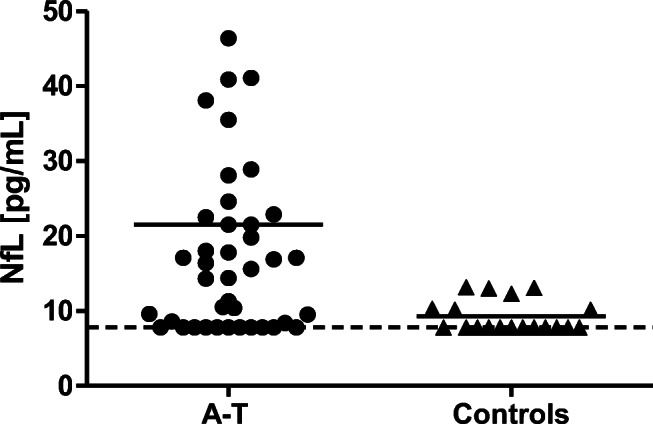
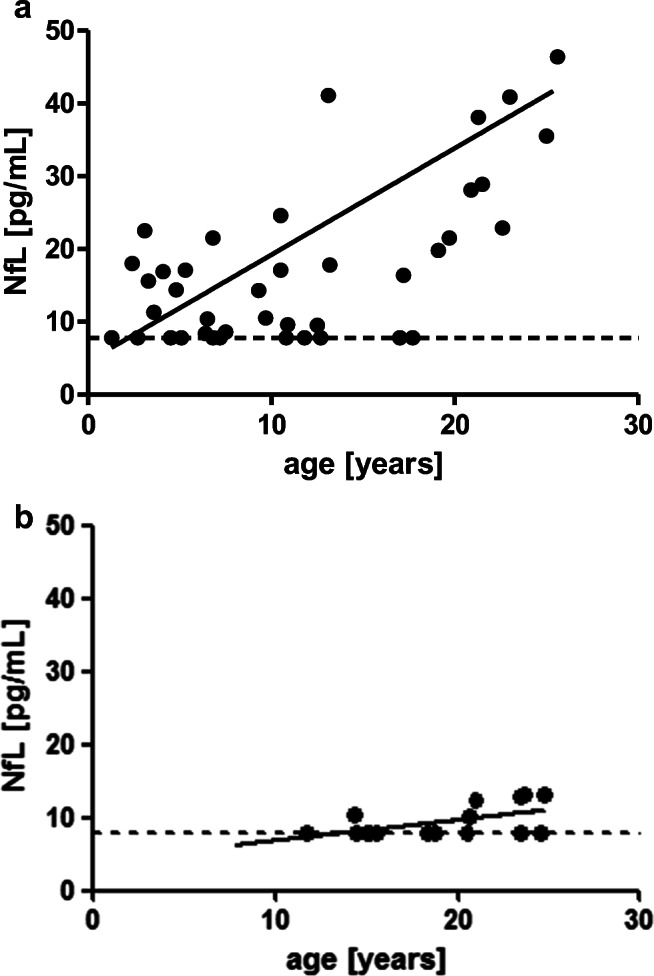
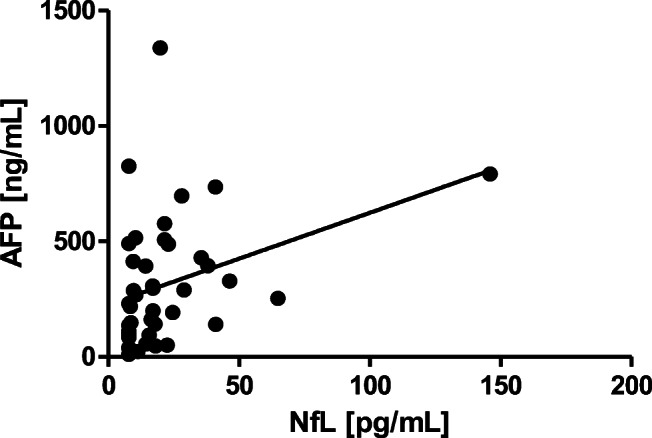
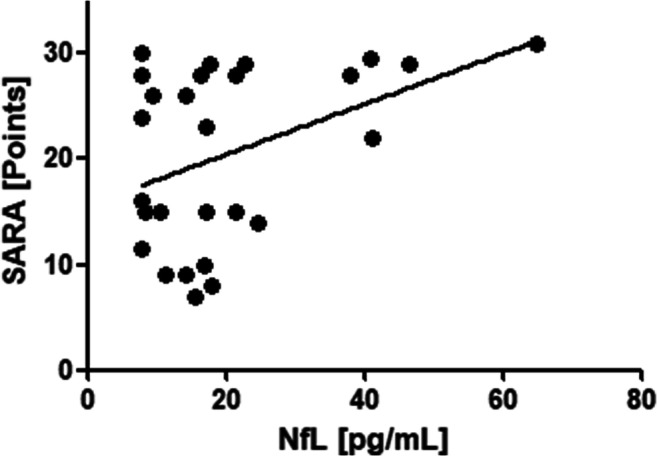
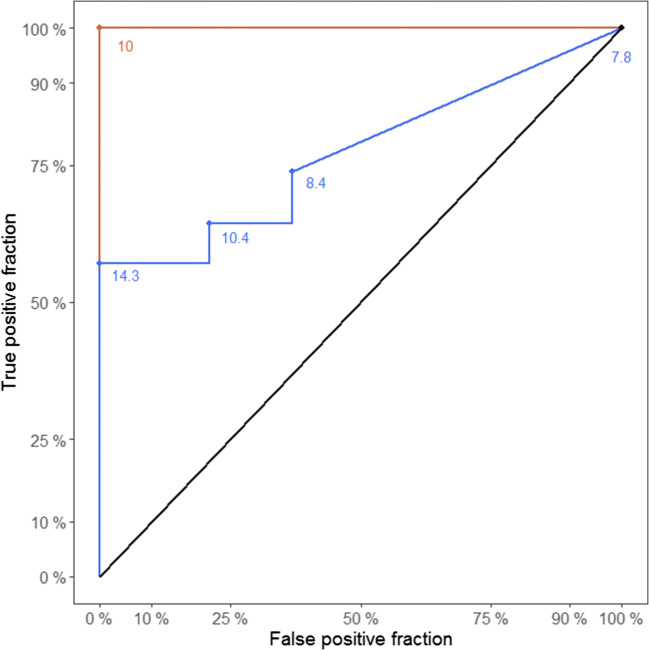
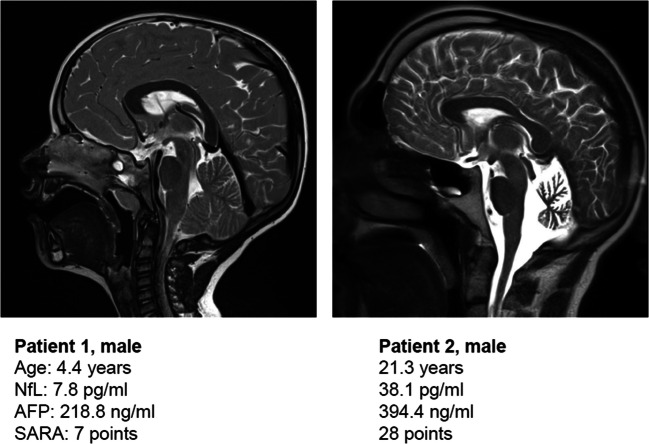
Ataxia telangiectasia (A-T) is a progressive and life-limiting disease associated with cerebellar ataxia due to progressive cerebellar degeneration. In addition to ataxia, which is described in detail, the presence of chorea, dystonia, oculomotor apraxia, athetosis, parkinsonism, and myoclonia are typical manifestations of the disease. The study aimed to evaluate the specificity and sensitivity of neurofilament light chain (NfL) as a biomarker of neurodegeneration in relation to SARA score. In this prospective trial, one visit of 42 A-T patients aged 1.3-25.6 years (mean 11.6 ± 7.3 years) was performed, in which NfL was determined from serum by ELISA. Additionally, a neurological examination of the patients was performed. Blood was collected from 19 healthy volunteers ≥ 12 years of age. We found significantly increased levels of NfL in patients with A-T compared to healthy controls (21.5 ± 3.6 pg/mL vs. 9.3 ± 0.49 pg/mL, p ≤ 0.01). There was a significant correlation of NfL with age, AFP, and SARA. NfL is a new potential progression biomarker in blood for neurodegeneration in A-T which increases with age.
Keywords: Ataxia telangiectasia; Biomarker; Disease progression; Neurodegeneration; Neurofilament light chain; NfL.
© 2021. The Author(s).
Conflict of interest statement
The authors declare no competing interests.
Figures
References
-
- Bhatt JM, Bush A, van Gerven M, Nissenkorn A, Renke M, Yarlett L, Taylor M, Tonia T, Warris A, Zielen S, Zinna S. Merkus PJ; European Respiratory Society. ERS statement on the multidisciplinary respiratory management of ataxia telangiectasia. Eur Respir Rev. 2015;24(138):565–581. doi: 10.1183/16000617.0066-2015. - DOI - PMC - PubMed
-
- Duecker R, Baer PC, Buecker A, Huenecke S, Pfeffermann L-M, Modlich U, et al. Hematopoietic stem cell transplantation restores naïve T-cell populations in Atm-deficient mice and in preemptively treated patients with ataxia-telangiectasia. Front Immunol. 2019;10:2785. doi: 10.3389/fimmu.2019.02785. - DOI - PMC - PubMed
Publication types
MeSH terms
Substances
LinkOut - more resources
Full Text Sources
Other Literature Sources
Medical
