


Chronic Otitis in Cats: Clinical management of primary, predisposing and perpetuating factors
- PMID: 33896249
- PMCID: PMC10741284
- DOI: 10.1177/1098612X211007072
Chronic Otitis in Cats: Clinical management of primary, predisposing and perpetuating factors
Abstract
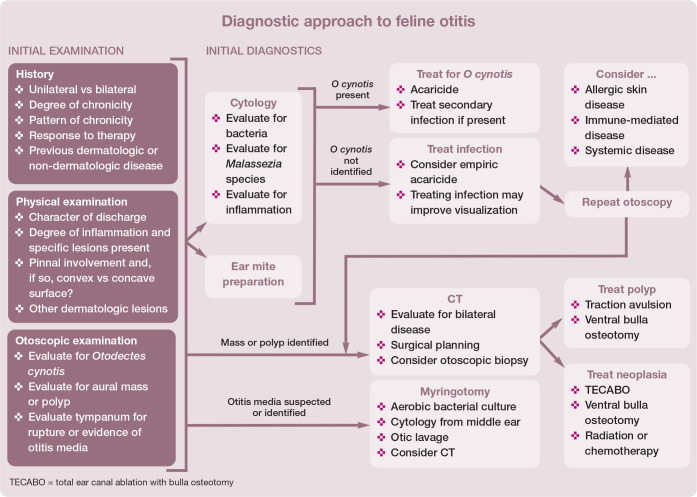
Practical relevance: Chronic otitis can be one of the most frustrating diseases to manage for a small animal practitioner. While it occurs less commonly in the cat than the dog, it is no less challenging. The purpose of this review is to discuss the common and uncommon causes of chronic otitis in the cat within the clinical framework used for diagnosis and treatment. The focus is on diseases that affect the ear canal, rather than those restricted to the pinnae.
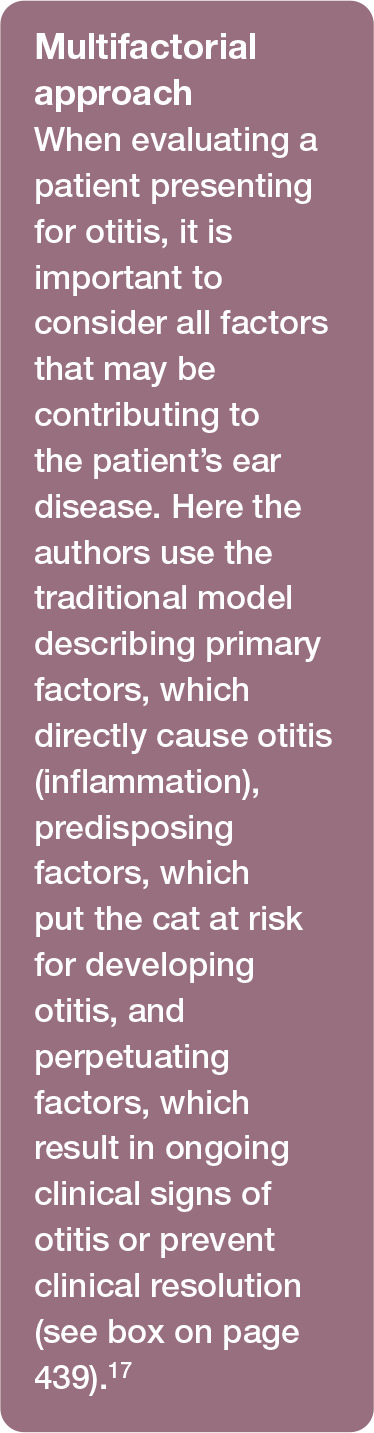
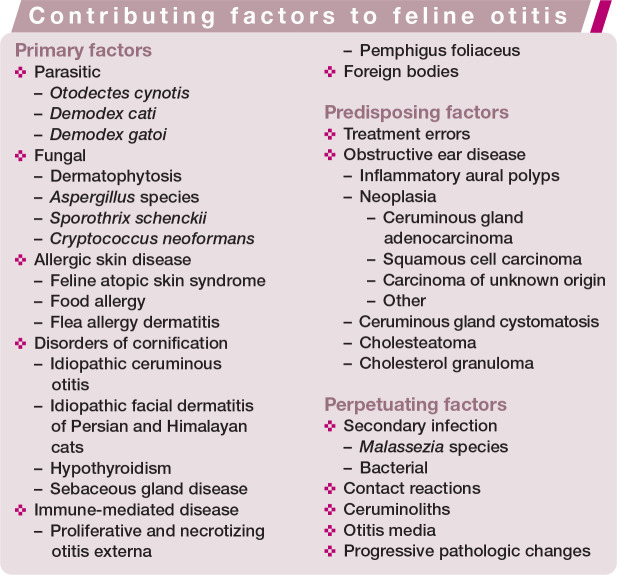
Clinical challenges: Otitis is multifactorial, which complicates management. A common clinical mistake is to focus solely on treating the infection present. Only by addressing all factors will a clinician successfully control chronic otitis. For the purposes of this review, the authors have adopted the established model of separating primary, predisposing and perpetuating causes of otitis. Primary factors are those that directly cause otitis (inflammation); predisposing factors are those that put the patient at risk for development of otitis; and perpetuating factors are those that result in ongoing clinical signs of otitis or that prevent clinical resolution.
Audience: This review is aimed at veterinarians who treat cats and particularly those with an interest in feline dermatology and otology.
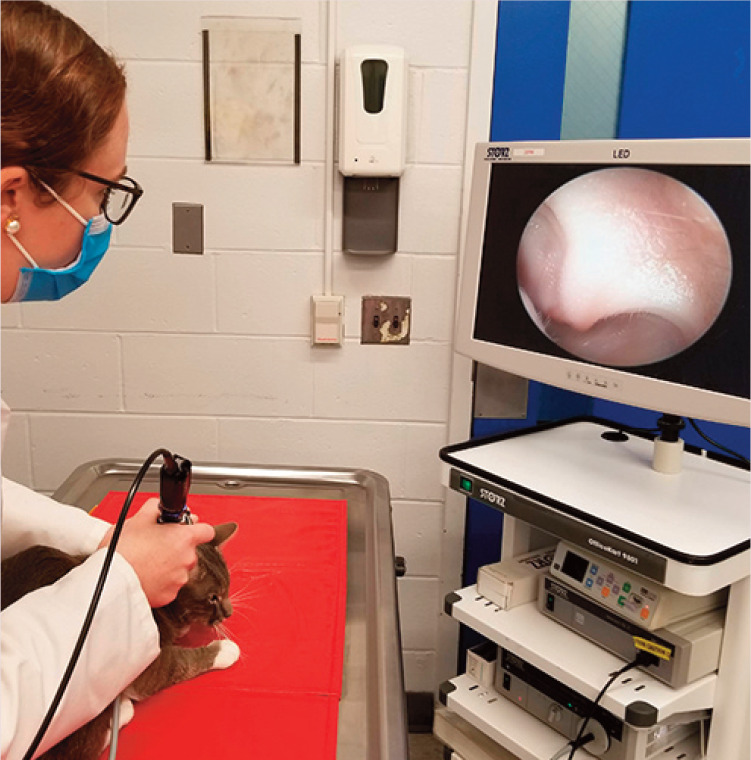
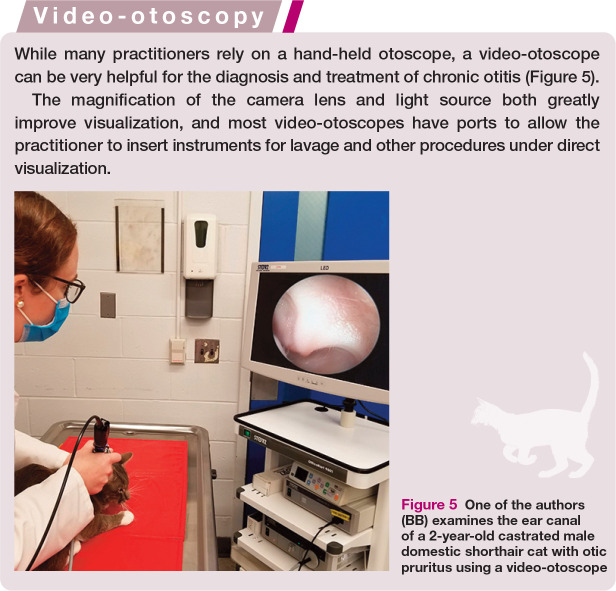
Equipment: While many practitioners rely on a hand-held otoscope, a video-otoscope can be very helpful for the diagnosis and treatment of chronic otitis.
Evidence base: This review presents up-to-date information regarding the diagnosis and treatment of chronic otitis in cats, with emphasis on the most recent peer-reviewed literature.
Keywords: Chronic otitis; Otodectes cynotis; inflammatory aural polyp; otitis externa; otitis media.
Conflict of interest statement
The authors declared no potential conflicts of interest with respect to the research, authorship, and/or publication of this article.
Figures
References
-
- Tater KC, Scott DW, Miller WH, Jr, et al.. The cytology of the external ear canal in the normal dog and cat. J Vet Med A Physiol Pathol Clin Med 2003; 50: 370–374. - PubMed
-
- Little CJL, Lane JG. The surgical anatomy of the feline bulla tympanica. J Small Anim Pract 1986; 27: 371–378.
-
- Ginel PJ, Lucena R, Rodriguez JC, et al.. A semiquantitative cytological evaluation of normal and pathological samples from the external ear canal of dogs and cats. Vet Dermatol 2002; 13: 151–156. - PubMed
-
- Hariharan H, Matthew V, Fountain J, et al.. Aerobic bacteria from mucous membranes, ear canals, and skin wounds of feral cats in Grenada, and the antimicrobial drug susceptibility of major isolates. Comp Immunol Microbiol Infect Dis 2011; 34: 129–134. - PubMed
Publication types
MeSH terms
LinkOut - more resources
Full Text Sources
Miscellaneous
