


Deep Learning-Enabled Label-Free On-Chip Detection and Selective Extraction of Cell Aggregate-Laden Hydrogel Microcapsules
- PMID: 33899299
- PMCID: PMC8203426
- DOI: 10.1002/smll.202100491
Deep Learning-Enabled Label-Free On-Chip Detection and Selective Extraction of Cell Aggregate-Laden Hydrogel Microcapsules
Erratum in
-
Deep Learning-Enabled Label-Free On-Chip Detection and Selective Extraction of Cell Aggregate-Laden Hydrogel Microcapsules.Small. 2021 Jun;17(24):e2102868. doi: 10.1002/smll.202102868. Small. 2021. PMID: 34145733 No abstract available.
Abstract
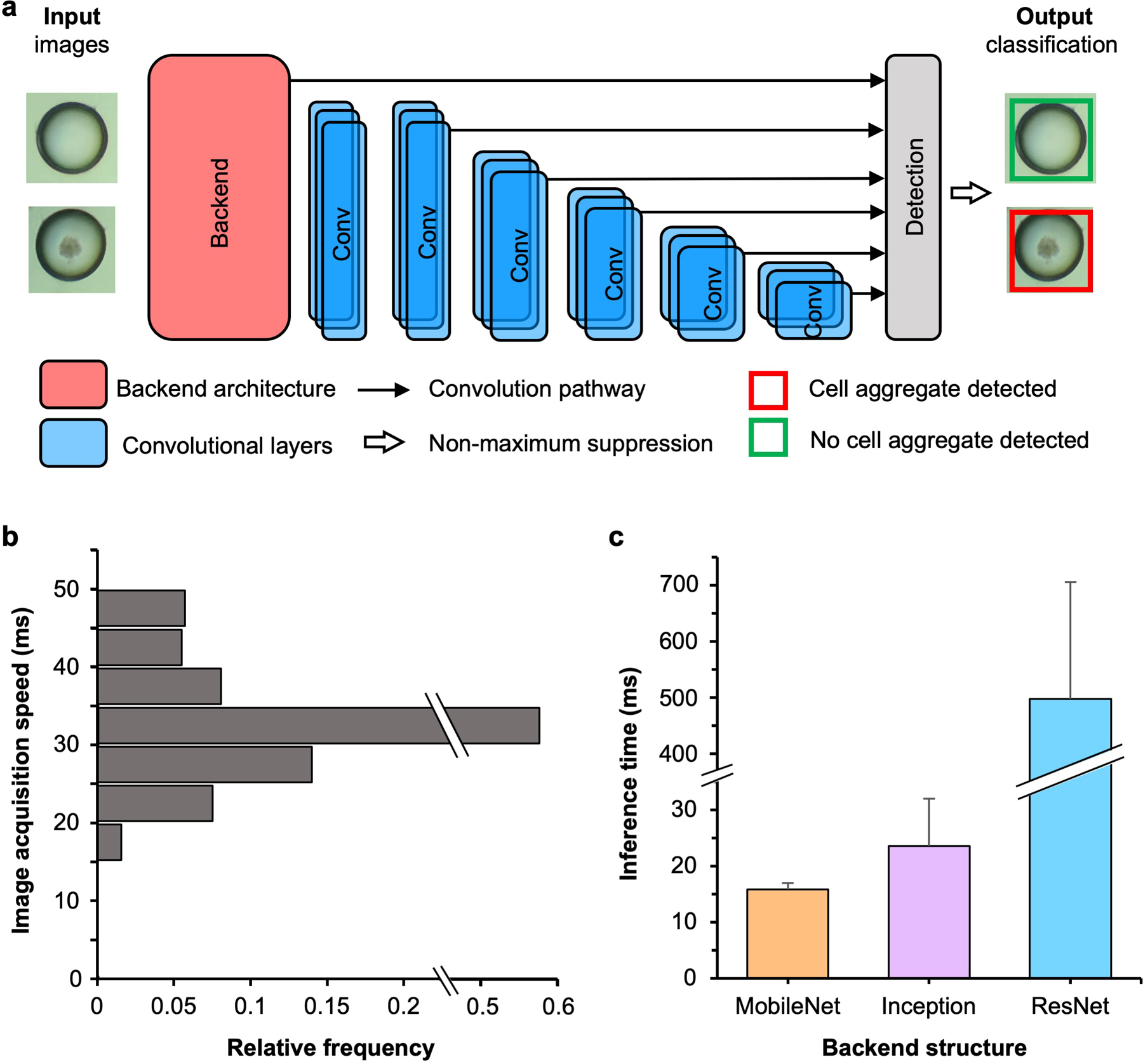
Microfluidic encapsulation of cells/tissues in hydrogel microcapsules has attracted tremendous attention in the burgeoning field of cell-based medicine. However, when encapsulating rare cells and tissues (e.g., pancreatic islets and ovarian follicles), the majority of the resultant hydrogel microcapsules are empty and should be excluded from the sample. Furthermore, the cell-laden hydrogel microcapsules are usually suspended in an oil phase after microfluidic generation, while the microencapsulated cells require an aqueous phase for further culture/transplantation and long-term suspension in oil may compromise the cells/tissues. Thus, real-time on-chip selective extraction of cell-laden hydrogel microcapsules from oil into aqueous phase is crucial to the further use of the microencapsulated cells/tissues. Contemporary extraction methods either require labeling of cells for their identification along with an expensive detection system or have a low extraction purity (<≈30%). Here, a deep learning-enabled approach for label-free detection and selective extraction of cell-laden microcapsules with high efficiency of detection (≈100%) and extraction (≈97%), high purity of extraction (≈90%), and high cell viability (>95%) is reported. The utilization of deep learning to dynamically analyze images in real time for label-free detection and on-chip selective extraction of cell-laden hydrogel microcapsules is unique and may be valuable to advance the emerging cell-based medicine.
Keywords: cell microencapsulation; hydrogel; machine learning; microfluidic; transplantation.
© 2021 Wiley-VCH GmbH.
Conflict of interest statement
Competing and financial interests
The authors declare no competing financial interests.
Figures


References
-
- Zhang J, Coulston RJ, Jones ST, Geng J, Scherman OA, Abell C, Science (80-. ) 2012, 335, 690. - PubMed
-
- Vegas AJ, Veiseh O, Gürtler M, Millman JR, Pagliuca FW, Bader AR, Doloff JC, Li J, Chen M, Olejnik K, Tam HH, Jhunjhunwala S, Langan E, Aresta-Dasilva S, Gandham S, McGarrigle JJ, Bochenek MA, Hollister-Lock J, Oberholzer J, Greiner DL, Weir GC, Melton DA, Langer R, Anderson DG, Nat. Med 2016, 22, 306. - PMC - PubMed
Publication types
MeSH terms
Substances
Grants and funding
LinkOut - more resources
Full Text Sources
