


Qualitative study: burden of menopause-associated vasomotor symptoms (VMS) and validation of PROMIS Sleep Disturbance and Sleep-Related Impairment measures for assessment of VMS impact on sleep
- PMID: 33900486
- PMCID: PMC8076383
- DOI: 10.1186/s41687-021-00289-y
Qualitative study: burden of menopause-associated vasomotor symptoms (VMS) and validation of PROMIS Sleep Disturbance and Sleep-Related Impairment measures for assessment of VMS impact on sleep
Erratum in
-
Correction to: Qualitative study: burden of menopause-associated vasomotor symptoms (VMS) and validation of PROMIS sleep disturbance and sleep-related impairment measures for assessment of VMS impact on sleep.J Patient Rep Outcomes. 2021 Jun 1;5(1):42. doi: 10.1186/s41687-021-00322-0. J Patient Rep Outcomes. 2021. PMID: 34061278 Free PMC article. No abstract available.
Abstract
Purpose: We evaluated the impact of menopause-associated vasomotor symptoms (VMS) on sleep. We also sought to establish the content validity of Patient-Reported Outcomes Measurement Information System (PROMIS) short form Sleep-Related Impairment and Sleep Disturbance measures in postmenopausal women with moderate to severe VMS.
Methods: Cross-sectional, in-person, qualitative interviews were conducted in the United States (Texas, Illinois) and European Union (UK, France) with women aged 40-64 years experiencing moderate to severe VMS (≥35/wk). Main outcomes were impact of VMS on sleep based on concept elicitation and content validity of PROMIS Sleep-Related Impairment and Sleep Disturbance short forms via cognitive debriefing.
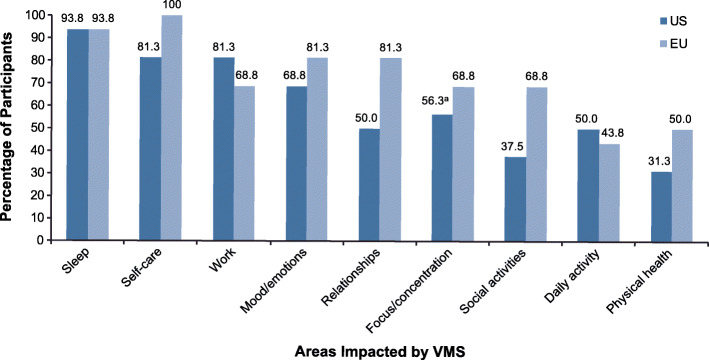
Results: Thirty-two women (US: n = 16; EU: n = 16) participated. A majority (US: 93.8%; EU: 93.8%) said VMS affected sleep; specifically, they had sleep interrupted by sweating or overheating and had difficulty returning to sleep. Sleep disturbance was the most bothersome aspect of VMS (US: 75%; EU: 50%). VMS-associated sleep disturbance affected next-day work productivity, mood, relationships, daily activities, concentration, social activities, and physical health. Participants found both PROMIS sleep measures relevant and easy to answer; the Sleep Disturbance measure was considered the most relevant. Participants had no difficulty remembering their experiences over the 7-day recall period and found the response options to be distinct.
Conclusion: VMS associated with menopause significantly interferes with sleep and next-day functioning (e.g., work productivity), supporting assessment of sleep outcomes in studies evaluating treatment of VMS. Women with moderate to severe VMS found that the PROMIS Sleep-Related Impairment and Sleep Disturbance short forms assessed constructs important to understanding sleep in the context of menopause-associated VMS.
Keywords: Content validity; Menopause; PRO; Quality of life; Sleep; Vasomotor symptoms.
Conflict of interest statement
DD, CS, LD, and RC are employees of RTI Health Solutions, contracted by Astellas to design and conduct this research. ME, BS, and ES are Medical and Development employees at Astellas Pharma, Inc.
Figures
References
-
- Mirkin S, Graham S, Revicki DA, Bender RH, Bernick B, Constantine GD. Relationship between vasomotor symptom improvements and quality of life and sleep outcomes in menopausal women treated with oral, combined 17β-estradiol/progesterone. Menopause. 2019;26:637–642. doi: 10.1097/gme.0000000000001294. - DOI - PMC - PubMed
LinkOut - more resources
Full Text Sources
Other Literature Sources
