


Effect of chronic intracerebroventricular administration of an aromatase inhibitor on the expression of socio-sexual behaviors in male Japanese quail
- PMID: 33901434
- PMCID: PMC8178220
- DOI: 10.1016/j.bbr.2021.113315
Effect of chronic intracerebroventricular administration of an aromatase inhibitor on the expression of socio-sexual behaviors in male Japanese quail
Abstract
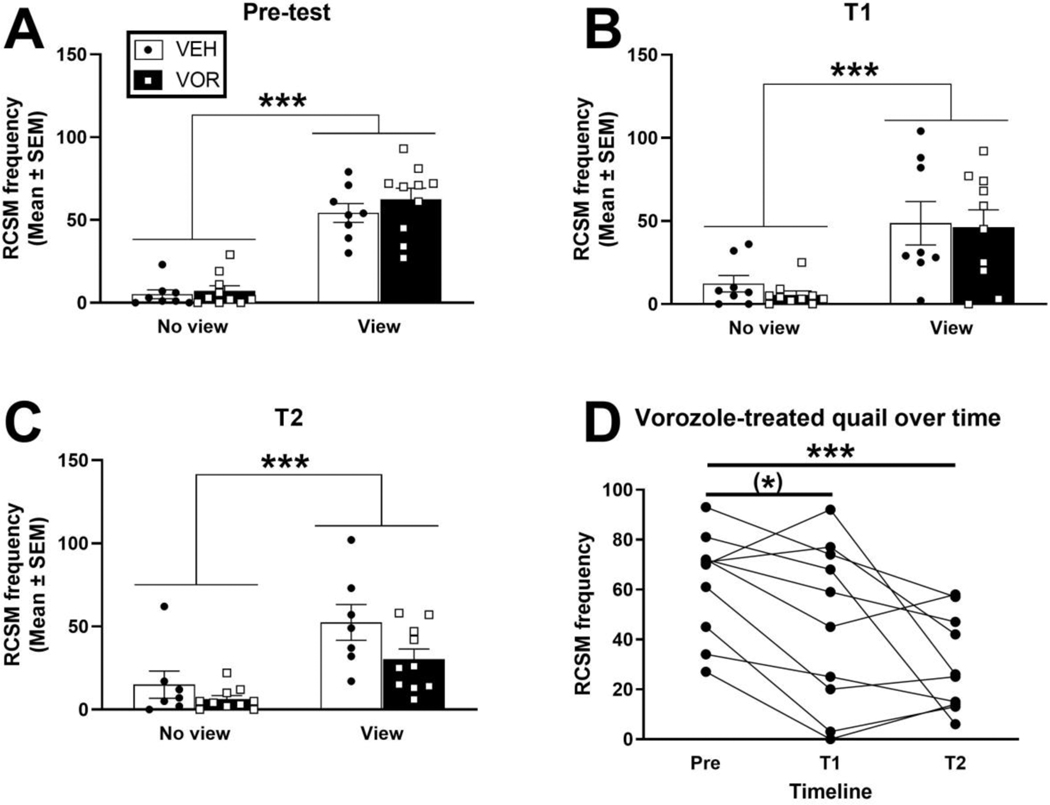
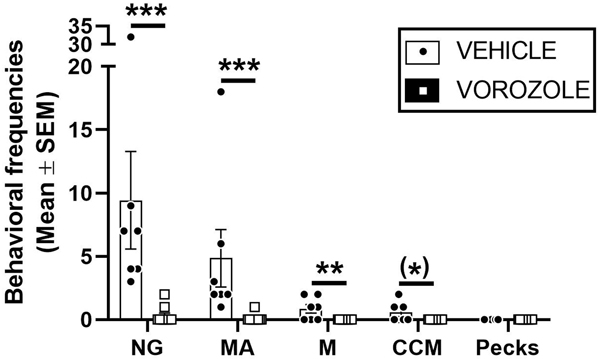
Aromatase converts androgens into estrogens in the brain of vertebrates including humans. This enzyme is also expressed in other tissues where its action may result in negative effects on human health (e.g., promotion of tumor growth). To prevent these effects, aromatase inhibitors were developed and are currently used to block human estrogen-dependent tumors. In vertebrates including quail, aromatase is expressed in a highly conserved set of interconnected brain nuclei known as the social behavior network. This network is directly implicated in the expression of a large range of social behaviors. The primary goal of this study was to characterize in Japanese quail the potential impact of brain aromatase on sexual behavior, aggressiveness and social motivation (i.e., tendency to approach and stay close to conspecifics). An additional goal was to test the feasibility and effectiveness of long-term delivery of an aromatase inhibitor directly into the third ventricle via Alzet™ osmotic minipumps using male sexual behavior as the aromatase dependent measure. We demonstrate that this mode of administration results in the strongest inhibition of both copulatory behavior and sexual motivation ever observed in this species, while other social behaviors were variably affected. Sexual motivation and the tendency to approach a group of conspecifics including females clearly seem to depend on brain aromatase, but the effects of central estrogen production on aggressive behavior and on the motivation to approach males remain less clear.
Keywords: Aggressive behavior; Aromatase; Bird; Neurosestrogen; Sexual behavior; Social motivation.
Copyright © 2021 Elsevier B.V. All rights reserved.
Figures





References
-
- Adkins EK, & Alder NT (1972). Hormonal control of behavior in the Japanese quail. Journal of comparative and physiological psychology, 81(1), 27. - PubMed
-
- Bakker J, Honda S, Harada N, & Balthazart J. (2004). Restoration of male sexual behavior by adult exogenous estrogens in male aromatase knockout mice. Hormones and Behavior, 46(1), 1–10. - PubMed
Publication types
MeSH terms
Substances
Grants and funding
LinkOut - more resources
Full Text Sources
Other Literature Sources
