


Associations between green/blue spaces and mental health across 18 countries
- PMID: 33903601
- PMCID: PMC8076244
- DOI: 10.1038/s41598-021-87675-0
Associations between green/blue spaces and mental health across 18 countries
Abstract
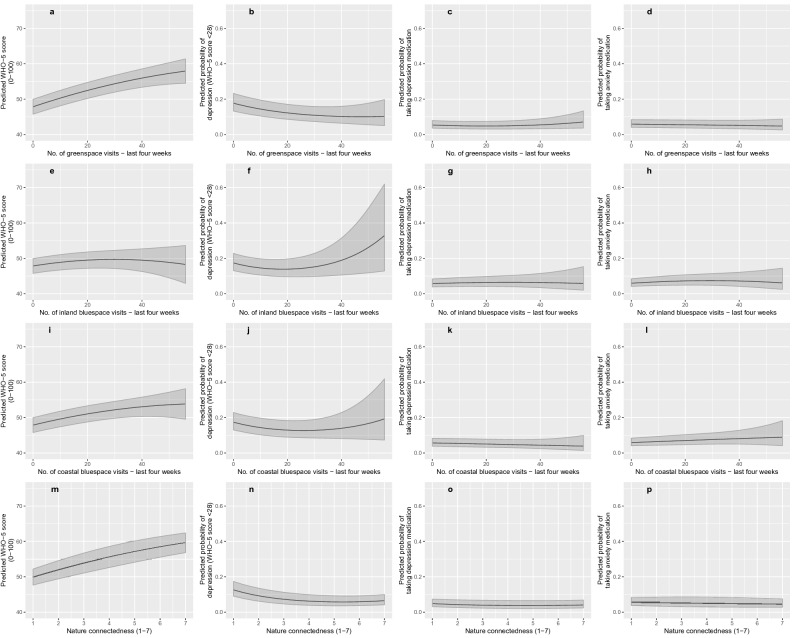
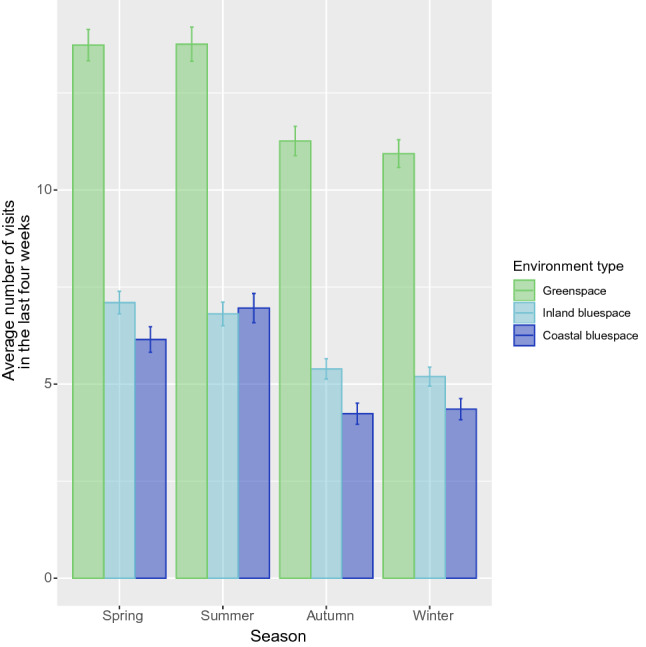
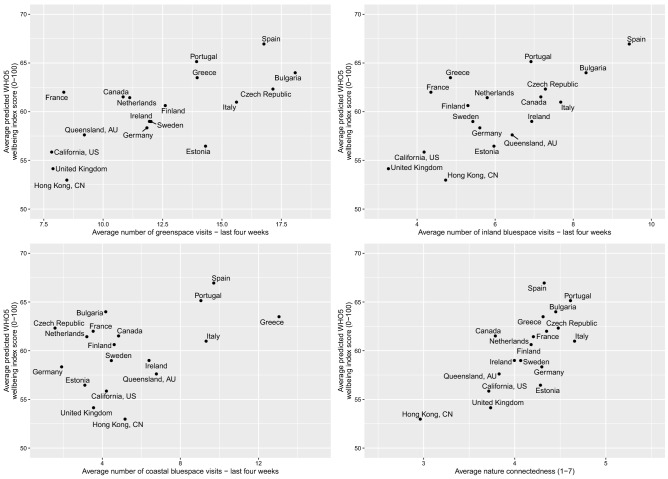
Living near, recreating in, and feeling psychologically connected to, the natural world are all associated with better mental health, but many exposure-related questions remain. Using data from an 18-country survey (n = 16,307) we explored associations between multiple measures of mental health (positive well-being, mental distress, depression/anxiety medication use) and: (a) exposures (residential/recreational visits) to different natural settings (green/inland-blue/coastal-blue spaces); and (b) nature connectedness, across season and country. People who lived in greener/coastal neighbourhoods reported higher positive well-being, but this association largely disappeared when recreational visits were controlled for. Frequency of recreational visits to green, inland-blue, and coastal-blue spaces in the last 4 weeks were all positively associated with positive well-being and negatively associated with mental distress. Associations with green space visits were relatively consistent across seasons and countries but associations with blue space visits showed greater heterogeneity. Nature connectedness was also positively associated with positive well-being and negatively associated with mental distress and was, along with green space visits, associated with a lower likelihood of using medication for depression. By contrast inland-blue space visits were associated with a greater likelihood of using anxiety medication. Results highlight the benefits of multi-exposure, multi-response, multi-country studies in exploring complexity in nature-health associations.
Conflict of interest statement
The authors declare no competing interests.
Figures
References
-
- World Health Organization . Depression and Other Common Mental Disorders: Global Health Estimates (No. WHO/MSD/MER/2017.2) World Health Organization; 2017.
-
- United Nations, Department of Economic and Social Affairs, Population Division. The World’s Cities in 2018: Data Booklet (ST/ESA/ SER.A/417) (2018).
-
- Penkalla AM, Kohler S. Urbanicity and mental health in Europe: A systematic review. Eur. J. Mental Health. 2014;9:163–177. doi: 10.5708/EJMH.9.2014.2.2. - DOI
-
- Soga M, Gaston KJ. Extinction of experience: The loss of human–nature interactions. Front. Ecol. Environ. 2016;14:94–101. doi: 10.1002/fee.1225. - DOI
