


Occupational burnout and job satisfaction among physicians in times of COVID-19 crisis: a convergent parallel mixed-method study
- PMID: 33906619
- PMCID: PMC8079229
- DOI: 10.1186/s12889-021-10897-4
Occupational burnout and job satisfaction among physicians in times of COVID-19 crisis: a convergent parallel mixed-method study
Abstract
Background: Healthcare professionals including physicians were subjected to an increased workload during the COVID-19 crisis, leaving them exposed to significant physical and psychological distress. Therefore, our present study aimed to (i) assess the prevalence of burnout and levels of job satisfaction among physicians in Jordan, and (ii) explore physicians' opinions, experiences, and perceptions during the pandemic crisis.
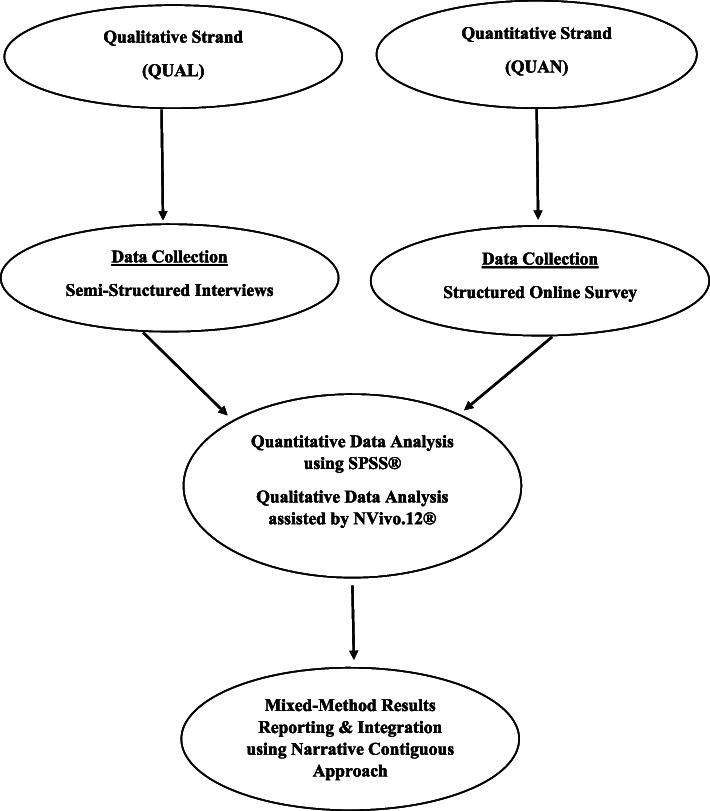
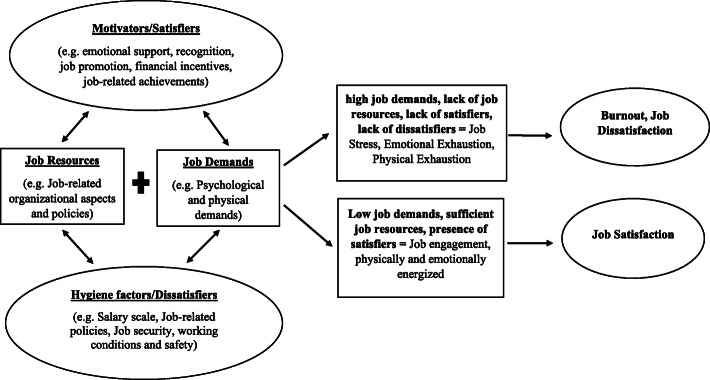
Methods: This was a mixed-method study that utilized a structured web-based questionnaire and semi-structured individual interviews. The 10-Item Burnout Measure-Short version (BMS), and the 5-Item Short Index of Job Satisfaction (SIJS) were adopted to assess occupational burnout and job satisfaction, respectively. Semi-structured interviews were conducted, based on a conceptual framework that was developed from Herzberg's Two-Factor Theory of Motivation and Job Demands-Resources Model. Descriptive statistics and regression models, as well as inductive thematic analysis, were used to analyze quantitative and qualitative data, respectively.
Results: A total of 973 survey responses and 11 interviews were included in our analysis. The prevalence of burnout among physicians was (57.7%). Several significant factors were positively associated with burnout, including female gender, working at highly loaded hospitals, working for long hours, doing night shifts, lack of sufficient access to personal protective equipment, and being positively tested for SARS-CoV-2. Regarding job satisfaction, regression analysis revealed that age was positively associated with higher levels of job satisfaction. On contrary, being a general practitioner or specialist, working at highly loaded hospitals, low salaries, and suffering from burnout have predicted lower levels of job satisfaction. Besides, four themes have emerged from the thematic analysis: (i) Work-induced psychological distress during the pandemic, (ii) Decision-driven satisfactory and dissatisfactory experiences, (iii) Impact of the pandemic on doctor-patient communication and professional skills, and (iv) Economic impacts of the pandemic crisis and lockdown.
Conclusion: A significant physical and psychological burden was associated with the COVID-19 pandemic. Reliable efforts should be implemented aiming at protecting physicians' physical and mental wellbeing, enhancing their working conditions, and raising awareness about burnout. Evidence-based decisions and proper utilization of financial and human resources at institutional and national levels are believed to be crucial for the sustainability of the health workforce, especially in crises.
Keywords: COVID-19 pandemic; Convergent parallel; Job satisfaction; Jordan; Mixed-method; Occupational burnout; Physical burden; Physicians; Psychological distress.
Conflict of interest statement
The authors declare that they have no competing interests.
Figures
References
-
- World Health Organization. COVID-19 Dashboard. [Online]. 2020. https://covid19.who.int/. Accessed 5 Dec 2020.
MeSH terms
LinkOut - more resources
Full Text Sources
Other Literature Sources
Medical
Miscellaneous
