Review
. 2021 Jun;42(6):508-522.
doi: 10.1016/j.it.2021.04.001. Epub 2021 Apr 24.

Emerging mechanisms of immunocoagulation in sepsis and septic shock

Affiliations
Review

Emerging mechanisms of immunocoagulation in sepsis and septic shock

Daolin Tang et al. Trends Immunol. 2021 Jun.

Abstract

Sepsis and septic shock driven by microbial infections are still among the most challenging health problems, causing 11 million deaths worldwide every year. How does the host's response to pathogen infections effectively restore homeostasis instead of precipitating pathogenic and potentially fatal feedforward reactions? Recently, there have been significant new advances in our understanding of the interface between mammalian immunity and coagulation ('immunocoagulation') and its impact on sepsis. In particular, the release and activation of F3 (the main initiator of coagulation) from and on myeloid or epithelial cells is facilitated by activating inflammasomes and consequent gasdermin D (GSDMD)-mediated pyroptosis, coupled to signaling via high mobility group box 1 (HMGB1), stimulator of interferon response CGAMP interactor 1 (STING1), or sequestosome 1 (SQSTM1). Pharmacological modulation of the immunocoagulation pathways emerge as novel and potential therapeutic strategies for sepsis.


Conflict of interest statement

Declaration of interests No conflicts of interest to declare.

Figures
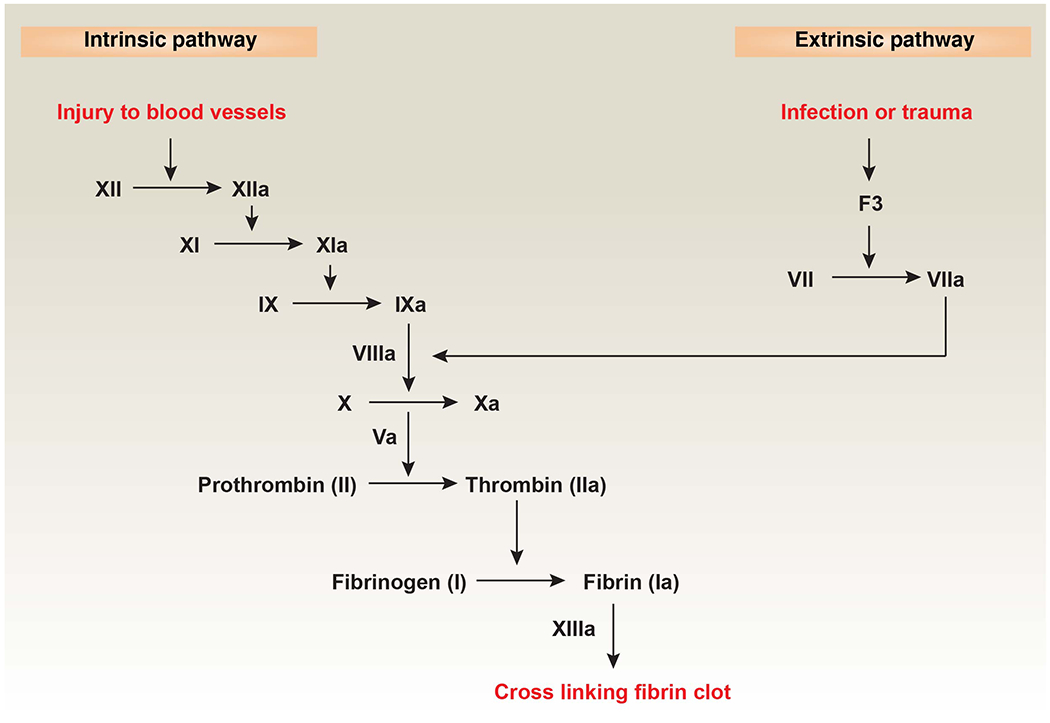
Figure 1.
Figure 1.. The coagulation cascade in mammals.
Coagulation is the process of forming a blood clot to reduce blood loss or pathogen spread after blood vessel damage or microbial infections. The intrinsic pathway is also known as the contact pathway, which is activated by damage inside the vasculature. Platelets, exposed/damaged endothelium, collagen, and other chemicals can activate this arm of the pathway [7]. The extrinsic pathway is also called the F3 pathway, which is activated by trauma or pathogen infection. When coagulation factor X is activated through the intrinsic or extrinsic pathways, it activates prothrombin (also known as coagulation factor II) and uses coagulation factor V to convert it into thrombin. Thrombin then cleaves fibrinogen into fibrin, forming a mesh that binds and strengthens platelet embolism, completes coagulation, and stops bleeding [7]. Abbreviations: F3, coagulation factor III.
Figure 2.
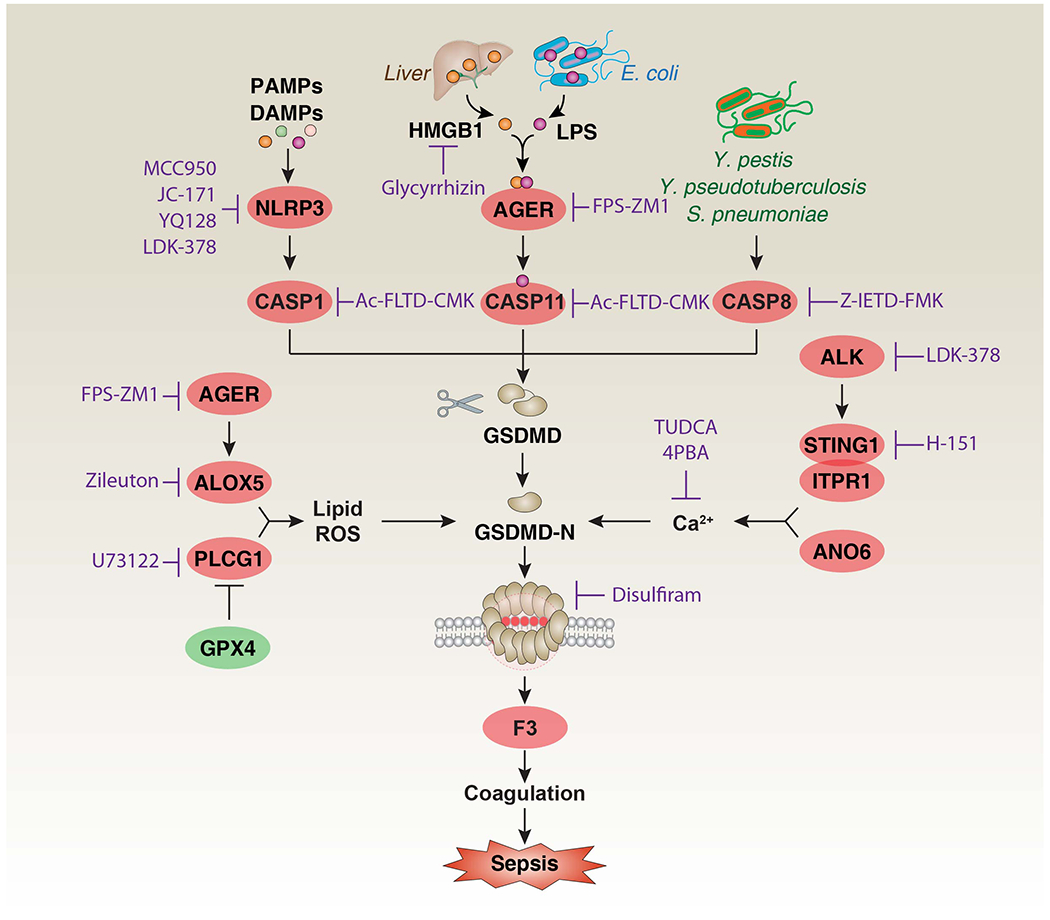
Figure 2.. Mechanism and regulation of GSDMD-mediated F3 release and activation in mouse sepsis.
GSDMD is the substrate of CASP1, CASP11, and CASP8, producing two fragments: GSDMD-N and GSDMD-C. GSDMD-N triggers pyroptosis and subsequent F3 release and activation by forming pores in the plasma membrane [14, 17, 18]. The activation of GSDMD-N is positively regulated by lipid ROS and Ca2+ [121, 122]. The generation of lipid ROS is related to AGER-dependent ALOX5 activation and GPX4 depletion-induced PLCG1 activation [59, 80]. The increase in Ca2+ influx is related to the STING1-ITPR1 complex-mediated ER calcium release and ANO6 signal in the plasma membrane [17, 18]. In addition, HMGB1 released from the liver can deliver extracellular LPS to the inside to activate CASP11 through its receptor AGER [55]. These inflammatory immune pathways can ultimately lead to the F3-mediated coagulation cascade in myeloid or epithelial cells, and have been associated with sepsis [17, 18, 55, 67]. Abbreviations: AGER, advanced glycosylation end-product specific receptor; ALK, ALK receptor tyrosine kinase; ANO6, anoctamin 6; ALOX5, arachidonate 5-lipoxygenase; CASP1, caspase 1; CASP8, caspase 8; CASP11, caspase 11; F3, coagulation factor III; GSDMD, gasdermin D; GPX4, glutathione peroxidase 4; ITPR1, inositol 1,4,5-trisphosphate receptor type 1; HMGB1, high mobility group box 1; LPS, lipopolysaccharides; NLRP3, NLR family pyrin domain containing 3; PLCG1, phospholipase C gamma 1; ROS, reactive oxygen species; STING1, stimulator of interferon response CGAMP interactor 1.
Figure 3.
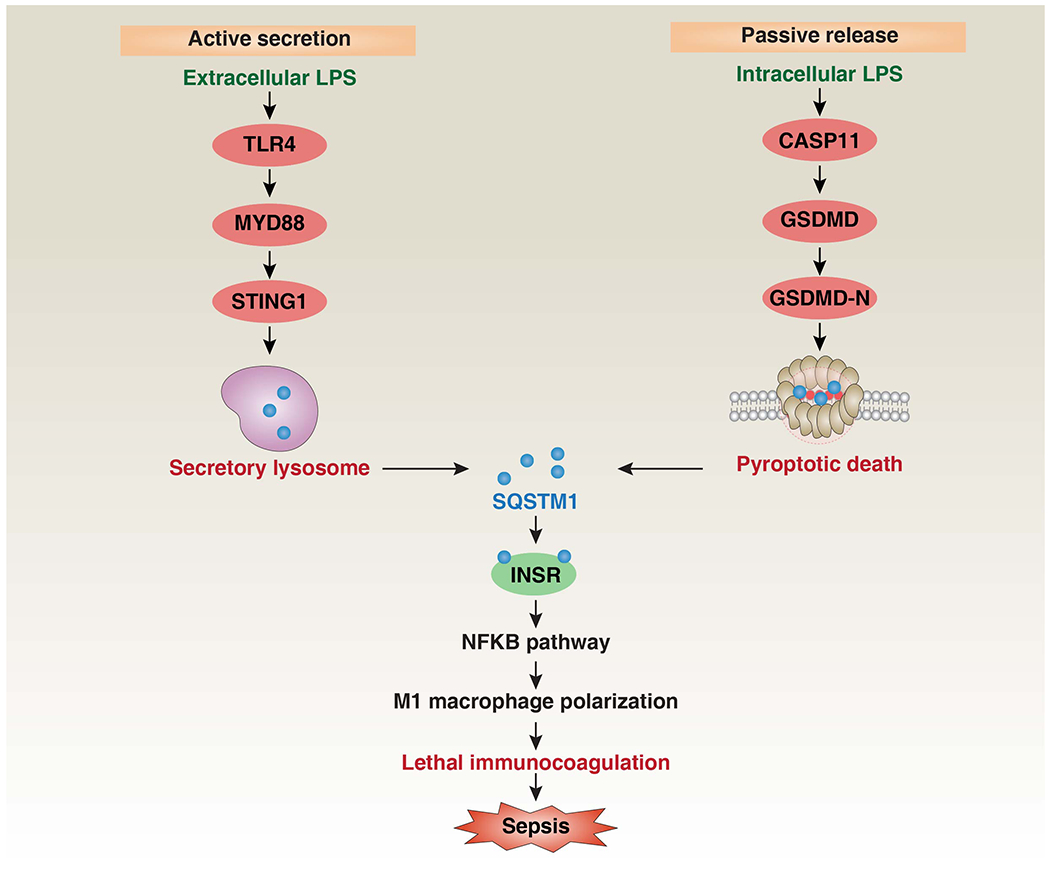
Figure 3.. Release and activity of SQSTM1 in mouse sepsis.
There are two mechanisms by which macrophages release SQSTM1 into the extracellular environment (active secretion or passive release). Extracellular LPS induces SQSTM1 lysosomal secretion by activating the TLR4-MYD88-STING1 pathway, while intracellular LPS triggers the pyroptotic release of SQSTM1 by activating the CASP11-GSDMD-GSDMD-N pathway [78]. After its release, SQSTM1 binds to the receptor INSR to activate the NFκB pathway, causing the polarization of pro-inflammatory macrophages (aka ‘M1’), and finally mediating septic death in mice through excessive inflammation and coagulation [78]. Abbreviations: CASP11, caspase 11; GSDMD, gasdermin D; INSR, insulin receptor; LPS, lipopolysaccharides; MYD88, MYD88 innate immune signal transduction adaptor; NFKB, nuclear factor-κB; PLCG1, phospholipase C gamma 1; ROS, reactive oxygen species; STING1, stimulator of interferon response CGAMP interactor 1; SQSTM1, sequestosome 1; TLR4, toll like receptor 4.

References

    1. Singer M et al. (2016) The Third International Consensus Definitions for Sepsis and Septic Shock (Sepsis-3). JAMA 315 (8), 801–10. - PMC - PubMed
    1. Zhou P et al. (2020) A pneumonia outbreak associated with a new coronavirus of probable bat origin. Nature 579 (7798), 270–273. - PMC - PubMed
    1. Rudd KE et al. (2020) Global, regional, and national sepsis incidence and mortality, 1990-2017: analysis for the Global Burden of Disease Study. Lancet 395 (10219), 200–211. - PMC - PubMed
    1. Reinhart K et al. (2017) Recognizing Sepsis as a Global Health Priority - A WHO Resolution. N Engl J Med 377 (5), 414–417. - PubMed
    1. Gando S et al. (2019) Role of disseminated intravascular coagulation in severe sepsis. Thromb Res 178, 182–188. - PubMed

Publication types

Substances