


Clinical Utility of Pegaspargase in Children, Adolescents and Young Adult Patients with Acute Lymphoblastic Leukemia: A Review
- PMID: 33907490
- PMCID: PMC8064615
- DOI: 10.2147/BLCTT.S245210
Clinical Utility of Pegaspargase in Children, Adolescents and Young Adult Patients with Acute Lymphoblastic Leukemia: A Review
Abstract
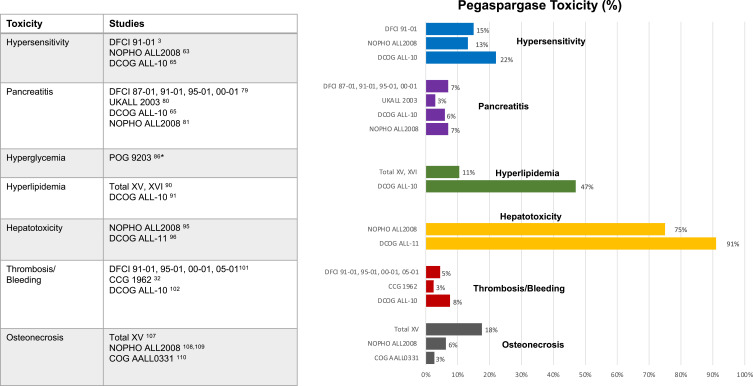
Acute lymphoblastic leukemia (ALL) is a heterogenous hematological malignancy representing 25% of all cancers in children less than 15 years of age. Significant improvements in survival and cure rates have been made over the past four decades in pediatric ALL treatment. Asparaginases, derived from Escherichia coli and Erwinia chrysanthemi, have become a critical component of ALL therapy since the 1960s. Asparaginases cause depletion of serum asparagine, leading to deprivation of this critical amino acid for protein synthesis, and hence limit survival of lymphoblasts. Pegaspargase, a conjugate of monomethoxypolyethylene glycol (mPEG) and L-asparaginase, has become an integral component of pediatric upfront and relapsed ALL protocols due to its longer half-life and improved immunogenicity profile compared to native asparaginase preparations. Over the past two decades great strides have been made in outcomes for pediatric ALL due to risk stratification, incorporation of multiagent chemotherapy protocols, and central nervous system prophylaxis with pegaspargase having played an important role in this success. However, adolescents and young adults (AYA) with ALL when treated on contemporaneous trials using adult ALL regimens, continue to have poor outcomes. There is increasing realization of adapting pediatric trial regimens for treating AYAs, especially those incorporating higher intensity of chemotherapeutic agents with pegaspargase being one such agent. Dose or treatment-limiting toxicity is observed in 25-30% of patients, most notable being hypersensitivity reactions. Other toxicities include asparaginase-associated pancreatitis, thrombosis, liver dysfunction, osteonecrosis, and dyslipidemia. Discontinuation or subtherapeutic levels of asparaginase are associated with inferior disease-free survival leading to higher risk of relapse, and in cases of relapse, a higher risk for remission failure. This article provides an overview of available evidence for use of pegaspargase in pediatric acute lymphoblastic leukemia.
Keywords: asparaginase; asparagine; serum asparaginase activity; toxicity.
© 2021 Bender et al.
Conflict of interest statement
Anupam Verma, Cynthia Bender and Maria Carter have no conflicts of interest to report in this work. Luke Maese has served as consultant and has received honoraria from Jazz Pharmaceuticals.
Figures
References
Publication types
LinkOut - more resources
Full Text Sources
Other Literature Sources
Miscellaneous
