


Vaccine Hesitancy: Characteristics of the Refusal of Childhood Vaccination in a Peruvian Population
- PMID: 33907645
- PMCID: PMC8067775
- DOI: 10.7759/cureus.14105
Vaccine Hesitancy: Characteristics of the Refusal of Childhood Vaccination in a Peruvian Population
Abstract
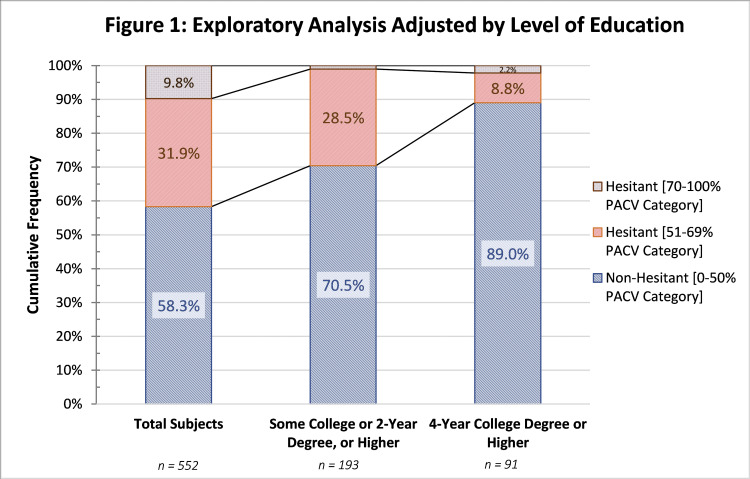
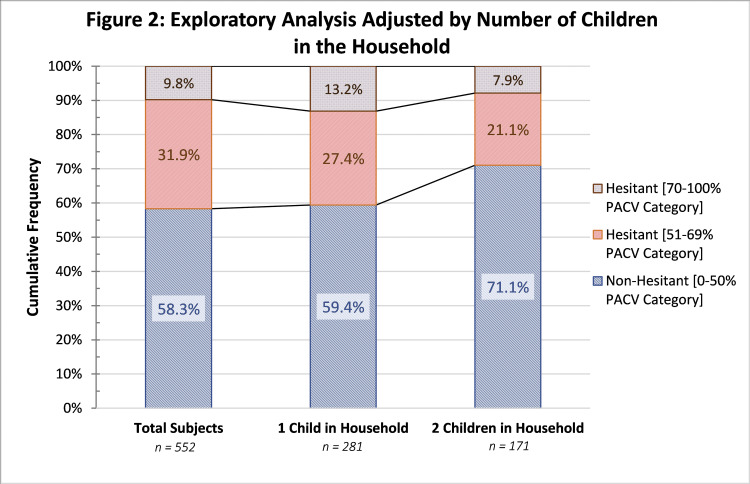
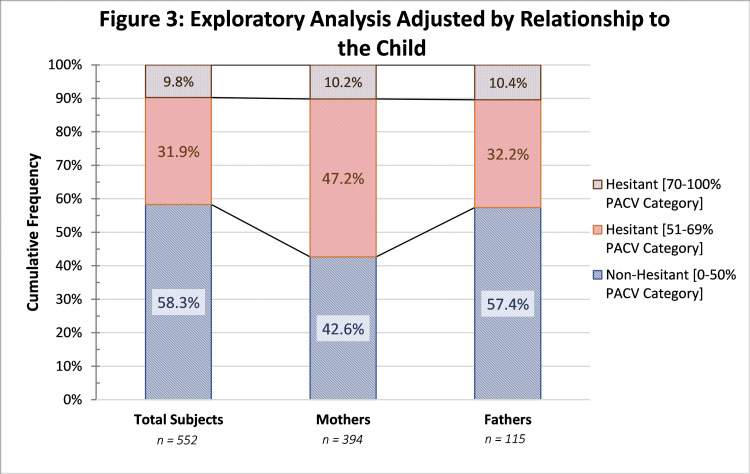
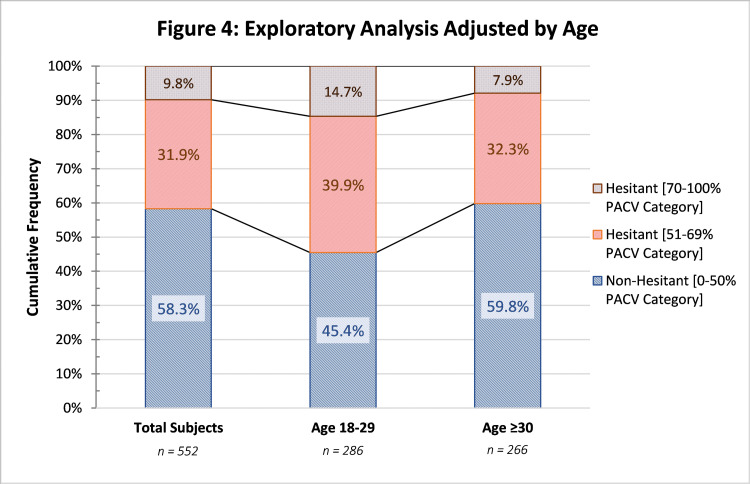
Understanding the determinants of vaccine hesitancy is paramount to reinstate confidence in immunizations. The objective of this investigation was to explore the characteristics of the vaccination decision-making process that may result in the refusal of childhood immunization in Peru, during February-June 2020. A descriptive, cross-sectional study involving telephone interviews was executed in Peru. The Parents Attitudes about Childhood Vaccines (PACV) survey was used. A demographic analysis was done, followed by an unadjusted exploratory subgroup analysis. Out of 552 subjects, 9.8% were considered vaccine hesitant, 70.3% had purposively delayed vaccination, 88.4% thought fewer vaccines were better and 52.2% were concerned about vaccine safety. The level of hesitancy was inversely proportional to the level of education and the number of children at home. Mothers and subjects aged ≤29 years showed a greater level of vaccine hesitancy. This population displays a vaccine-hesitant conduct. Vaccine safety and the number of vaccines to administer are important determining factors. This behavior could be influenced by variables such as level of education, number of children at home, parental relationship, and age. These results help understand local vaccination behaviors. More studies are encouraged to confirm and validate these findings.
Keywords: immunization; pacv; peru; vaccine; vaccine hesitancy; vaccine refusal.
Copyright © 2021, Chung-Delgado et al.
Conflict of interest statement
Kocfa Chung-Delgado is an employee at Sanofi Pasteur.
Figures
References
-
- Understanding vaccine hesitancy around vaccines and vaccination from a global perspective: a systematic review of published literature, 2007-2012. Larson HJ, Jarrett C, Eckersberger E, Smith D, Paterson P. Vaccine. 2014;19:2150–2159. - PubMed
-
- Report of the SAGE Working Group on Vaccine Hesitancy - October 2014. [Jan;2021 ];https://www.who.int/immunization/sage/meetings/2014/october/1_Report_WOR... 2014
-
- Coverage and factors associated with measles vaccination in children aged 12-59 months in Peru: estimate based on the 2017 Demographic and Family Health Survey. (Article in Spanish) Vásquez-Uriarte K, Ninatanta Ortiz JA, Romani F, Roque-Henriquez JC. Rev Peru Med Exp Salud Publica. 2019;36:610–619. - PubMed
LinkOut - more resources
Full Text Sources
Other Literature Sources