


Medication overuse and drug addiction: a narrative review from addiction perspective
- PMID: 33910499
- PMCID: PMC8080402
- DOI: 10.1186/s10194-021-01224-8
Medication overuse and drug addiction: a narrative review from addiction perspective
Erratum in
-
Correction to: Medication overuse and drug addiction: a narrative review from addiction perspective.J Headache Pain. 2021 Jul 5;22(1):64. doi: 10.1186/s10194-021-01275-x. J Headache Pain. 2021. PMID: 34225669 Free PMC article. No abstract available.
Abstract
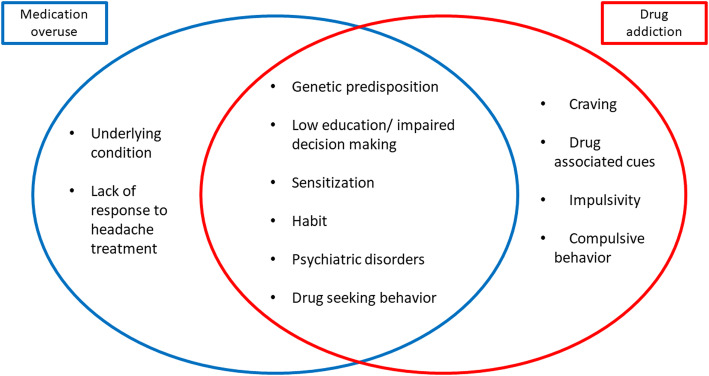
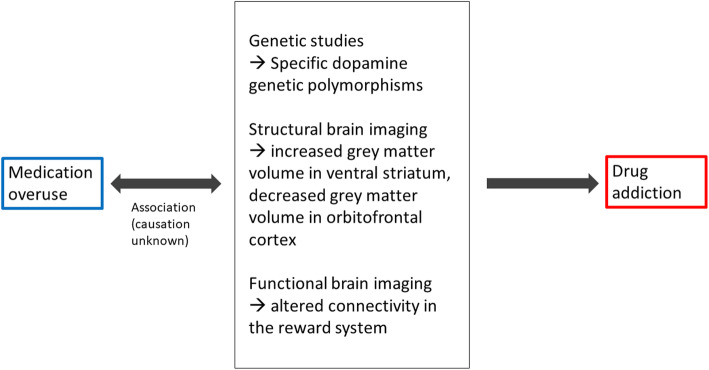
Chronic headache is particularly prevalent in migraineurs and it can progress to a condition known as medication overuse headache (MOH). MOH is a secondary headache caused by overuse of analgesics or other medications such as triptans to abort acute migraine attacks. The worsening of headache symptoms associated with medication overuse (MO) generally ameliorates following interruption of regular medication use, although the primary headache symptoms remain unaffected. MO patients may also develop certain behaviors such as ritualized drug administration, psychological drug attachment, and withdrawal symptoms that have been suggested to correlate with drug addiction. Although several reviews have been performed on this topic, to the authors best knowledge none of them have examined this topic from the addiction point of view. Therefore, we aimed to identify features in MO and drug addiction that may correlate. We initiate the review by introducing the classes of analgesics and medications that can cause MOH and those with high risk to produce MO. We further compare differences between sensitization resulting from MO and from drug addiction, the neuronal pathways that may be involved, and the genetic susceptibility that may overlap between the two conditions. Finally, ICHD recommendations to treat MOH will be provided herein.
Keywords: Dependence; Drug abuse; Migraine; Substance abuse; Vulnerability.
Conflict of interest statement
The authors declare that they have no competing interests.
Figures

References
-
- Headache Classification Committee of the International Headache Society (IHS) The International Classification of Headache Disorders, 3rd edition. Cephalalgia, 2018. 38(1): p. 1–211 DOI: 10.1177/0333102417738202 - PubMed
-
- Negro A, Rocchietti-March M, Fiorillo M, Martelletti P. Chronic migraine: current concepts and ongoing treatments. Eur Rev Med Pharmacol Sci. 2011;15(12):1401–1420. - PubMed
Publication types
MeSH terms
Substances
LinkOut - more resources
Full Text Sources
Other Literature Sources
Medical
