


The role of transcriptomic biomarkers of endometrial receptivity in personalized embryo transfer for patients with repeated implantation failure
- PMID: 33910562
- PMCID: PMC8082865
- DOI: 10.1186/s12967-021-02837-y
The role of transcriptomic biomarkers of endometrial receptivity in personalized embryo transfer for patients with repeated implantation failure
Abstract
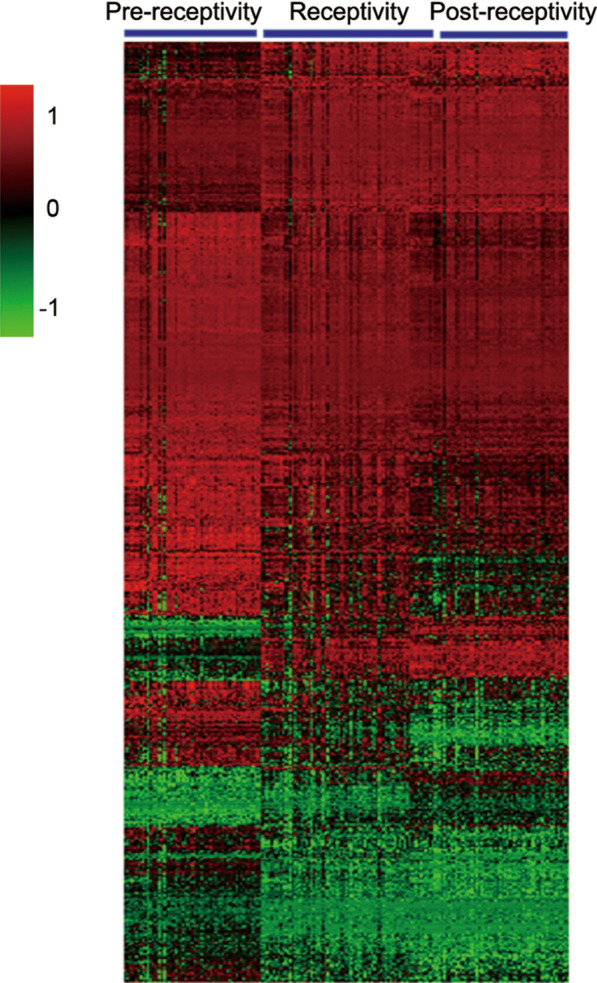
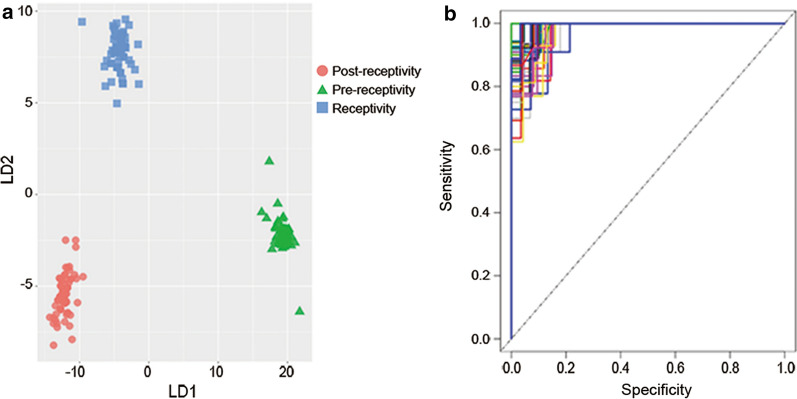
Background: Window of implantation (WOI) displacement is one of the endometrial origins of embryo implantation failure, especially repeated implantation failure (RIF). An accurate prediction tool for endometrial receptivity (ER) is extraordinarily needed to precisely guide successful embryo implantation. We aimed to establish an RNA-Seq-based endometrial receptivity test (rsERT) tool using transcriptomic biomarkers and to evaluate the benefit of personalized embryo transfer (pET) guided by this tool in patients with RIF.
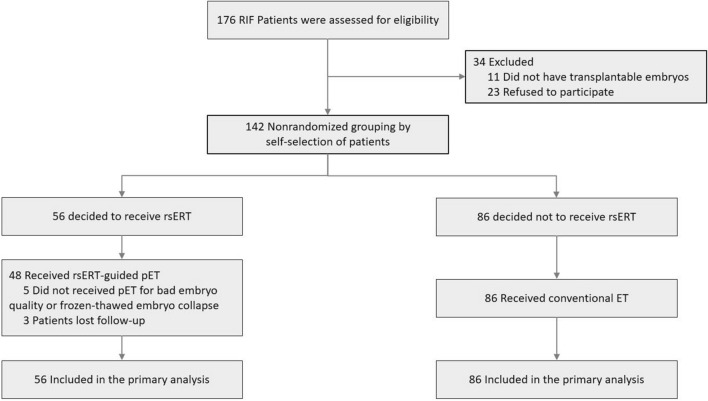
Methods: This was a two-phase strategy comprising tool establishment with retrospective data and benefit evaluation with a prospective, nonrandomized controlled trial. In the first phase, rsERT was established by sequencing and analyzing the RNA of endometrial tissues from 50 IVF patients with normal WOI timing. In the second phase, 142 patients with RIF were recruited and grouped by patient self-selection (experimental group, n = 56; control group, n = 86). pET guided by rsERT was performed in the experimental group and conventional ET in the control group.
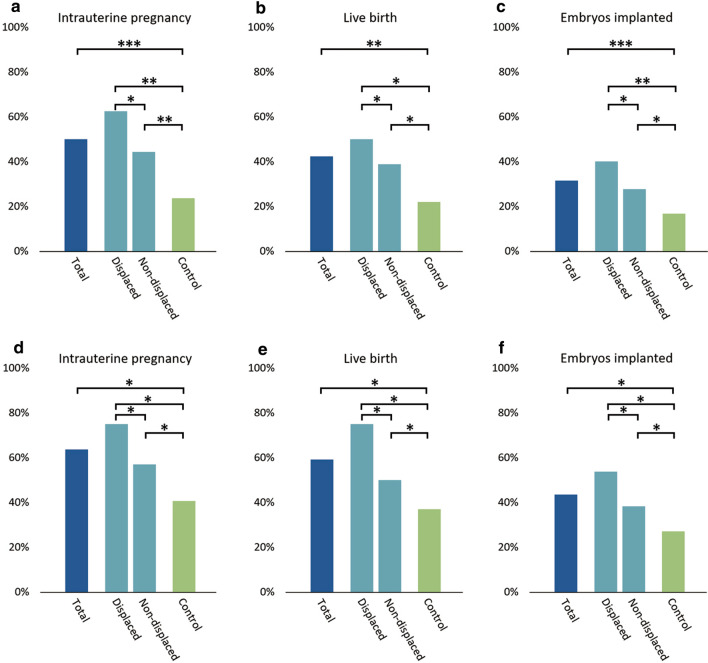
Results: The rsERT, comprising 175 biomarker genes, showed an average accuracy of 98.4% by using tenfold cross-validation. The intrauterine pregnancy rate (IPR) of the experimental group (50.0%) was significantly improved compared to that (23.7%) of the control group (RR, 2.107; 95% CI 1.159 to 3.830; P = 0.017) when transferring day-3 embryos. Although not significantly different, the IPR of the experimental group (63.6%) was still 20 percentage points higher than that (40.7%) of the control group (RR, 1.562; 95% CI 0.898 to 2.718; P = 0.111) when transferring blastocysts.
Conclusions: The rsERT was developed to accurately predict the WOI period and significantly improve the pregnancy outcomes of patients with RIF, indicating the clinical potential of rsERT-guided pET. Trial registration Chinese Clinical Trial Registry: ChiCTR-DDD-17013375. Registered 14 November 2017, http://www.chictr.org.cn/index.aspx.
Keywords: Biomarkers; Endometrial receptivity; Personalized embryo transfer; RNA-Seq; Repeated implantation failure; Window of implantation.
Conflict of interest statement
The authors declare that they have no competing interests.
Figures
References
Publication types
MeSH terms
Substances
Associated data
LinkOut - more resources
Full Text Sources
Other Literature Sources
Research Materials
