. 2021 May;16(5):2450-2470.
doi: 10.1038/s41596-021-00504-6. Epub 2021 Apr 28.

Peat-based gnotobiotic plant growth systems for Arabidopsis microbiome research

Affiliations

Peat-based gnotobiotic plant growth systems for Arabidopsis microbiome research

James M Kremer et al. Nat Protoc. 2021 May.

Abstract

The complex structure and function of a plant microbiome are driven by many variables, including the environment, microbe-microbe interactions and host factors. Likewise, resident microbiota can influence many host phenotypes. Gnotobiotic growth systems and controlled environments empower researchers to isolate these variables, and standardized methods equip a global research community to harmonize protocols, replicate experiments and collaborate broadly. We developed two easily constructed peat-based gnotobiotic growth platforms: the FlowPot system and the GnotoPot system. Sterile peat is amenable to colonization by microbiota and supports growth of the model plant Arabidopsis thaliana in the presence or absence of microorganisms. The FlowPot system uniquely allows one to flush the substrate with water, nutrients and/or suspensions of microbiota via an irrigation port, and a mesh retainer allows for the inversion of plants for dip or vacuum infiltration protocols. The irrigation port also facilitates passive drainage, preventing root anoxia. In contrast, the GnotoPot system utilizes a compressed peat pellet, widely used in the horticultural industry. GnotoPot construction has fewer steps and requires less user handling, thereby reducing the risk of contamination. Both protocols take up to 4 d to complete with 4-5 h of hands-on time, including substrate and seed sterilization. In this protocol, we provide detailed assembly and inoculation procedures for the two systems. Both systems are modular, do not require a sterile growth chamber, and cost less than US$2 per vessel.


Figures
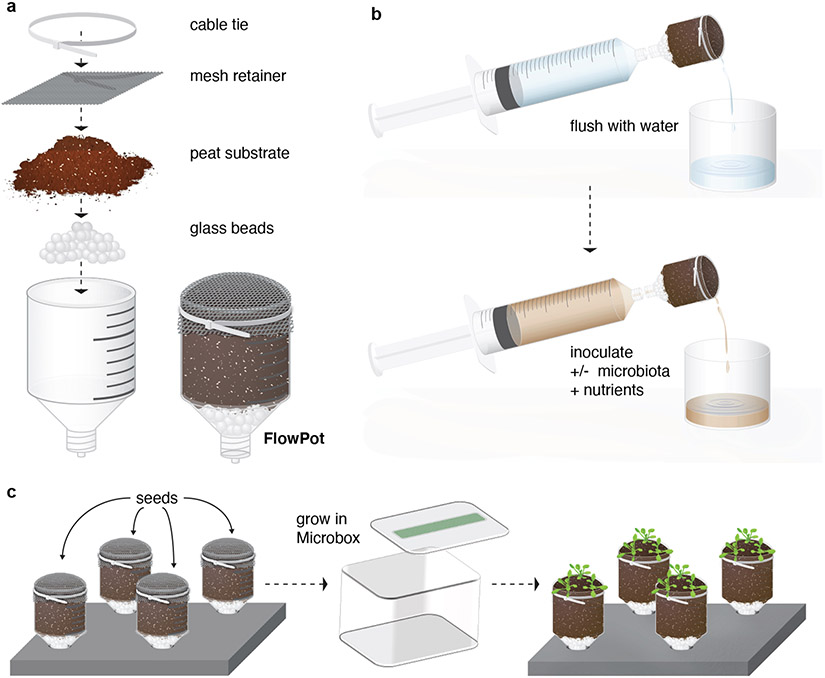
Fig. 1 ∣
Fig. 1 ∣. Schematic illustration of the FlowPot system.
Each FlowPot is prepared by (a) adding glass beads to the Luer end of a truncated syringe, followed by the addition of twice-autoclaved peat, covered with a mesh retainer, and then secured with a cable tie. Assembled FlowPots are then autoclaved, (b) aseptically irrigated with sterile Milli-Q water, and inoculated with nutrients and any desired input microbiota. (c) FlowPots are then aseptically placed into Microboxes on stands and microbe-free Arabidopsis seeds are sown onto each FlowPot. The Microboxes containing FlowPots are placed in a growth chamber with desired lighting and temperature conditions for plant growth.
Fig. 2 ∣
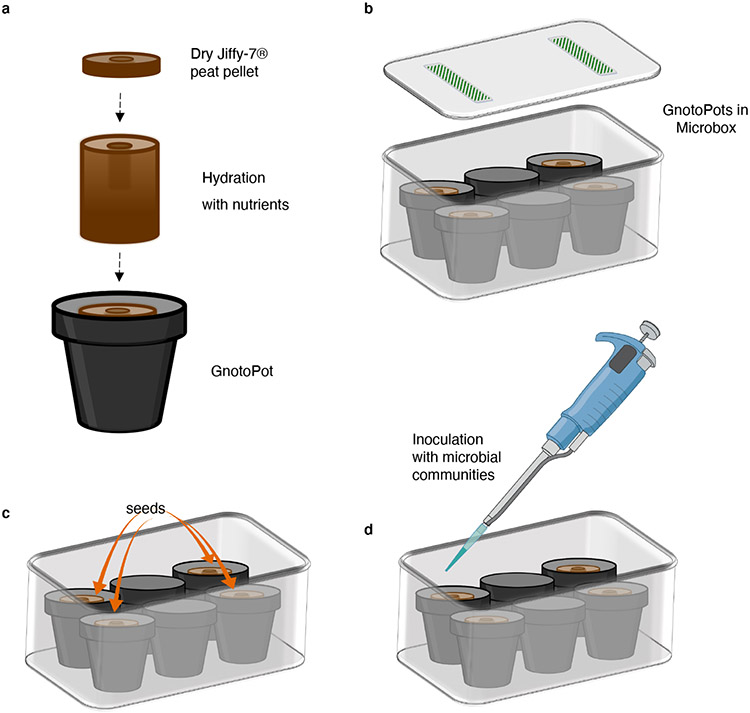
Fig. 2 ∣. Schematic illustration of the GnotoPot system.
Soaking the Jiffy-7® peat pellet with nutrient solution results in expansion of the dry discs and formation of the GnotoPot (a). GnotoPots are placed inside the Microboxes flanking two empty pots (b). After the autoclaving cycles the GnotoPots are rehydrated with nutrient solution and seeds are sown aseptically (c). Lastly, desired input microbiota is inoculated using a 1 mL pipette (d), the lids are snapped closed and Microboxes are transferred to growth chambers.
Fig. 3 ∣
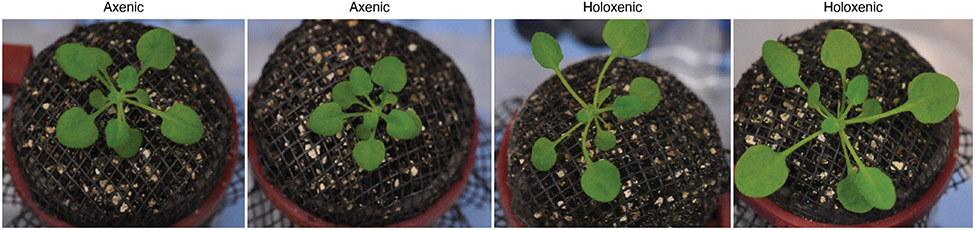
Fig. 3 ∣. Arabidopsis thaliana grown in FlowPots with axenic or holoxenic substrate.
Growth phenotype of Arabidopsis plants grown in FlowPots, 4 weeks post germination. Holoxenic substrate was inoculated with a soil slurry, and axenic substrate was inoculated with a heat-killed version of the same soil slurry. Rosette images are representative of at least three replicated experiments.
Fig. 4 ∣
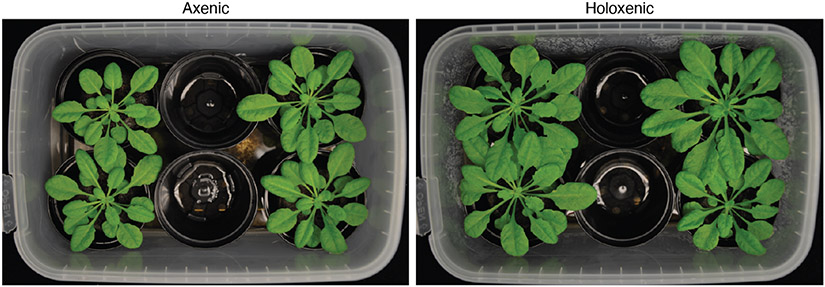
Fig. 4 ∣. Arabidopsis thaliana grown in GnotoPots with axenic or holoxenic substrate.
Growth phenotype of Arabidopsis plants grown in GnotoPots at 6.5 weeks post germination. Holoxenic substrate was inoculated with a soil slurry, axenic substrate was inoculated with a heat-killed version of the same soil slurry. Rosette images are representative of at least three replicated experiments.
Fig. 5 ∣
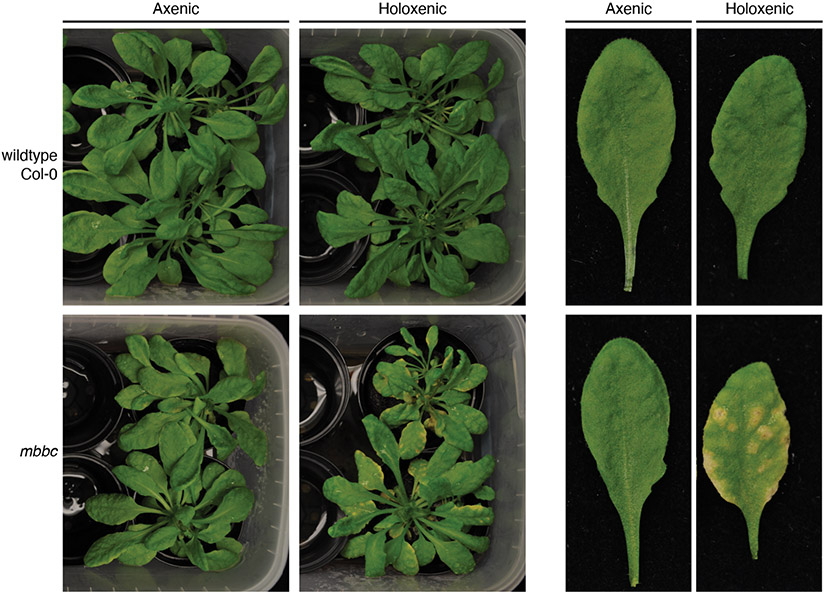
Fig. 5 ∣. Application for microbiota function studies in planta.
Six-week old wildtype (Col-0) and mbbc plants were subjected to high humidity (95% relative humidity) for 11 days. A chlorosis phenotype is observed in holoxenic mbbc plants but not axenic mbbc plants, indicating that chlorosis is dependent on exposure to a microbial community. Holoxenic substrate was inoculated with a soil slurry, axenic substrate was inoculated with a heat-killed version of the same soil slurry.
Fig. 6 ∣
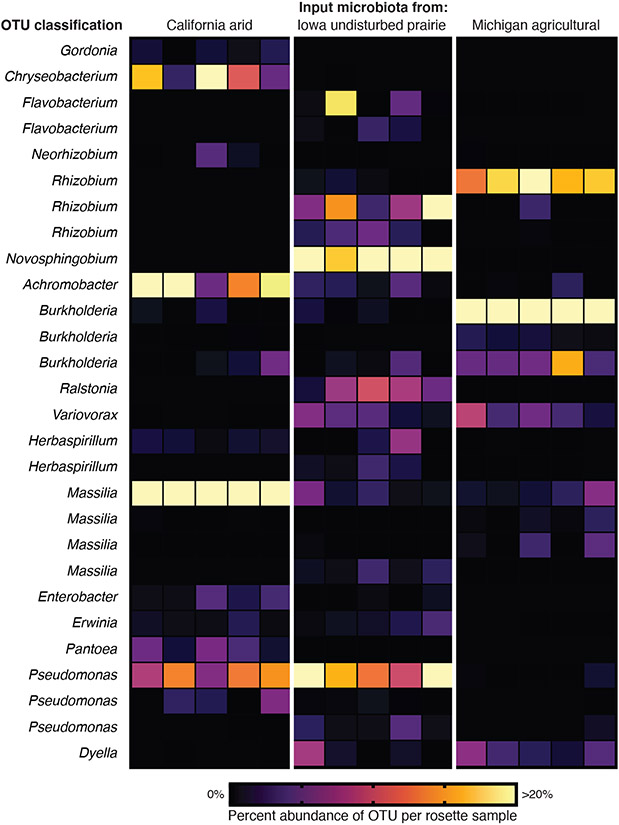
Fig. 6 ∣. Application for microbial community studies.
FlowPots were inoculated with soil slurries from three distinct environments (arid, undisturbed prairie, agricultural) (Supplementary Table 1) with 20 replicate FlowPots per treatment contained in 5 Microboxes (4 per box). Arabidopsis seeds (wildtype Col-0) were sowed, and total rosettes were collected at 4 weeks. Each sample consists of bulk DNA extracted from 4 pooled rosettes from the same Microbox. The heatmap represents the relative abundance of Operational Taxonomic Units (OTUs) for all OTUs that accounted for >2% of total reads in any given sample. Genus-level classifications are given for each OTU (Supplementary Table 2). See Supplementary Methods for DNA extraction and microbial community profiling.

References

    1. Durán P. et al. Cell 175, 973–983 (2018). 10.1016/j.cell.2018.10.020 - DOI - PMC - PubMed
    1. Chen T. et al. Nature 580, 653–657 (2020). 10.1038/s41586-020-2185-0 - DOI - PMC - PubMed
    1. Round JL & Mazmanian SK The gut microbiota shapes intestinal immune responses during health and disease. Nat. Rev. Immunol 9, 313–323 (2009). - PMC - PubMed
    1. Chen T. et al. A plant genetic network for preventing dysbiosis in the phyllosphere. Nature 580, 653–657 (2020). - PMC - PubMed
    1. Durán P. et al. Microbial Interkingdom Interactions in Roots Promote Arabidopsis Survival. Cell 175, 973–983.e14 (2018). - PMC - PubMed

Publication types