


The antibacterial activities of honey
- PMID: 33911935
- PMCID: PMC8071826
- DOI: 10.1016/j.sjbs.2020.10.017
The antibacterial activities of honey
Abstract
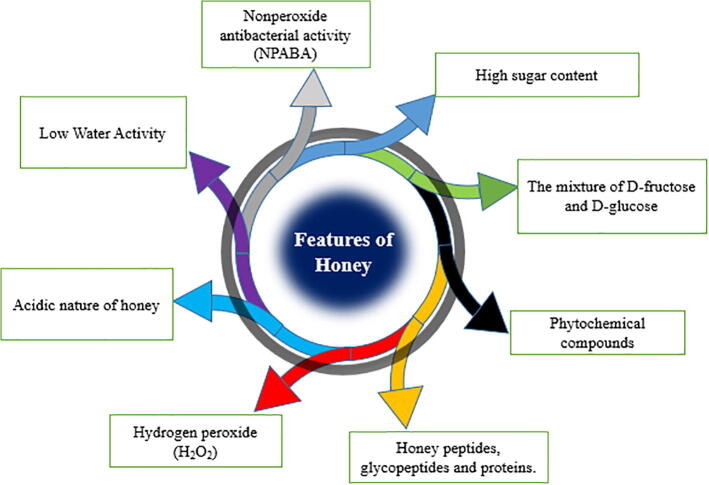
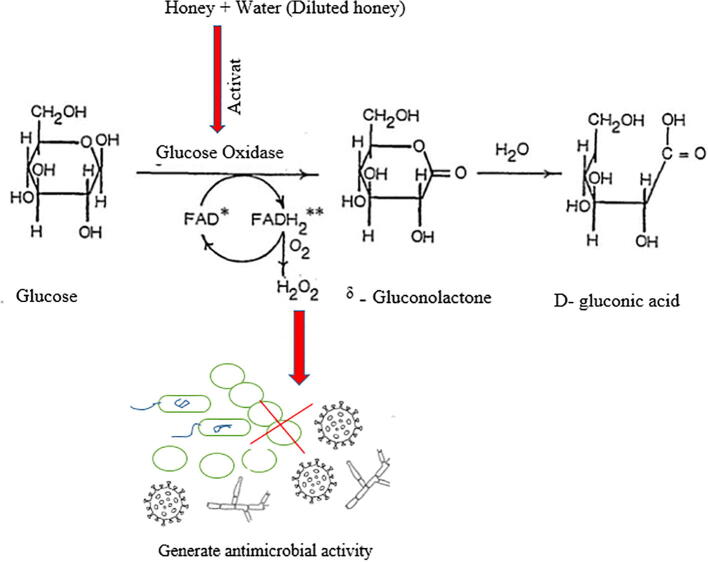
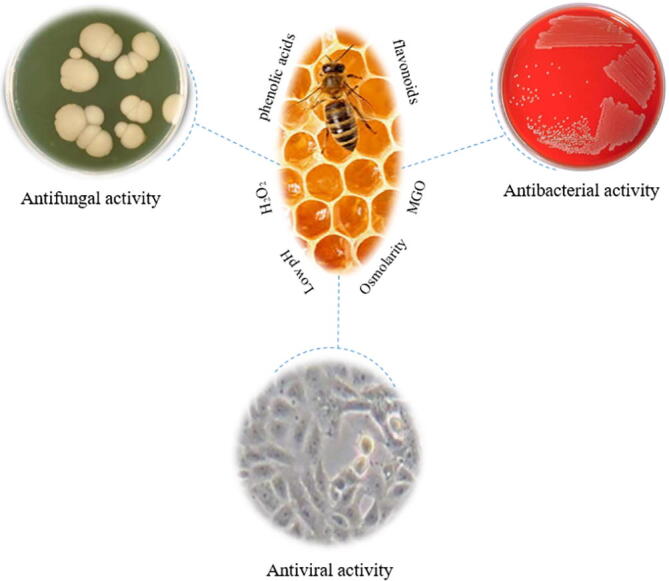
Honey is a powerful antimicrobial agent with a wide range of effects. Various components contribute to the antibacterial efficacy of honey: the sugar content; polyphenol compounds; hydrogen peroxide; 1,2-dicarbonyl compounds; and bee defensin-1. All of these elements are present at different concentrations depending on the source of nectar, bee type, and storage. These components work synergistically, allowing honey to be potent against a variety of microorganisms including multidrug resistant bacteria and modulate their resistance to antimicrobial agents. The effectiveness and potency of honey against microorganisms depends on the type of honey produced, which is contingent on its botanical origin, the health of the bee, its origin, and processing method. The application of antibiotics with honey yielded better antimicrobial potential and synergistic effects were noted against biofilms. In medicine, honey has been used in the treatment of surface wounds, burns, and inflammation, and has a synergistic effect when applied with antibiotics. Tissue repair is enhanced by the low pH of honey (3.5-4): causing a reduction in protease activity on the wound site, elevating oxygen release from hemoglobin and stimulating fibroblast and macrophage activity. Furthermore, H2O2 has antiseptic effects, and it disinfects the wound site and stimulates production of vascular endothelial growth factor. The use of honey will clean wounds or burn areas from free radicals and reduces scarring and contractures. The anti-inflammatory and antibacterial potential of honey will keep the injured area moist and as such prevents it from deterioration and fibrosis. Honey can promote fast healing and reduce scarring and is very convenient for plastic surgery. Skin maceration is protected by honey due to its high osmolarity and because it keeps the injury moist. In non-infected areas, honey still reduced pain and inflammation. In general, the use of honey in medical settings has reduced economic loss and provided proven economic benefits by lowering direct costs in comparison to conventional treatments and by using less antibiotics, faster healing and less hospitalization stay. This review is intended to provide an overview of the antibacterial activities of honey and its applications.
Keywords: Antibacterial; Antibiotics; Def-1, defensin-1; H2O2, hydrogen peroxide; Honey; MDR, multidrug resistant/resistance; MRSA, methicillin-resistant Staphylococcus aureus; Synergy; TP, total phenolic; Wounds and burns.
© 2020 The Author.
Figures
References
-
- Ahmed A.K., Hoekstra M.J., Hage J.J., Karim R.B. Honey-medicated dressing: transformation of an ancient remedy into modern therapy. Ann Plast Surg. 2003;50(2) 143-147; discussion 147-148. - PubMed
-
- Al-Waili N.S. Investigating the Antimicrobial Activity of Natural Honey and Its Effects on the Pathogenic Bacterial Infections of Surgical Wounds and Conjunctiva. Journal of Medicinal Food. 2004;7(2):210–222. - PubMed
-
- Al-Waili N.S., Boni N.S. Natural Honey Lowers Plasma Prostaglandin Concentrations in Normal Individuals. Journal of Medicinal Food. 2003;6(2):129–133. - PubMed
Publication types
LinkOut - more resources
Full Text Sources
Other Literature Sources
Research Materials
