


Association of Maternal SARS-CoV-2 Infection in Pregnancy With Neonatal Outcomes
- PMID: 33914014
- PMCID: PMC8085767
- DOI: 10.1001/jama.2021.5775
Association of Maternal SARS-CoV-2 Infection in Pregnancy With Neonatal Outcomes
Erratum in
-
Percentage Incorrect in 2 Places.JAMA. 2021 Sep 14;326(10):978. doi: 10.1001/jama.2021.13853. JAMA. 2021. PMID: 34519814 Free PMC article. No abstract available.
Abstract
Importance: The outcomes of newborn infants of women testing positive for SARS-CoV-2 in pregnancy is unclear.
Objective: To evaluate neonatal outcomes in relation to maternal SARS-CoV-2 test positivity in pregnancy.
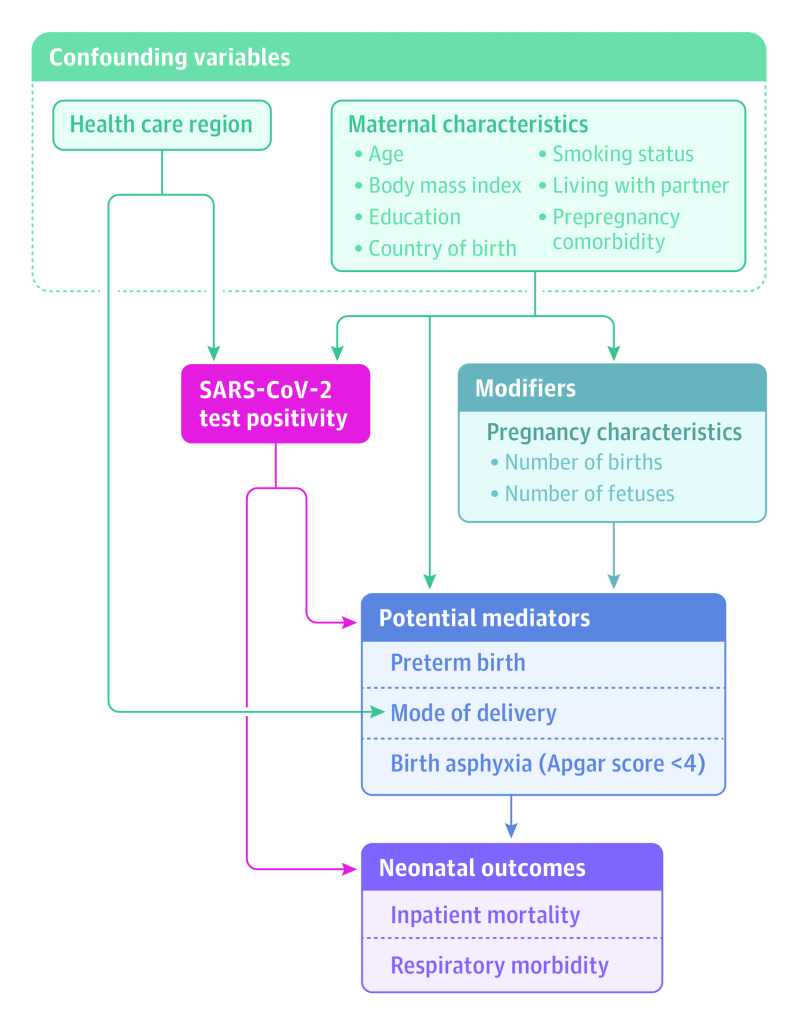
Design, setting, and participants: Nationwide, prospective cohort study based on linkage of the Swedish Pregnancy Register, the Neonatal Quality Register, and the Register for Communicable Diseases. Ninety-two percent of all live births in Sweden between March 11, 2020, and January 31, 2021, were investigated for neonatal outcomes by March 8, 2021. Infants with malformations were excluded. Infants of women who tested positive for SARS-CoV-2 were matched, directly and using propensity scores, on maternal characteristics with up to 4 comparator infants.
Exposures: Maternal test positivity for SARS-CoV-2 in pregnancy.
Main outcomes and measures: In-hospital mortality; neonatal resuscitation; admission for neonatal care; respiratory, circulatory, neurologic, infectious, gastrointestinal, metabolic, and hematologic disorders and their treatments; length of hospital stay; breastfeeding; and infant test positivity for SARS-CoV-2.
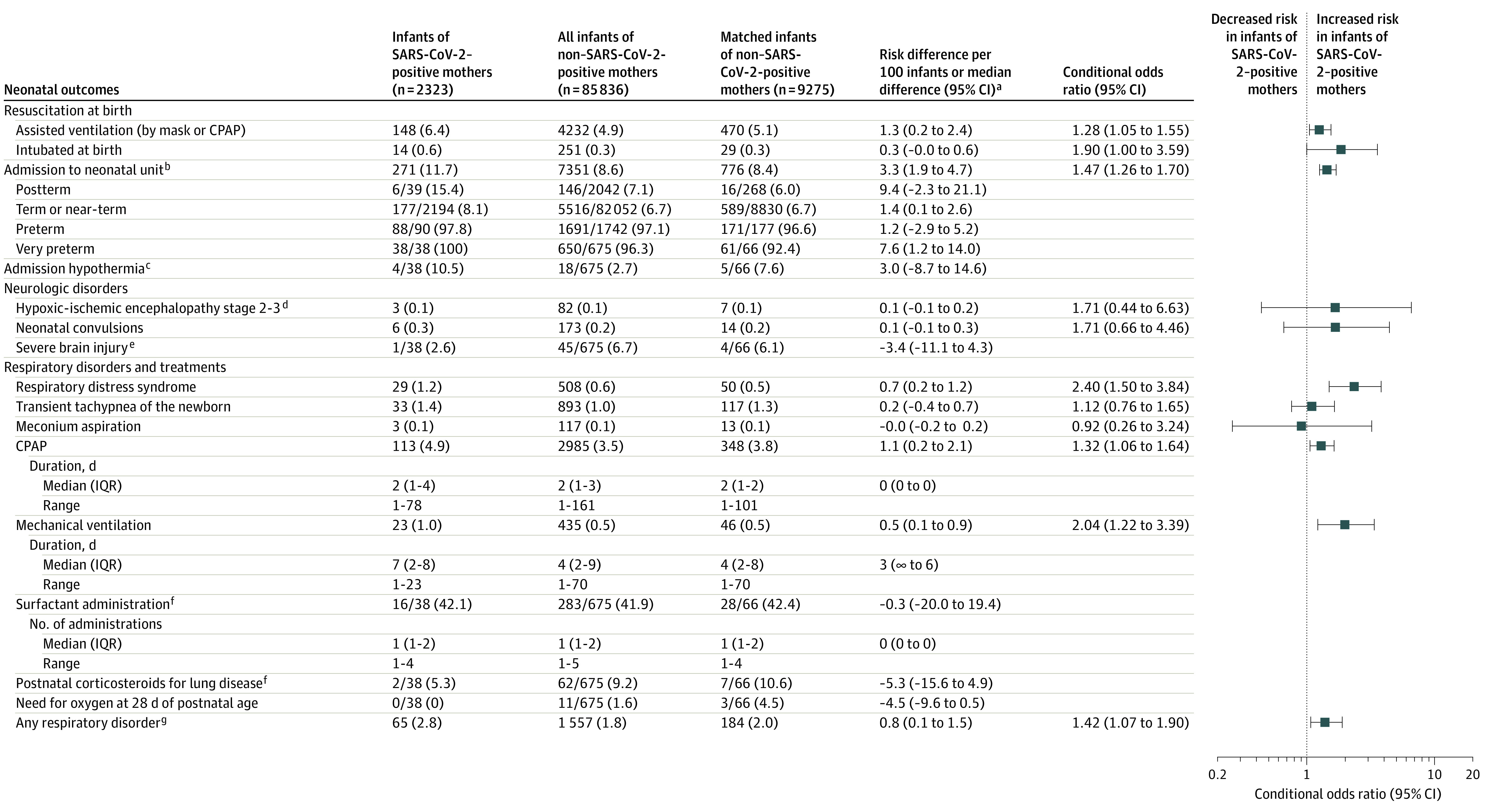
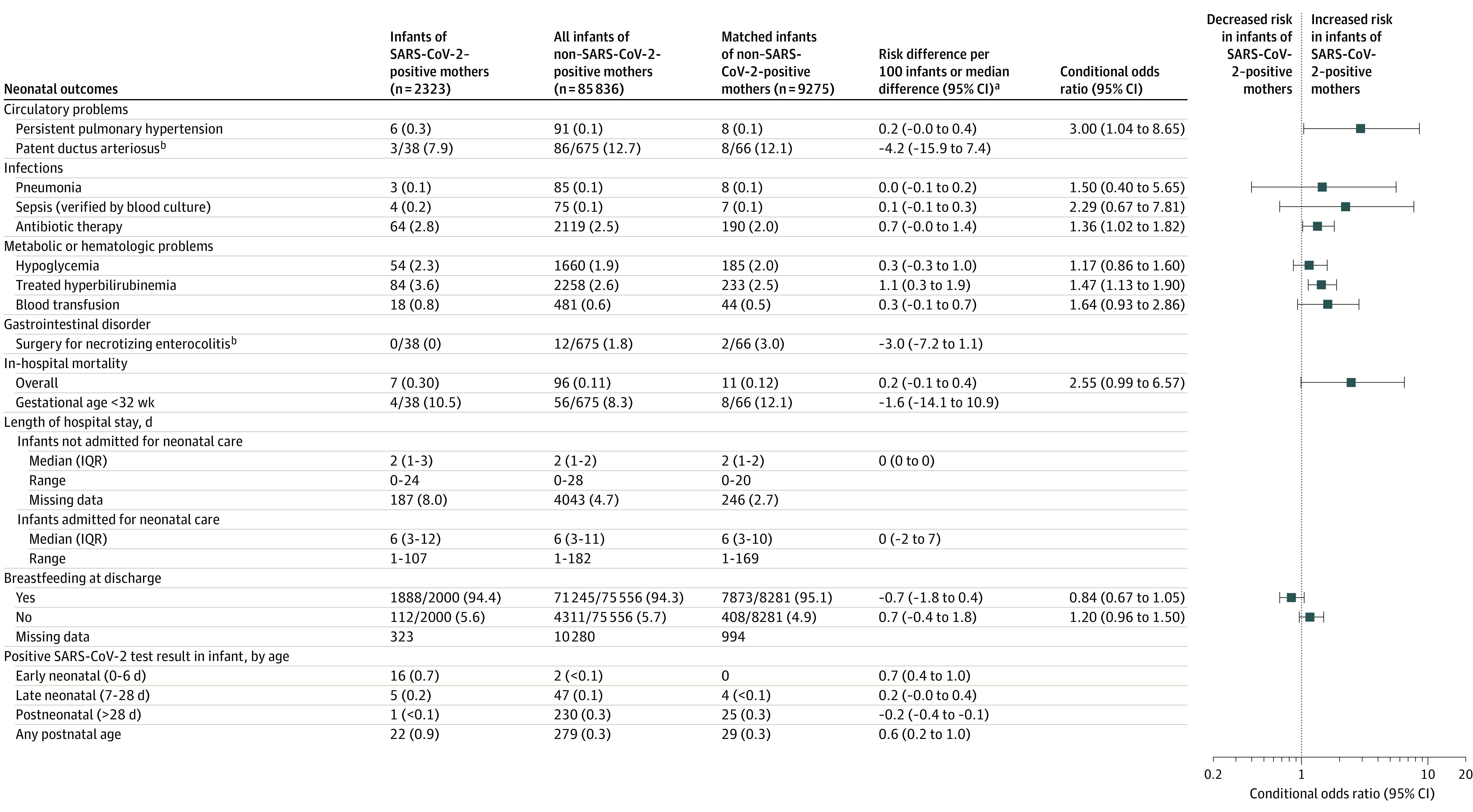
Results: Of 88 159 infants (49.0% girls), 2323 (1.6%) were delivered by mothers who tested positive for SARS-CoV-2. The mean gestational age of infants of SARS-CoV-2-positive mothers was 39.2 (SD, 2.2) weeks vs 39.6 (SD, 1.8) weeks for comparator infants, and the proportions of preterm infants (gestational age <37 weeks) were 205/2323 (8.8%) among infants of SARS-CoV-2-positive mothers and 4719/85 836 (5.5%) among comparator infants. After matching on maternal characteristics, maternal SARS-CoV-2 test positivity was significantly associated with admission for neonatal care (11.7% vs 8.4%; odds ratio [OR], 1.47; 95% CI, 1.26-1.70) and with neonatal morbidities such as respiratory distress syndrome (1.2% vs 0.5%; OR, 2.40; 95% CI, 1.50-3.84), any neonatal respiratory disorder (2.8% vs 2.0%; OR, 1.42; 95% CI, 1.07-1.90), and hyperbilirubinemia (3.6% vs 2.5%; OR, 1.47; 95% CI, 1.13-1.90). Mortality (0.30% vs 0.12%; OR, 2.55; 95% CI, 0.99-6.57), breastfeeding rates at discharge (94.4% vs 95.1%; OR, 0.84; 95% CI, 0.67-1.05), and length of stay in neonatal care (median, 6 days in both groups; difference, 0 days; 95% CI, -2 to 7 days) did not differ significantly between the groups. Twenty-one infants (0.90%) of SARS-CoV-2-positive mothers tested positive for SARS-CoV-2 in the neonatal period; 12 did not have neonatal morbidity, 9 had diagnoses with unclear relation to SARS-CoV-2, and none had congenital pneumonia.
Conclusions and relevance: In a nationwide cohort of infants in Sweden, maternal SARS-CoV-2 infection in pregnancy was significantly associated with small increases in some neonatal morbidities. Given the small numbers of events for many of the outcomes and the large number of statistical comparisons, the findings should be interpreted as exploratory.
Conflict of interest statement
Figures
Comment in
-
Understanding Risk for Newborns Born to SARS-CoV-2-Positive Mothers.JAMA. 2021 May 25;325(20):2051-2052. doi: 10.1001/jama.2021.6210. JAMA. 2021. PMID: 33914045 No abstract available.
References
Publication types
MeSH terms
LinkOut - more resources
Full Text Sources
Other Literature Sources
Medical
Miscellaneous
