


Effects of exogenous ascorbic acid on seed germination and seedling salt-tolerance of alfalfa
- PMID: 33914821
- PMCID: PMC8084155
- DOI: 10.1371/journal.pone.0250926
Effects of exogenous ascorbic acid on seed germination and seedling salt-tolerance of alfalfa
Abstract
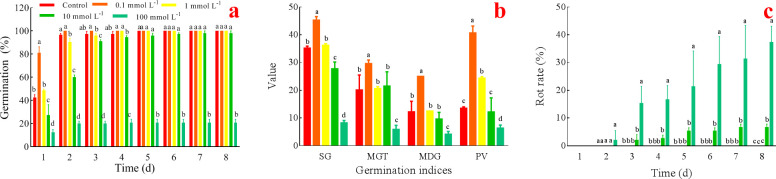
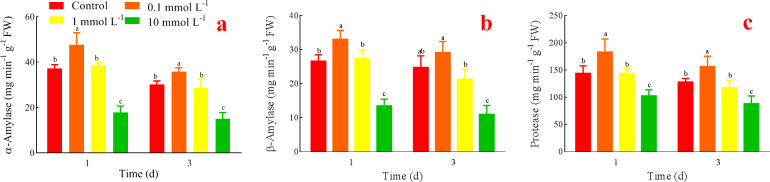
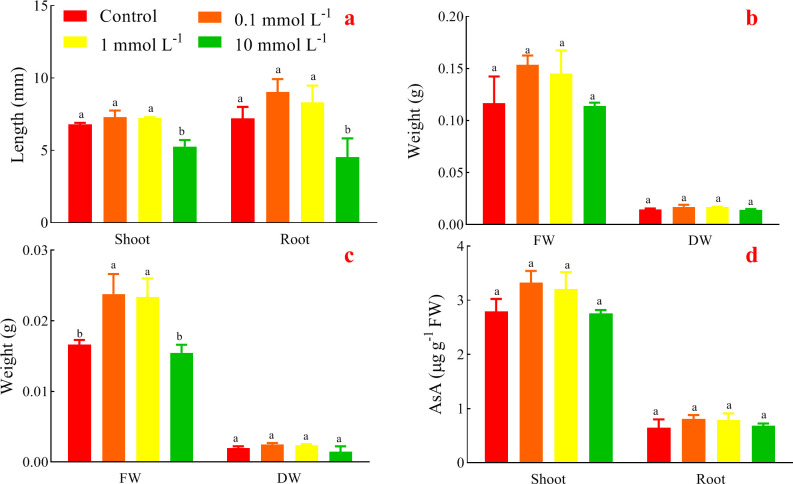
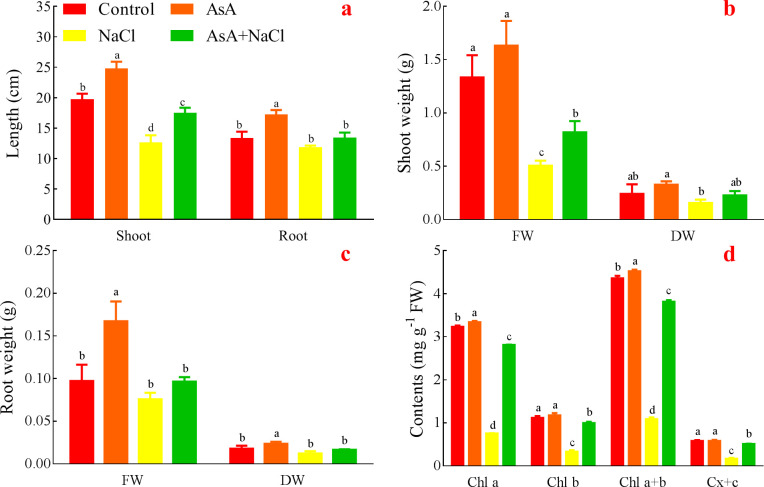
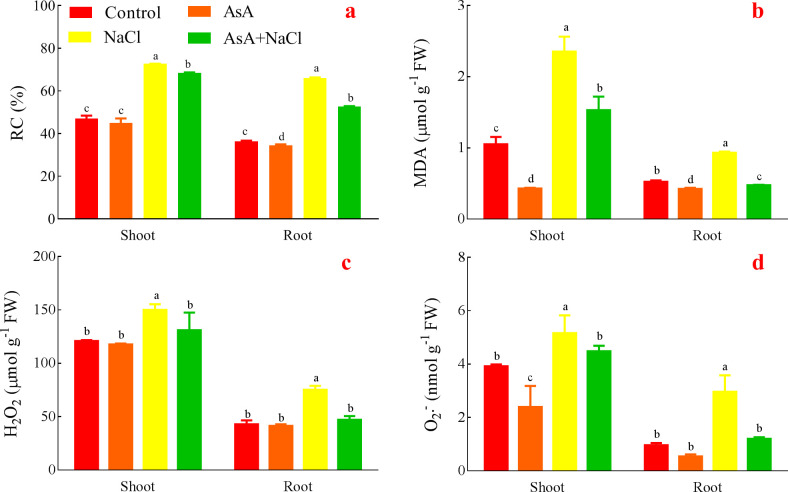
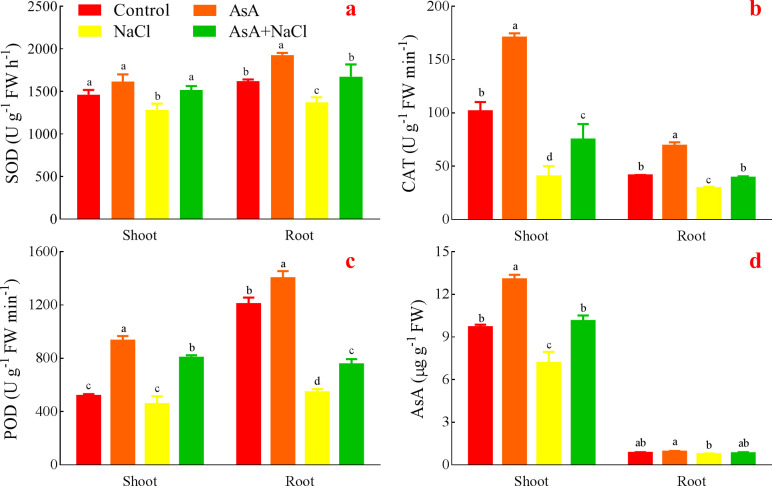
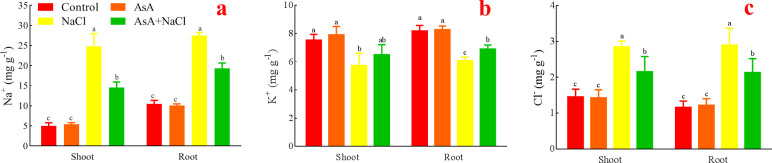
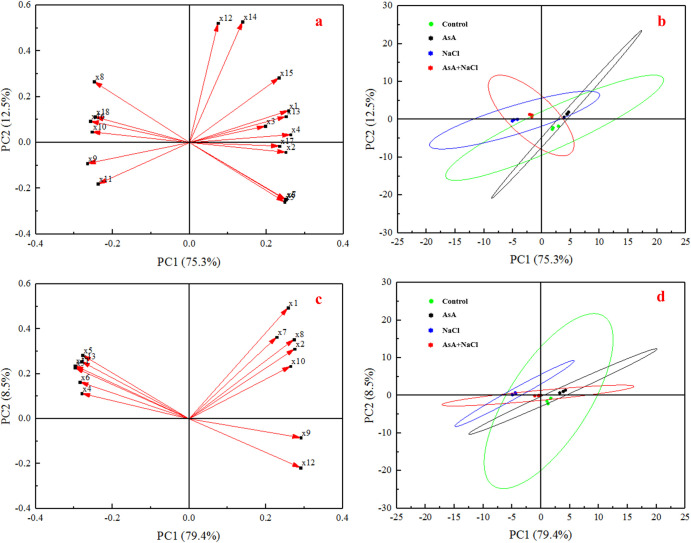
Alfalfa (Medicago sativa L.) is an important legume crop for forage, agriculture, and environment in the world. Ascorbic acid (AsA) plays positive roles in plants. However, its effects on germination and salt-tolerance of alfalfa are unknown. The effects of AsA applications on seed germination and seedling salt-tolerance of alfalfa were investigated. The results revealed that 0.1 and 1 mmol L-1 of exogenous AsA increased germination, amylase, and protease, as well as seedling length, fresh weight (FW), dry weight (DW), and endogenous AsA both in the shoots and roots, except that 1 mmol L-1 AsA reduced the activities of α-amylase, β-amylase and protease on day 3. However, 10 and 100 mmol L-1 AsA inhibited these parameters and even caused serious rot. It indicates that 0.1 mmol L-1 AsA has the optimal effects, whereas 100 mmol L-1 AsA has the worst impacts. Another part of the results showed that 0.1 mmol L-1 AsA not only enhanced stem elongation, FW and DW, but also increased chlorophyll and carotenoids both under non-stress and 150 mmol L-1 NaCl stress. Furthermore, 0.1 mmol L-1 AsA mitigated the damages of membrane permeability, malondialdehyde, and excessive reactive oxygen species (ROS) and ions both in the shoots and roots under 150 mmol L-1 NaCl stress. Hence, 0.1 mmol L-1 AsA improves growth and induces salt-tolerance by inhibiting excessive ROS, down-regulating the ion toxicity and up-regulating the antioxidant system. The principal component analysis included two main components both in the shoots and roots, and it explained the results well. In summary, the optimum concentration of 0.1 mmol L-1 AsA can be implemented to improve the seed germination and seedling growth of alfalfa under salt stress.
Conflict of interest statement
The authors have declared that no competing interests exist.
Figures
References
-
- Wang XS, Han JG. 2007. Effects of NaCl and silicon on ion distribution in the roots, shoots and leaves of two alfalfa cultivars with different salt tolerance. Soil Sci Plant Nutr 53: 278–285. 10.1111/j.1747-0765.2007.00135.x. - DOI
-
- Jin JJ, Niu JP, Guo TT, Zhou RL, Sun LZ. 2020. The effect of drought on physiological responses of forage plants to salt stresses depends on occurring time. Acta Physiol Plant 42: 91. 10.1007/s11738-020-03083-3. - DOI
MeSH terms
Substances
LinkOut - more resources
Full Text Sources
Other Literature Sources
Medical
