


Mental Health during the COVID-19 Lockdown over the Christmas Period in Austria and the Effects of Sociodemographic and Lifestyle Factors
- PMID: 33916019
- PMCID: PMC8036255
- DOI: 10.3390/ijerph18073679
Mental Health during the COVID-19 Lockdown over the Christmas Period in Austria and the Effects of Sociodemographic and Lifestyle Factors
Abstract
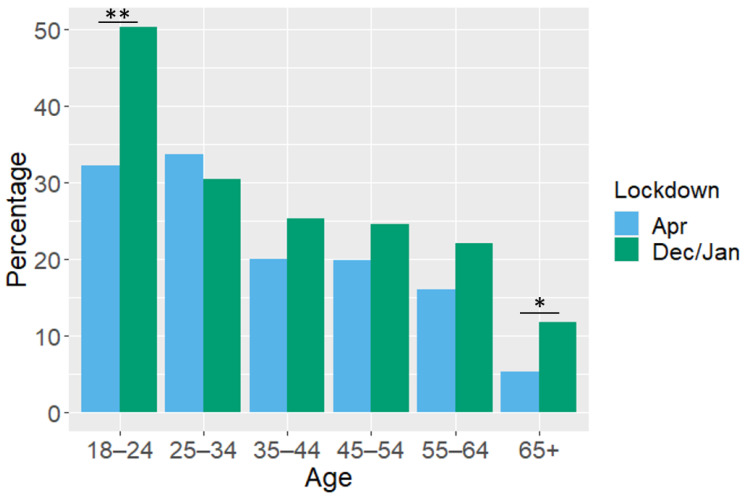
Since the beginning of the COVID-19 pandemic a decline in mental health has been reported. This online study investigated mental health and well-being in Austria during a strict lockdown. In total, N = 1505 participants were recruited between 23 December 2020 and 4 January 2021 and levels of depression (PHQ-9), anxiety (GAD-7), sleep quality (ISI), well-being (WHO-5), quality of life (WHO-QOL) and stress (PSS-10) were measured. 26% scored above the cut-off for moderate depressive symptoms (PHQ-9 ≥ 10; ♀ = 32%; ♂ = 21%), 23% above the cut-off for moderate anxiety (GAF-7 ≥ 10; ♀ = 29%; ♂ = 17%) and 18% above the cut-off for moderate insomnia (ISI ≥ 15; ♀ = 21%; ♂ = 16%). Mean-scores for quality of life (psychological WHO-QOL) were 68.89, for well-being (WHO-5) 14.34, and for stress (PSS-10) 16.42. The youngest age group (18-24) was most burdened and showed significantly more mental health symptoms compared with the oldest age group (65+) in depressive symptoms (50% vs. 12%), anxiety symptoms (35% vs. 10%), and insomnia (25% vs. 11%, all p-values < 0.05). Mental health decreased compared to both the first lockdown earlier in 2020 and pre-pandemic data. Further analyses indicate these findings were especially apparent for the under 24-year-olds, women, single/separated people, low incomes and those who do not partake in any physical activity (all p-values < 0.05). We highlight the need for ongoing mental health support, particularly to the most burdened groups.
Keywords: Austria; COVID-19; mental health.
Conflict of interest statement
The authors declare no conflict of interest.
Figures
References
-
- Nussbaumer-Streit B., Mayr V., Dobrescu A.I., Chapman A., Persad E., Klerings I., Wagner G., Siebert U., Christof C., Zachariah C., et al. Quarantine alone or in combination with other public health measures to control COVID-19: A rapid review. Cochrane Database Syst. Rev. 2020;4:CD013574. doi: 10.1002/14651858.cd013574. - DOI - PMC - PubMed
-
- WHO . WHO/Europe Coronavirus Disease (COVID-19) Outbreak. WHO; Geneva, Switzerland: 2020. WHO/Europe COVID-19.
Publication types
MeSH terms
LinkOut - more resources
Full Text Sources
Other Literature Sources
Medical
