


A Study of 3CLpros as Promising Targets against SARS-CoV and SARS-CoV-2
- PMID: 33916747
- PMCID: PMC8065850
- DOI: 10.3390/microorganisms9040756
A Study of 3CLpros as Promising Targets against SARS-CoV and SARS-CoV-2
Abstract
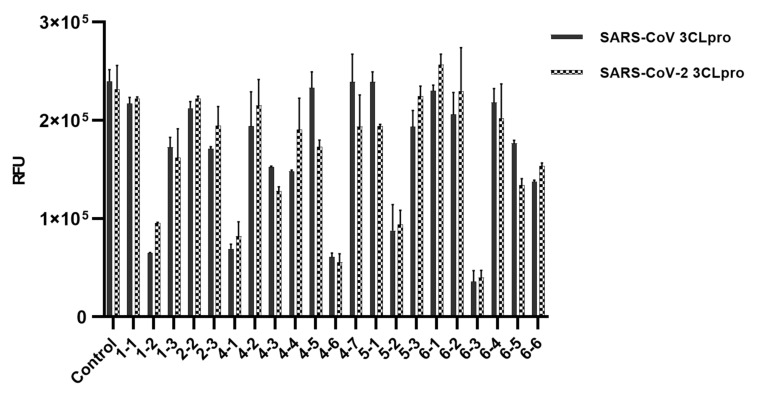
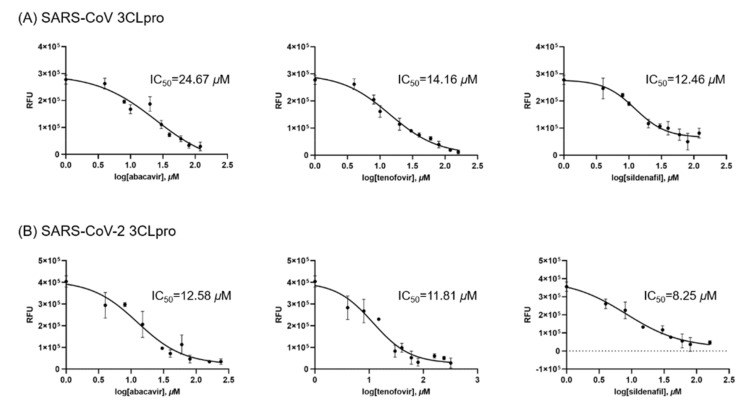
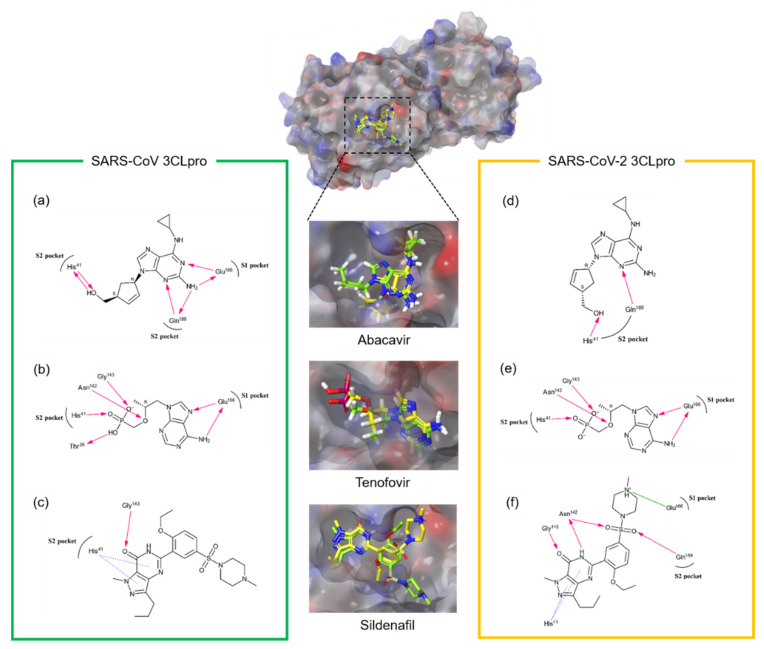
The outbreak of coronavirus disease 2019 (COVID-19), caused by severe acute respiratory syndrome coronavirus 2 (SARS-CoV-2), results in serious chaos all over the world. In addition to the available vaccines, the development of treatments to cure COVID-19 should be done quickly. One of the fastest strategies is to use a drug-repurposing approach. To provide COVID-19 patients with useful information about medicines currently being used in clinical trials, twenty-four compounds, including antiviral agents, were selected and assayed. These compounds were applied to verify the inhibitory activity for the protein function of 3CLpros (main proteases) of SARS-CoV and SARS-CoV-2. Among them, viral reverse-transcriptase inhibitors abacavir and tenofovir revealed a good inhibitory effect on both 3CLpros. Intriguingly, sildenafil, a cGMP-specific phosphodiesterase type 5 inhibitor also showed significant inhibitory function against them. The in silico docking study suggests that the active-site residues located in the S1 and S2 sites play key roles in the interactions with the inhibitors. The result indicates that 3CLpros are promising targets to cope with SAR-CoV-2 and its variants. The information can be helpful to design treatments to cure patients with COVID-19.
Keywords: FRET; SARS-CoV-2 3CL protease; antiviral; drug repurposing; inhibitory compounds.
Conflict of interest statement
The authors declare no conflict of interest. The funders had no role in the design of the study; in the collection, analyses or interpretation of data; in the writing of the manuscript; or in the decision to publish the results.
Figures
References
-
- Chen N., Zhou M., Dong X., Qu J., Gong F., Han Y., Qiu Y., Wang J., Liu Y., Wei Y., et al. Epidemiological and clinical characteristics of 99 cases of 2019 novel coronavirus pneumonia in Wuhan, China: A descriptive study. Lancet. 2020;395:507–513. doi: 10.1016/S0140-6736(20)30211-7. - DOI - PMC - PubMed
-
- Wu P., Hao X., Lau E.H., Wong J.Y., Leung K.S., Wu J.T., Cowling B.J., Leung G.M. Real-time tentative assessment of the epidemiological characteristics of novel coronavirus infections in Wuhan, China, as at 22 January 2020. Eurosurveillance. 2020;25:2000044. doi: 10.2807/1560-7917.ES.2020.25.3.2000044. - DOI - PMC - PubMed
Grants and funding
LinkOut - more resources
Full Text Sources
Other Literature Sources
Miscellaneous
