Review
. 2021 Apr 6;13(7):1725.
doi: 10.3390/cancers13071725.

The Yin and Yang of Discoidin Domain Receptors (DDRs): Implications in Tumor Growth and Metastasis Development

Affiliations
Review

The Yin and Yang of Discoidin Domain Receptors (DDRs): Implications in Tumor Growth and Metastasis Development

Sandra Majo et al. Cancers (Basel). .

Abstract

The tumor microenvironment is a complex structure composed of the extracellular matrix (ECM) and nontumoral cells (notably cancer-associated fibroblasts (CAFs) and immune cells). Collagens are the main components of the ECM and they are extensively remodeled during tumor progression. Some collagens are ligands for the discoidin domain receptor tyrosine kinases, DDR1 and DDR2. DDRs are involved in different stages of tumor development and metastasis formation. In this review, we present the different roles of DDRs in these processes and discuss controversial findings. We conclude by describing emerging DDR inhibitory strategies, which could be used as new alternatives for the treatment of patients.

Keywords: discoidin domain receptors; extracellular matrix; metastasis; tumor growth.


Conflict of interest statement

No conflicts of interest, financial or otherwise, are declared by the authors.

Figures
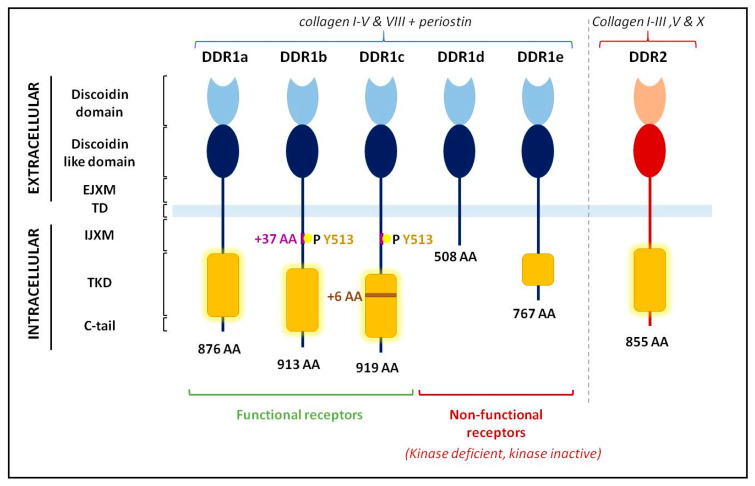
Figure 4
Figure 4
Schematic representation of the five discoidin domain receptor 1 (DDR1) isoforms and of the only DDR2 form. EJXM: extracellular juxta-membrane domain, TD: transmembrane domain, IJXM: intracellular juxta-membrane domain, TKD: tyrosine kinase domain, C-tail: C-terminal part of the receptors. Adapted from [12,17].
Figure 5
Figure 5
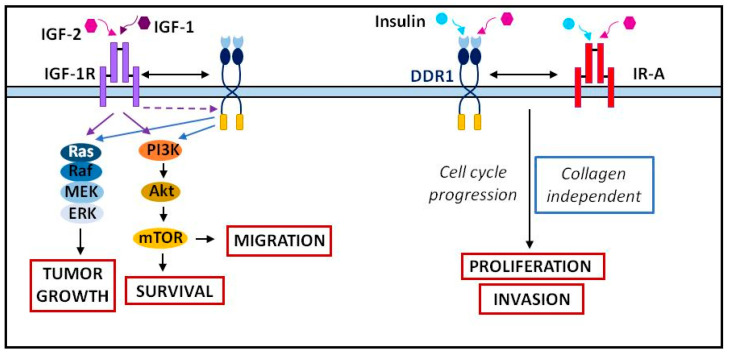
Crosstalk between DDR1 and the IGFs/insulin receptors. Adapted from [132,138].
Figure 1
Figure 1
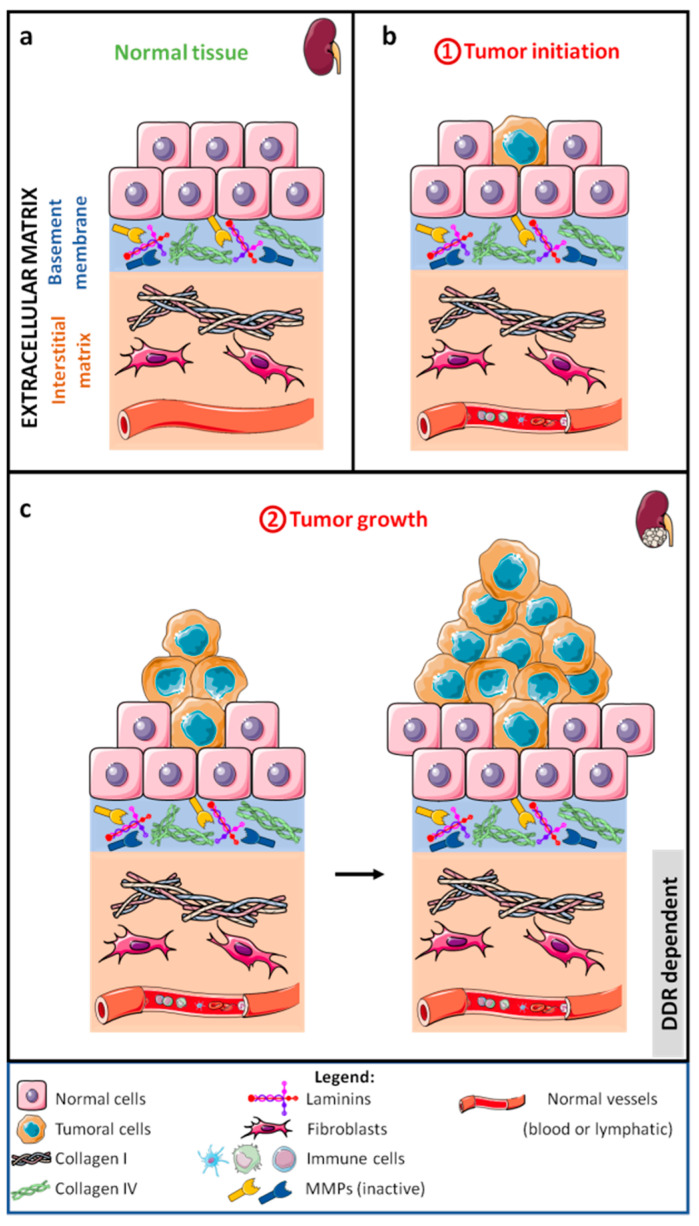
Schematic representation of normal tissue (a), carcinoma initiation (b), and initial stages of carcinoma development (c).
Figure 2
Figure 2
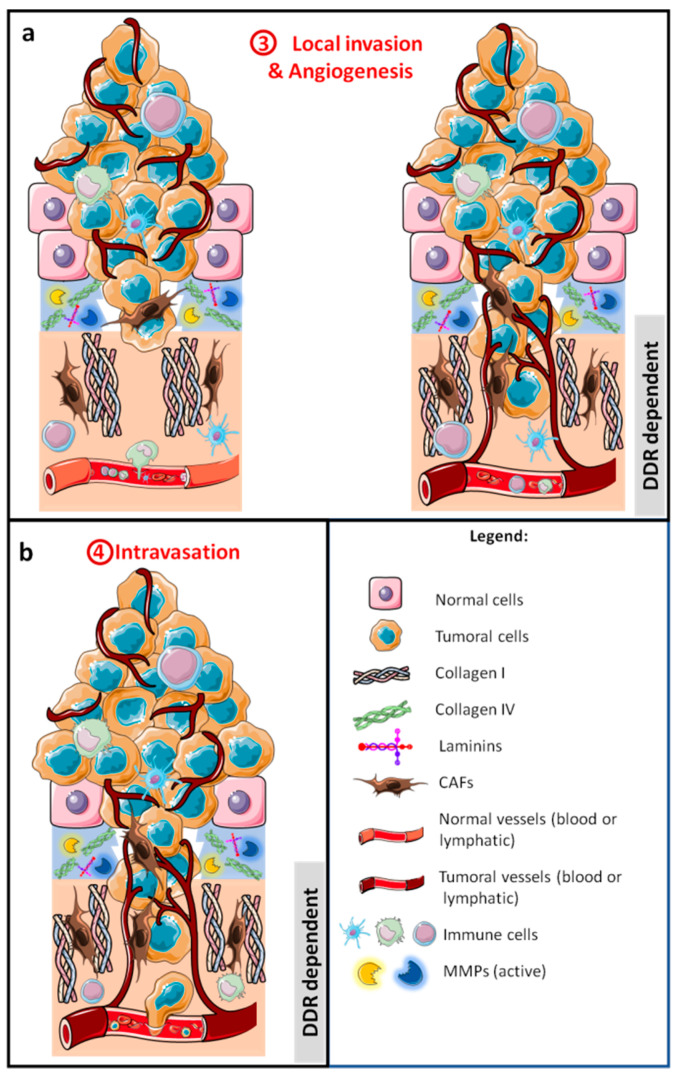
Schematic representation of the development of a carcinoma with the first metastatic stages, local invasion of tumor cells, and angiogenesis (a), allowing tumor cells to intravasate into lymphatic and/or blood vessels (b).
Figure 3
Figure 3
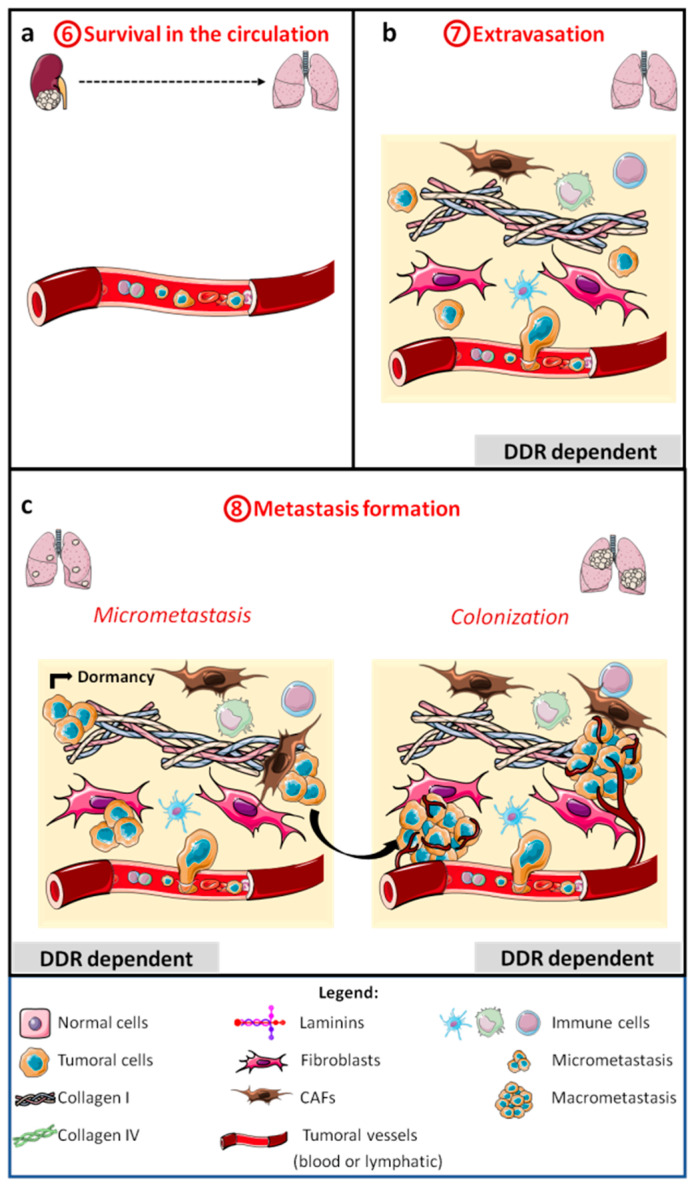
Schematic representation of the late metastatic stages: survival in the circulation (a), extravasation (b), micrometastasis, and colonization or macrometastasis formation (c).

References

    1. Auguste P., Lemiere S., Larrieu-Lahargue F., Bikfalvi A. Molecular Mechanisms of Tumor Vascularization. Crit. Rev. Oncol. Hematol. 2005;54:53–61. doi: 10.1016/j.critrevonc.2004.11.006. - DOI - PubMed
    1. Fidler I.J. Timeline—The Pathogenesis of Cancer Metastasis: The “seed and Soil” Hypothesis Revisited. Nat. Rev. Cancer. 2003;3:453–458. doi: 10.1038/nrc1098. - DOI - PubMed
    1. Valastyan S., Weinberg R.A. Tumor Metastasis: Molecular Insights and Evolving Paradigms. Cell. 2011;147:275–292. doi: 10.1016/j.cell.2011.09.024. - DOI - PMC - PubMed
    1. Steinbichler T.B., Savic D., Dudás J., Kvitsaridze I., Skvortsov S., Riechelmann H., Skvortsova I.-I. Cancer Stem Cells and Their Unique Role in Metastatic Spread. Semin. Cancer Biol. 2020;60:148–156. doi: 10.1016/j.semcancer.2019.09.007. - DOI - PubMed
    1. Niland S., Eble J.A. Hold on or Cut? Integrin- and MMP-Mediated Cell-Matrix Interactions in the Tumor Microenvironment. Int. J. Mol. Sci. 2021;22:238. doi: 10.3390/ijms22010238. - DOI - PMC - PubMed

LinkOut - more resources