


Roles of Inflammasomes in Epstein-Barr Virus-Associated Nasopharyngeal Cancer
- PMID: 33918087
- PMCID: PMC8069343
- DOI: 10.3390/cancers13081786
Roles of Inflammasomes in Epstein-Barr Virus-Associated Nasopharyngeal Cancer
Abstract
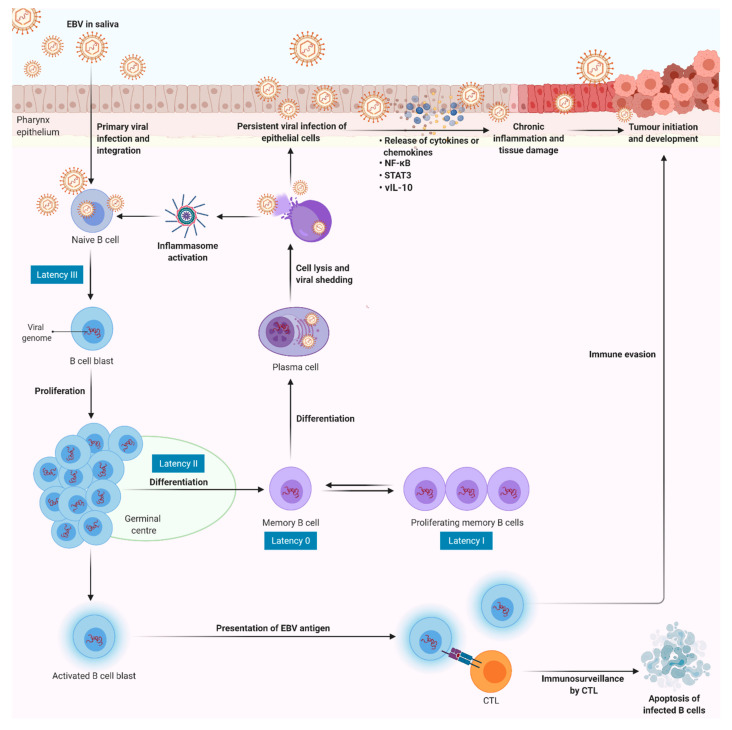
Epstein-Barr virus (EBV) infection is recognised as one of the causative agents in most nasopharyngeal carcinoma (NPC) cases. Expression of EBV viral antigens can induce host's antiviral immune response by activating the inflammasomes to produce pro-inflammatory cytokines, such as interleukin-1β (IL-1β) and IL-18. These cytokines are known to be detrimental to a wide range of virus-infected cells, in which they can activate an inflammatory cell death program, called pyroptosis. However, aberrant inflammasome activation and production of its downstream cytokines lead to chronic inflammation that may contribute to various diseases, including NPC. In this review, we summarise the roles of inflammasomes during viral infection, how EBV evades inflammasome-mediated immune response, and progress into tumourigenesis. The contrasting roles of inflammasomes in cancer, as well as the current therapeutic approaches used in targeting inflammasomes, are also discussed in this review. While the inflammasomes appear to have dual roles in carcinogenesis, there are still many questions that remain unanswered. In particular, the exact molecular mechanism responsible for the regulation of the inflammasomes during carcinogenesis of EBV-associated NPC has not been explored thoroughly. Furthermore, the current practical application of inflammasome inhibitors is limited to specific tumour types, hence, further studies are warranted to discover the potential of targeting the inflammasomes for the treatment of NPC.
Keywords: Epstein–Barr virus; cancer; immune response; inflammasome; inflammation; nasopharyngeal carcinoma; viral evasion.
Conflict of interest statement
The authors declare no conflict of interest. Where authors are identified as personnel of the International Agency for Research on Cancer/World Health Organisation, the authors alone are responsible for the views expressed in this article and they do not necessarily represent the decisions, policy, or views of the International Agency for Research on Cancer/World Health Organisation.
Figures
References
Publication types
Grants and funding
LinkOut - more resources
Full Text Sources
Other Literature Sources
Miscellaneous
