


Mitophagy in Human Diseases
- PMID: 33918863
- PMCID: PMC8069949
- DOI: 10.3390/ijms22083903
Mitophagy in Human Diseases
Abstract
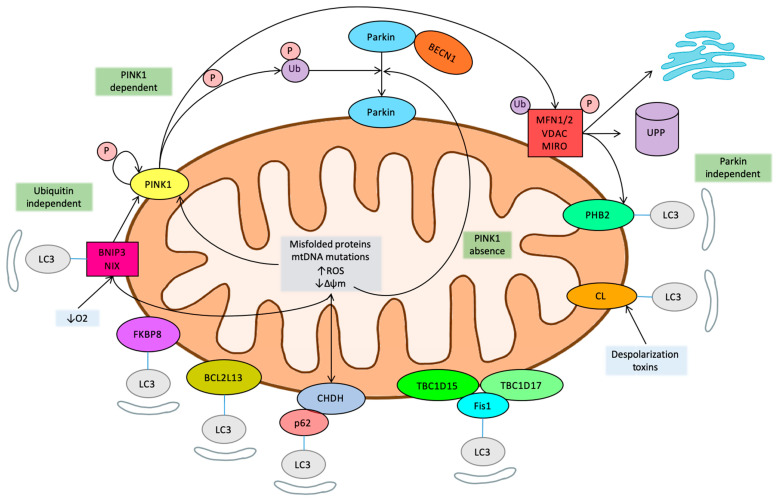
Mitophagy is a selective autophagic process, essential for cellular homeostasis, that eliminates dysfunctional mitochondria. Activated by inner membrane depolarization, it plays an important role during development and is fundamental in highly differentiated post-mitotic cells that are highly dependent on aerobic metabolism, such as neurons, muscle cells, and hepatocytes. Both defective and excessive mitophagy have been proposed to contribute to age-related neurodegenerative diseases, such as Parkinson's and Alzheimer's diseases, metabolic diseases, vascular complications of diabetes, myocardial injury, muscle dystrophy, and liver disease, among others. Pharmacological or dietary interventions that restore mitophagy homeostasis and facilitate the elimination of irreversibly damaged mitochondria, thus, could serve as potential therapies in several chronic diseases. However, despite extraordinary advances in this field, mainly derived from in vitro and preclinical animal models, human applications based on the regulation of mitochondrial quality in patients have not yet been approved. In this review, we summarize the key selective mitochondrial autophagy pathways and their role in prevalent chronic human diseases and highlight the potential use of specific interventions.
Keywords: Alzheimer’s; Huntington’s; PINK1; Parkin; Parkinson’s; aging; atherosclerosis; dementia; diabetes; exercise; heart failure; mice; mitophagy; muscle wasting; rats.
Conflict of interest statement
The authors declare no conflict of interest. The funders had no role in the design of the study; in the collection, analyses, or interpretation of data; in the writing of the manuscript; or in the decision to publish the results.
Figures
References
Publication types
MeSH terms
Substances
Grants and funding
LinkOut - more resources
Full Text Sources
Other Literature Sources
