


Thrombocytopenia and Intracranial Venous Sinus Thrombosis after "COVID-19 Vaccine AstraZeneca" Exposure
- PMID: 33918932
- PMCID: PMC8069989
- DOI: 10.3390/jcm10081599
Thrombocytopenia and Intracranial Venous Sinus Thrombosis after "COVID-19 Vaccine AstraZeneca" Exposure
Abstract
Background: As of 8 April 2021, a total of 2.9 million people have died with or from the coronavirus infection causing COVID-19 (Corona Virus Disease 2019). On 29 January 2021, the European Medicines Agency (EMA) approved a COVID-19 vaccine developed by Oxford University and AstraZeneca (AZD1222, ChAdOx1 nCoV-19, COVID-19 vaccine AstraZeneca, Vaxzevria, Covishield). While the vaccine prevents severe course of and death from COVID-19, the observation of pulmonary, abdominal, and intracranial venous thromboembolic events has raised concerns.
Objective: To describe the clinical manifestations and the concerning management of patients with cranial venous sinus thrombosis following first exposure to the "COVID-19 vaccine AstraZeneca".
Methods: Patient files, laboratory findings, and diagnostic imaging results, and endovascular interventions of three concerning patients were evaluated in retrospect.
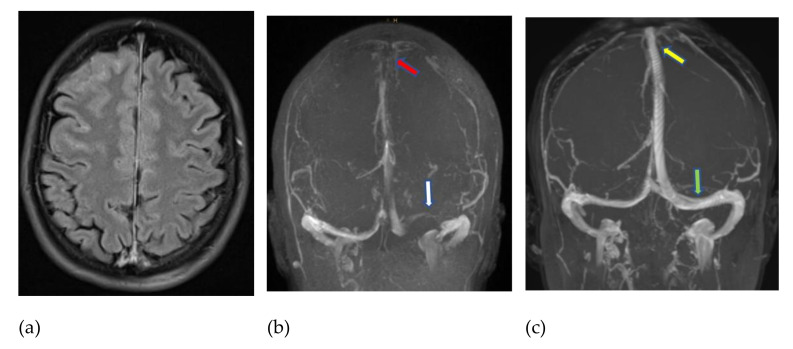
Results: Three women with intracranial venous sinus thrombosis after their first vaccination with "COVID-19 vaccine AstraZeneca" were encountered. Patient #1 was 22 years old and developed headaches four days after the vaccination. On day 7, she experienced a generalized epileptic seizure. Patient #2 was 46 years old. She presented with severe headaches, hemianopia to the right, and mild aphasia 13 days after the vaccination. MRI showed a left occipital intracerebral hemorrhage. Patient #3 was 36 years old and presented 17 days after the vaccination with acute somnolence and right-hand hemiparesis. The three patients were diagnosed with extensive venous sinus thrombosis. They were managed by heparinization and endovascular recanalization of their venous sinuses. They shared similar findings: elevated levels of D-dimers, platelet factor 4 antiplatelet antibodies, corona spike protein antibodies, combined with thrombocytopenia. Under treatment with low-molecular-weight heparin, platelet counts normalized within several days.
Conclusion: Early observations insinuate that the exposure to the "COVID-19 vaccine AstraZeneca" might trigger the expression of antiplatelet antibodies, resulting in a condition with thrombocytopenia and venous thrombotic events (e.g., intracranial venous sinus thrombosis). These patients' treatment should address the thrombo-embolic manifestations, the coagulation disorder, and the underlying immunological phenomena.
Keywords: COVID-19 vaccine AstraZeneca; anticoagulation; platelet factor 4 antibodies; rheolysis; venous sinus thrombosis.
Conflict of interest statement
The authors have no conflict of interest in this regard.
Figures
References
LinkOut - more resources
Full Text Sources
Other Literature Sources
Research Materials
Miscellaneous
