


Food Addiction and Lifestyle Habits among University Students
- PMID: 33919610
- PMCID: PMC8073513
- DOI: 10.3390/nu13041352
Food Addiction and Lifestyle Habits among University Students
Abstract
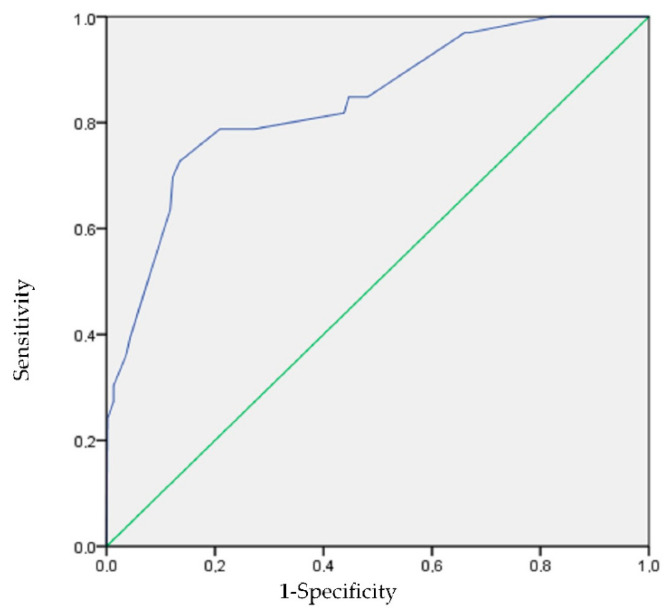
The prevalence of overweight and obesity is increasing in our society, with a complex, multifactorial origin, and associated with greater morbidity and mortality in the population. Food addiction (FA) is a common disorder in overweight/obese people, which appears to be increasingly common in young people. This study analyzed food addiction in a group of young university students and to examine its association with body composition, quality of sleep, adherence to the Mediterranean diet, physical activity/sedentary habits, tobacco or alcohol consumption, and health status. A total of 536 undergraduate nursing students participated in a questionnaire that included the Yale Food Addiction Scale (YFAS 2.0). Up to 6.4% of the students presented FA. Statistically significant associations were observed in the variables for sleep quality odds ratio (OR) 4.8 (95% confidence interval (CI): 1.66-13.87), anxiety/depression OR 8.71 (95% CI: 3.93-19.27), body mass index (BMI) OR 8.32 (95% CI: 3.81-18.15) and sedentary lifestyle OR 2.33 (95% CI: 1.09-5.01). A predictive model was developed after binary logistic regression (area under the ROC curve 0.84 (95% CI: 0.77-0.91). Students with FA presented higher BMI values, worse sleep quality, anxiety or depression problems, and more time spent in sedentary behaviors.
Keywords: Mediterranean diet; Yale Food Addiction Scale; anxiety; body mass index; depression; food addiction; lifestyle; physical activity; sedentary behavior; sleeping behaviors.
Conflict of interest statement
The authors declare no conflict of interest.
Figures
References
-
- Chu D.T., Minh Nguyet N.T., Dinh T.C., Thai Lien N.V., Nguyen K.H., Nhu Ngoc V.T., Tao Y., Son L.H., Le D.H., Nga V.B., et al. An update on physical health and economic consequences of overweight and obesity. Diabetes Metab. Syndr. Clin. Res. Rev. 2018;12:1095–1100. doi: 10.1016/j.dsx.2018.05.004. - DOI - PubMed
MeSH terms
LinkOut - more resources
Full Text Sources
Other Literature Sources
