


Alternative Vascularization Mechanisms in Tumor Resistance to Therapy
- PMID: 33921099
- PMCID: PMC8071410
- DOI: 10.3390/cancers13081912
Alternative Vascularization Mechanisms in Tumor Resistance to Therapy
Abstract
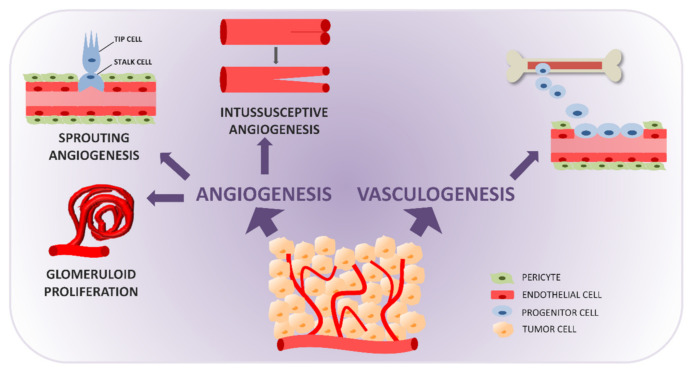
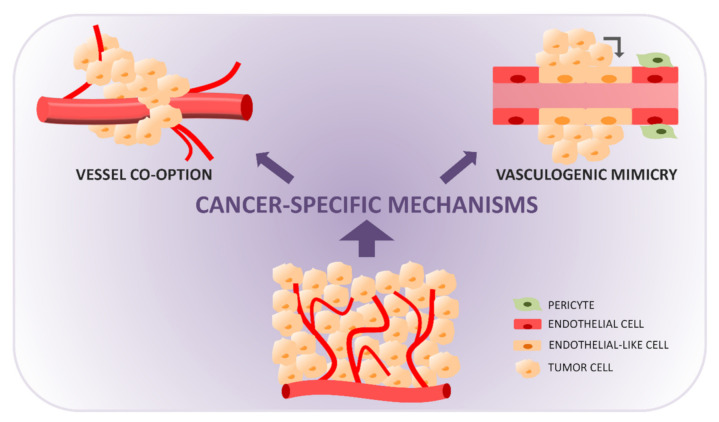
Blood vessels in tumors are formed through a variety of different mechanisms, each generating vessels with peculiar structural, molecular, and functional properties. This heterogeneity has a major impact on tumor response or resistance to antineoplastic therapies and is now emerging as a promising target for strategies to prevent drug resistance and improve the distribution and efficacy of antineoplastic treatments. This review presents evidence of how different mechanisms of tumor vessel formation (vasculogenesis, glomeruloid proliferation, intussusceptive angiogenesis, vasculogenic mimicry, and vessel co-option) affect tumor responses to antiangiogenic and antineoplastic therapies, but also how therapies can promote alternative mechanisms of vessel formation, contributing to tumor recurrence, malignant progression, and acquired drug resistance. We discuss the possibility of tailoring treatment strategies to overcome vasculature-mediated drug resistance or to improve drug distribution and efficacy.
Keywords: antiangiogenic therapy; drug resistance; non-sprouting angiogenesis; tumor microenvironment; tumor vasculature.
Conflict of interest statement
The authors declare no conflict of interest.
Figures
References
Publication types
Grants and funding
LinkOut - more resources
Full Text Sources
Other Literature Sources
