


Cryobiopsy in Lung Cancer Diagnosis-A Literature Review
- PMID: 33921579
- PMCID: PMC8074219
- DOI: 10.3390/medicina57040393
Cryobiopsy in Lung Cancer Diagnosis-A Literature Review
Abstract
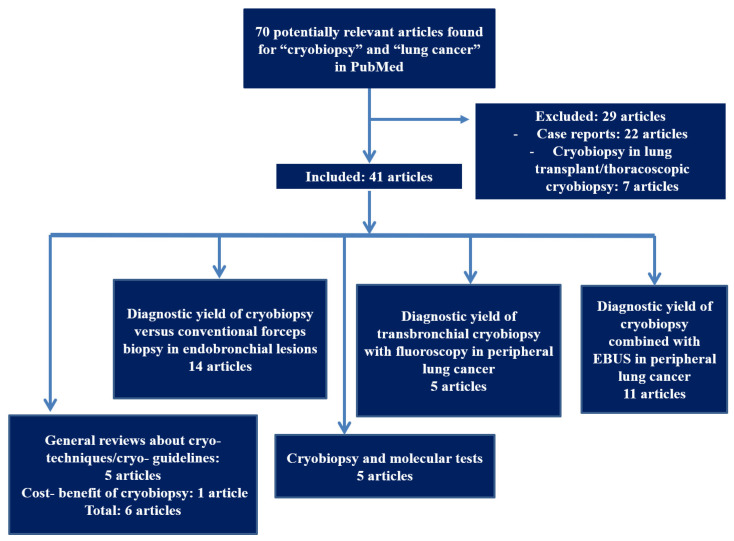
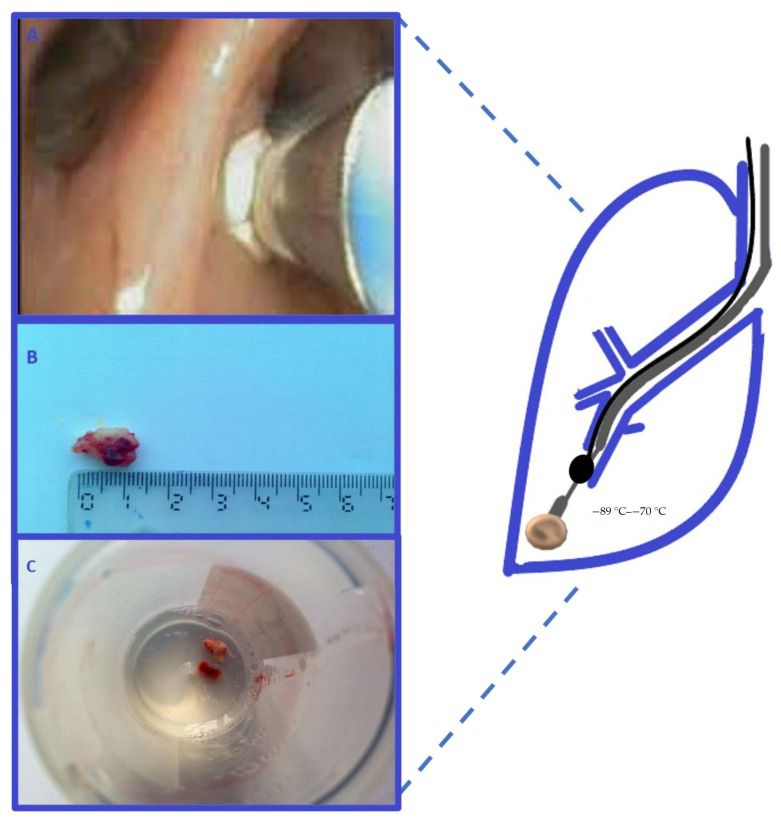
Optimizing the diagnosis of lung cancer represents a challenge, as well as a necessity, for improving the low survival of these patients. Flexible bronchoscopy with forceps biopsy is one of the key diagnostic procedures used for lung tumors. The small sample size and crush artifacts are several factors that can often limit access to a complete diagnosis, therefore leading to the need of repeating the bronchoscopy procedure or other invasive diagnostic methods. The bronchoscopic cryobiopsy is a recent technique that proved its utility in the diagnosis of both endobronchial and peripheral lung tumors. In comparison with conventional forceps biopsy, studies report a higher diagnostic yield and a superior quality of the collected samples for both the histopathological and the molecular diagnosis of lung cancer. This method shows promising results in sampling lung tissue, alone, or in conjunction with fluoroscopy or radial endobronchial ultrasound (r-EBUS). With a good safety and cost-benefit profile, this novel method has the potential to improve the diagnosis, and therefore the management of lung cancer patients. The objective of this narrative review is to provide a comprehensive review of the recent data regarding the advantages of cryobiopsy and r-EBUS in lung cancer diagnosis.
Keywords: biopsy; bronchoscopy; cryosurgery; lung neoplasms.
Conflict of interest statement
The authors declare no conflict of interest.
Figures
References
Publication types
MeSH terms
LinkOut - more resources
Full Text Sources
Other Literature Sources
Medical
