. 2021 Apr 19;10(4):626.
doi: 10.3390/antiox10040626.

Untargeted Metabolomics of Korean Fermented Brown Rice Using UHPLC Q-TOF MS/MS Reveal an Abundance of Potential Dietary Antioxidative and Stress-Reducing Compounds

Affiliations

Untargeted Metabolomics of Korean Fermented Brown Rice Using UHPLC Q-TOF MS/MS Reveal an Abundance of Potential Dietary Antioxidative and Stress-Reducing Compounds

Akanksha Tyagi et al. Antioxidants (Basel). .

Abstract

Free radical-induced oxidative stress is the root cause of many diseases, such as diabetes, stress and cardiovascular diseases. The objective of this research was to screen GABA levels, antioxidant activities and bioactive compounds in brown rice. In this study, we first fermented brown rice with different lactic acid bacteria (LABs), and the best LAB was selected based on the levels of GABA in the fermentate. Lactobacillus reuterii generated the highest levels of GABA after fermentation. To ascertain whether germination can improve the GABA levels of brown rice, we compared the levels of GABA in raw brown rice (Raw), germinated brown rice (Germ), fermented brown rice (Ferm) and fermented-germinated brown rice (G+F) to identify the best approach. Then, antioxidant activities were investigated for Raw BR, Germ BR, Ferm BR and G+F BR. Antioxidant activity was calculated using a 2,2-diphenyl-1-picryl hydrazile radical assay, 2,2-azino-bis-(3-ethylene benzothiozoline-6-sulfonic acid) radical assay and ferric-reducing antioxidant power. In Ferm BR, DPPH (114.40 ± 0.66), ABTS (130.52 ± 0.97) and FRAP (111.16 ± 1.83) mg Trolox equivalent 100 g, dry weight (DW), were observed as the highest among all samples. Total phenolic content (97.13 ± 0.59) and total flavonoids contents (79.62 ± 1.33) mg GAE/100 g and catechin equivalent/100 g, DW, were also found to be highest in fermented BR. Furthermore, an untargeted metabolomics approach using ultra-high-performance liquid tandem chromatography quadrupole time of flight mass spectrometry revealed the abundance of bioactive compounds in fermented BR, such as GABA, tryptophan, coumaric acid, L-ascorbic acid, linoleic acid, β-carotenol, eugenol, 6-gingerol, etc., as well as bioactive peptides which could contribute to the health-promoting properties of L. reuterii fermented brown rice.

Keywords: antioxidants; bioactive compounds; brown rice; fermentation; functional food; germination; health benefits; stress; untargeted metabolomics.


Conflict of interest statement

The authors declare that they have no conflict of interest. The funders had no role in study design, data collection and analysis, decision to publish, or preparation of the manuscript.

Figures
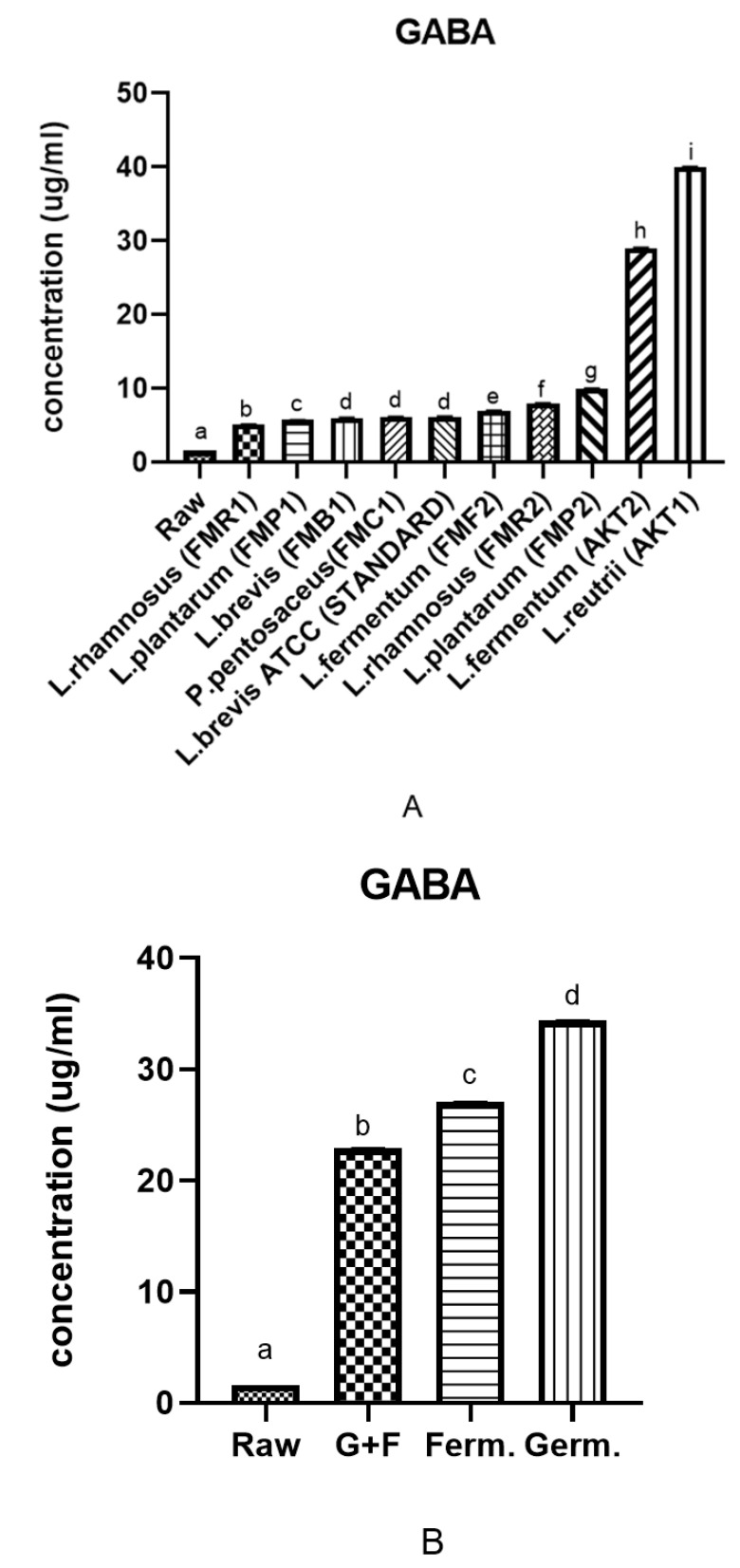
Figure 1
Figure 1
(A) Screening of different Lactobacillus strains (48 h fermented). (B) Comparison of GABA content among raw, germination (Germ), fermentation (Ferm) and germination combined with fermentation (G+F) treatments. All values are expressed as the mean ± SD of triplicate experiments. The sample concentration used was 1 mg/mL, and a–i superscripts with different letters indicate a significant difference, while sample superscript letters indicate no significant difference (p < 0.05) found by using SPSS and Graphpad Prism 8.0 programs.
Figure 2
Figure 2
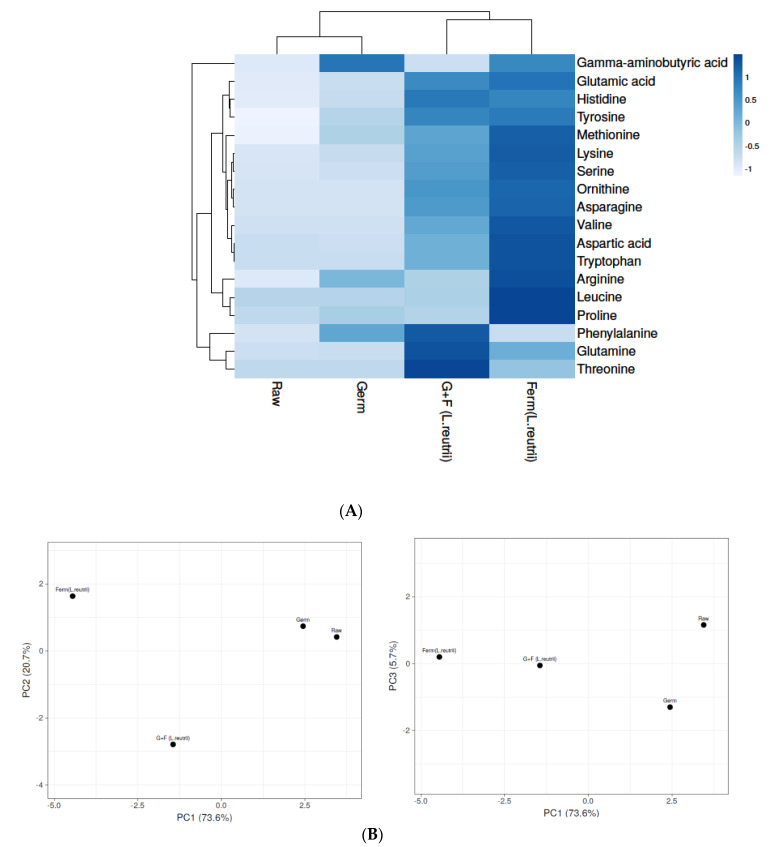
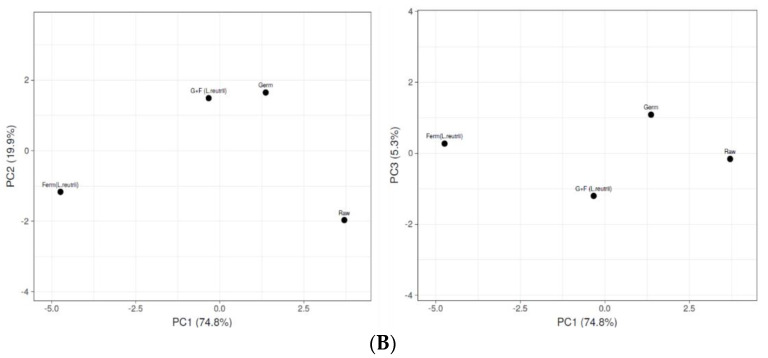
Levels of amino acids in raw, germinated, fermented (L. reuterii AKT1) and G+F (L. reuterii AKT1) samples. (A) The heat map shows different levels of amino acids in samples based on shades of blue. (B) Identification of principal component analysis (PCA) of Raw, Germ, Ferm (L. reuterii) and G+F samples was shown by comparing PC1 with PC2 and PC 1 with PC3. Germ-germinated brown rice, Ferm- fermented brown rice, G+F-germinated + fermented brown rice.
Figure 3
Figure 3
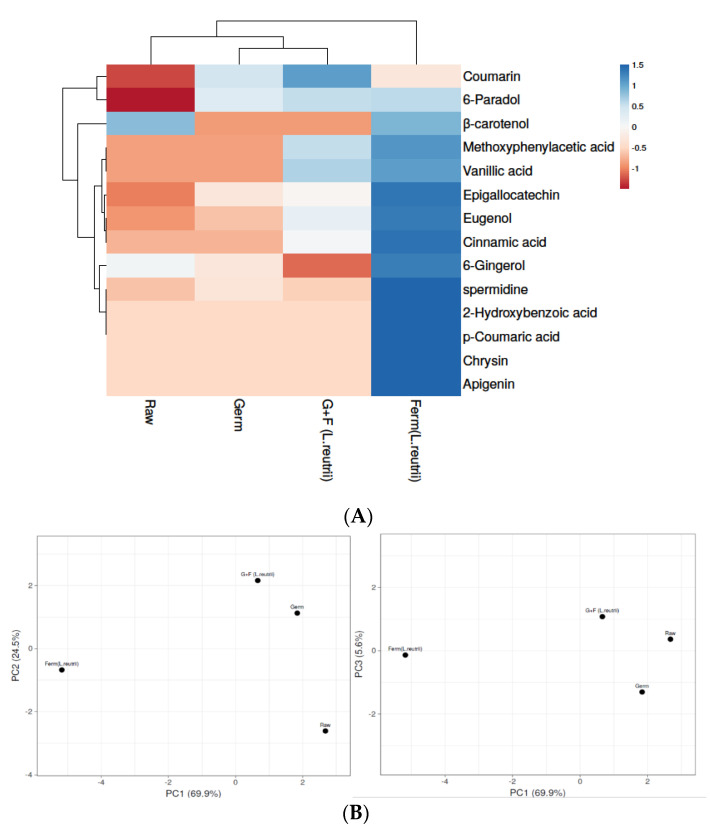
Levels of phenolic compounds in raw, germinated, fermented (L. reuterii AKT1) and G+F (L. reuterii AKT1) samples. (A) The heat map shows different levels of phenolic compounds in samples based on colors from blue to red, representing the level of phenolic compounds in decreasing order. (B) Identification of principal component analysis (PCA) of Raw, Germ, Ferm (L. reuterii) and G+F samples was shown by comparing PC1 with PC2 and PC1 with PC3. Germ- germinated brown rice, Ferm- fermented brown rice, G+F-germinated + fermented brown rice.
Figure 4
Figure 4
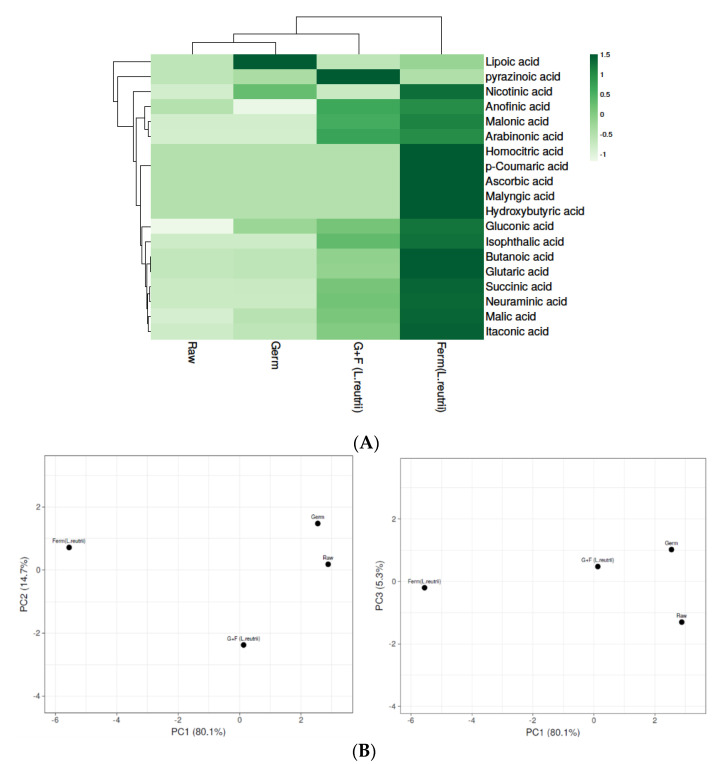
Levels of organic acids in Raw, Germinated, Fermented (L. reuterii AKT1) and G+F (L. reuterii AKT1) samples. (A) The heat map shows different levels of organic acids in samples based on colours as green to white represents the level of organic acids in decreasing order. (B) Identification of principal component analysis (PCA) of Raw, Germ, Ferm (L. reuterii AKT1) and G+F samples was shown by comparing PC1 with PC2 and PC1 with PC3. Germ- germinated brown rice, Ferm- fermented brown rice, G+F- germinated + fermented brown rice.
Figure 5
Figure 5
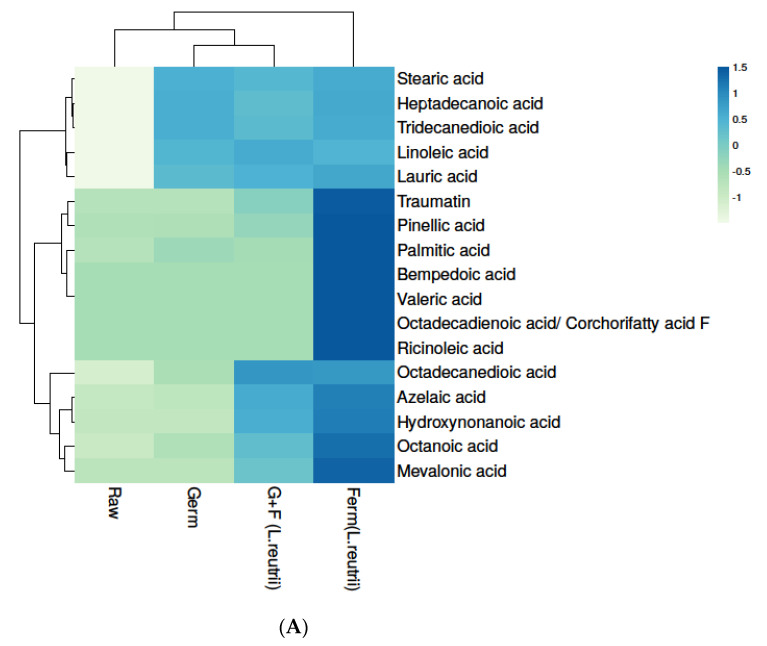
Levels of fatty acid in raw, germinated, fermented (L. reuterii AKT1) and G+F (L. reuterii AKT1) samples. (A) The heat map shows different levels of fatty acid in samples based on colors, as blue to green represents the level of fatty acids in decreasing order. (B) Identification of principal component analysis (PCA) of Raw, Germ, Ferm (L. reuterii AKT1) and G+F was shown by comparing PC1 with PC2 as well as PC1 with PC3. Germ- germinated brown rice, Ferm- fermented brown rice, G+F- germinated + fermented brown rice.
Figure 5
Figure 5
Levels of fatty acid in raw, germinated, fermented (L. reuterii AKT1) and G+F (L. reuterii AKT1) samples. (A) The heat map shows different levels of fatty acid in samples based on colors, as blue to green represents the level of fatty acids in decreasing order. (B) Identification of principal component analysis (PCA) of Raw, Germ, Ferm (L. reuterii AKT1) and G+F was shown by comparing PC1 with PC2 as well as PC1 with PC3. Germ- germinated brown rice, Ferm- fermented brown rice, G+F- germinated + fermented brown rice.

References

    1. Huang Y., Tong C., Xu F., Chen Y., Zhang C., Bao J. Variation in mineral elements in grains of 20 brown rice accessions in two environments. Food Chem. 2016;192:873–878. doi: 10.1016/j.foodchem.2015.07.087. - DOI - PubMed
    1. Saleh A.S., Wang P., Wang N., Yang L., Xiao Z. Brown rice versus white rice: Nutritional quality, potential health benefits, development of food products, and preservation technologies. Compr. Rev. Food Sci. Food Saf. 2019;18:1070–1096. doi: 10.1111/1541-4337.12449. - DOI - PubMed
    1. Tyagi A., Daliri E.B.-M., Kwami Ofosu F., Yeon S.-J., Oh D.-H. Food-Derived Opioid Peptides in Human Health: A Review. Int. J. Mol. Sci. 2020;21:8825. doi: 10.3390/ijms21228825. - DOI - PMC - PubMed
    1. Auten R.L., Davis J.M. Oxygen toxicity and reactive oxygen species: The devil is in the details. Pediatric Res. 2009;66:121–127. doi: 10.1203/PDR.0b013e3181a9eafb. - DOI - PubMed
    1. Singh A., Kukreti R., Saso L., Kukreti S. Oxidative stress: A key modulator in neurodegenerative diseases. Molecules. 2019;24:1583. doi: 10.3390/molecules24081583. - DOI - PMC - PubMed