


Biomarkers in Glycogen Storage Diseases: An Update
- PMID: 33922238
- PMCID: PMC8122709
- DOI: 10.3390/ijms22094381
Biomarkers in Glycogen Storage Diseases: An Update
Abstract
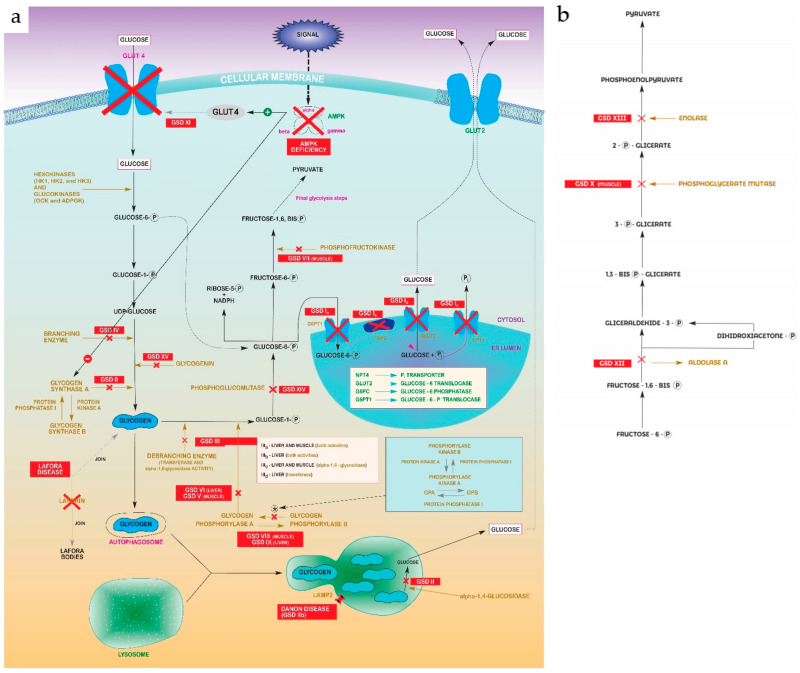
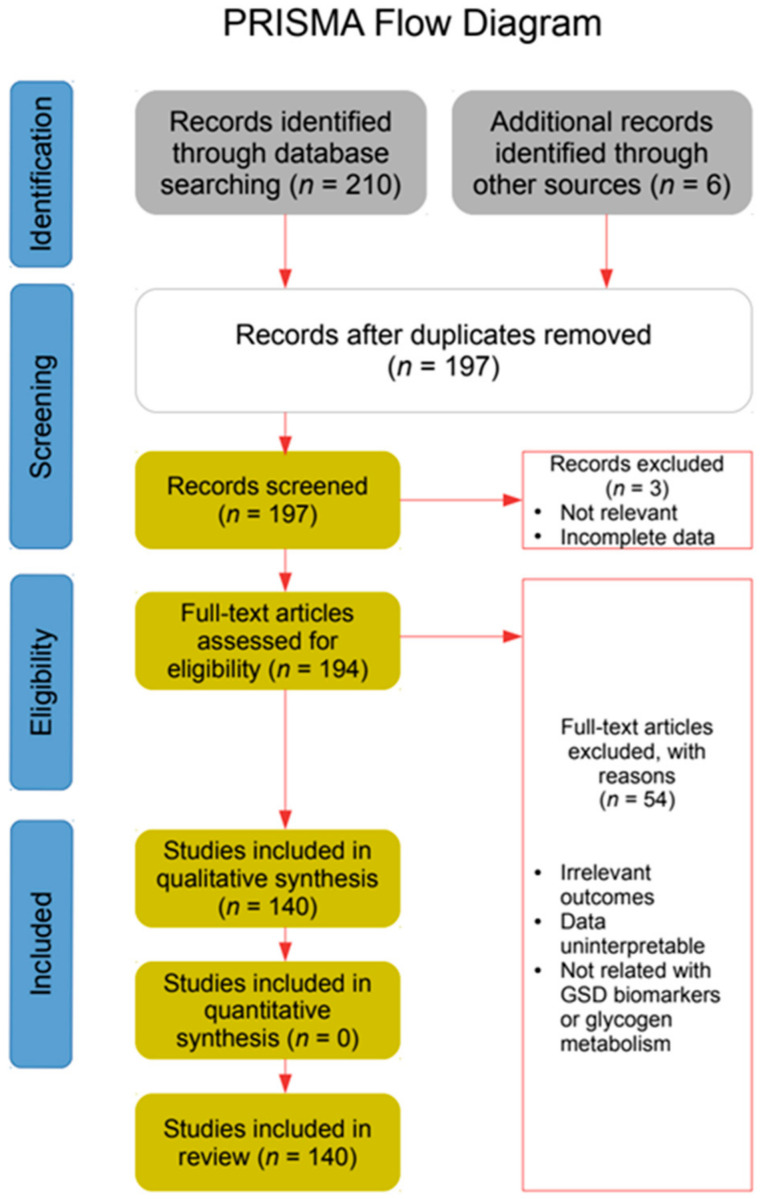
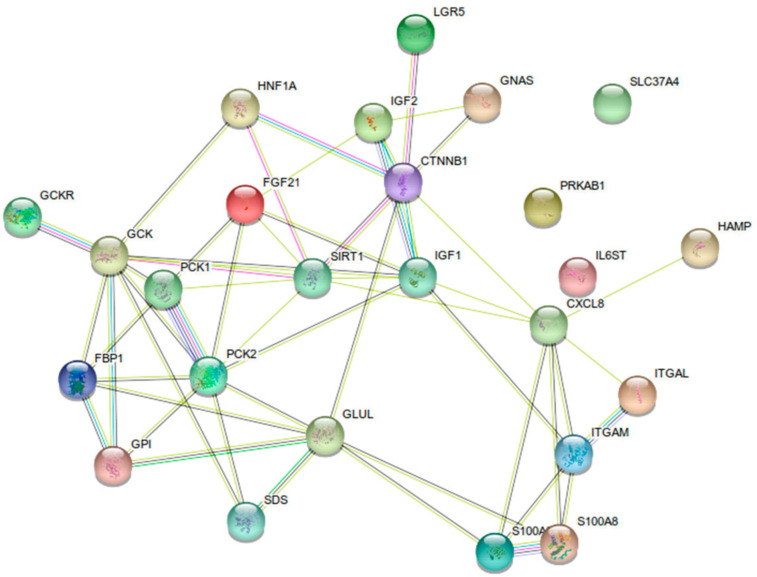
Glycogen storage diseases (GSDs) are a group of 19 hereditary diseases caused by a lack of one or more enzymes involved in the synthesis or degradation of glycogen and are characterized by deposits or abnormal types of glycogen in tissues. Their frequency is very low and they are considered rare diseases. Except for X-linked type IX, the different types are inherited in an autosomal recessive pattern. In this study we reviewed the literature from 1977 to 2020 concerning GSDs, biomarkers, and metabolic imbalances in the symptoms of some GSDs. Most of the reported studies were performed with very few patients. Classification of emerging biomarkers between different types of diseases (hepatics GSDs, McArdle and PDs and other possible biomarkers) was done for better understanding. Calprotectin for hepatics GSDs and urinary glucose tetrasaccharide for Pompe disease have been approved for clinical use, and most of the markers mentioned in this review only need clinical validation, as a final step for their routine use. Most of the possible biomarkers are implied in hepatocellular adenomas, cardiomyopathies, in malfunction of skeletal muscle, in growth retardation, neutropenia, osteopenia and bowel inflammation. However, a few markers have lost interest due to a great variability of results, which is the case of biotinidase, actin alpha 2, smooth muscle, aorta and fibroblast growth factor receptor 4. This is the first review published on emerging biomarkers with a potential application to GSDs.
Keywords: Glycogen metabolism; Glycogen storage disease (GSD); Pompe disease; biomarkers; hepatic GSD; muscle GSD.
Conflict of interest statement
The authors declare no potential competing interests with respect to the research, authorship and/or publication of this article.
Figures
References
-
- Walter J., Labrune P.A., Laforet P. The Glycogen Storage Diseases and Related Disorders. In: Saudubray J.-M., Baumgartner M.R., Walter J., editors. Inborn Metabolic Diseases. Springer; Berlin/Heidelberg, Germany: 2016. pp. 121–137.
-
- Bali D.S., Chen Y.-T., Austin S., Goldstein J.L. Glycogen Storage Disease Type I. In: Adam M.P., Ardinger H.H., Pagon R.A., Wallace S.E., Bean L.J., Stephens K., Amemiya A., editors. GeneReviews®. University of Washington, Seattle; Seattle, WA, USA: 1993.
-
- Leslie N., Bailey L. Pompe Disease. In: Adam M.P., Ardinger H.H., Pagon R.A., Wallace S.E., Bean L.J., Stephens K., Amemiya A., editors. GeneReviews®. University of Washington, Seattle; Seattle, WA, USA: 1993. - PubMed
-
- Dagli A., Sentner C.P., Weinstein D.A. Glycogen Storage Disease Type III. In: Adam M.P., Ardinger H.H., Pagon R.A., Wallace S.E., Bean L.J., Stephens K., Amemiya A., editors. GeneReviews®. University of Washington, Seattle; Seattle, WA, USA: 1993. - PubMed
Publication types
MeSH terms
Substances
LinkOut - more resources
Full Text Sources
Other Literature Sources
Miscellaneous
