


Effect of Air Pollution on Obesity in Children: A Systematic Review and Meta-Analysis
- PMID: 33922616
- PMCID: PMC8146513
- DOI: 10.3390/children8050327
Effect of Air Pollution on Obesity in Children: A Systematic Review and Meta-Analysis
Abstract
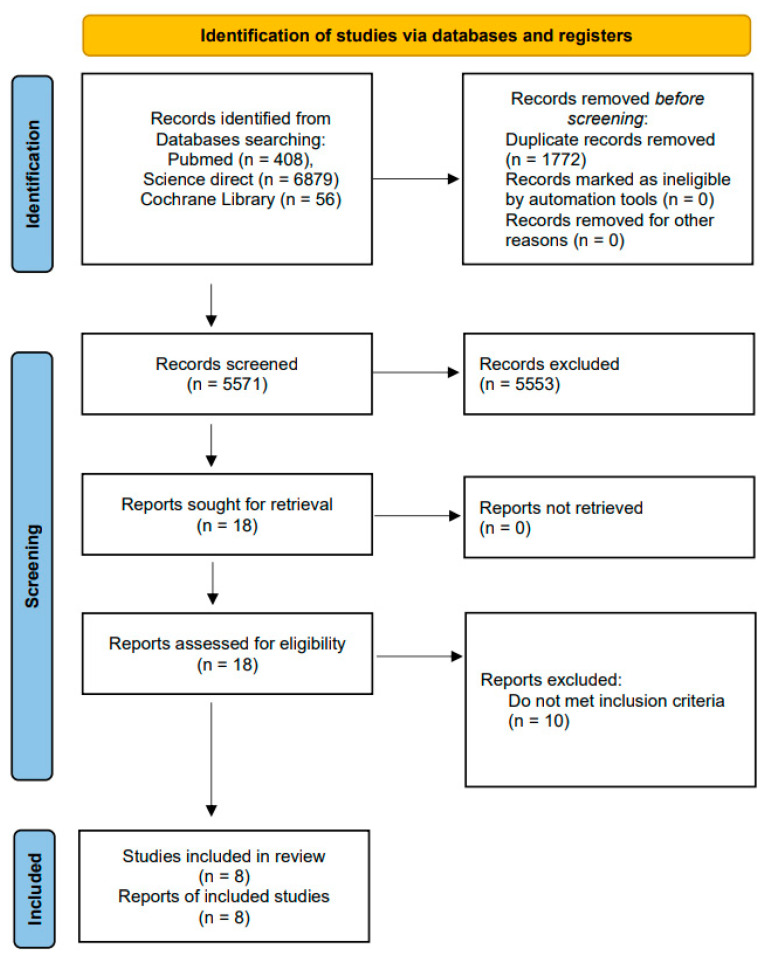
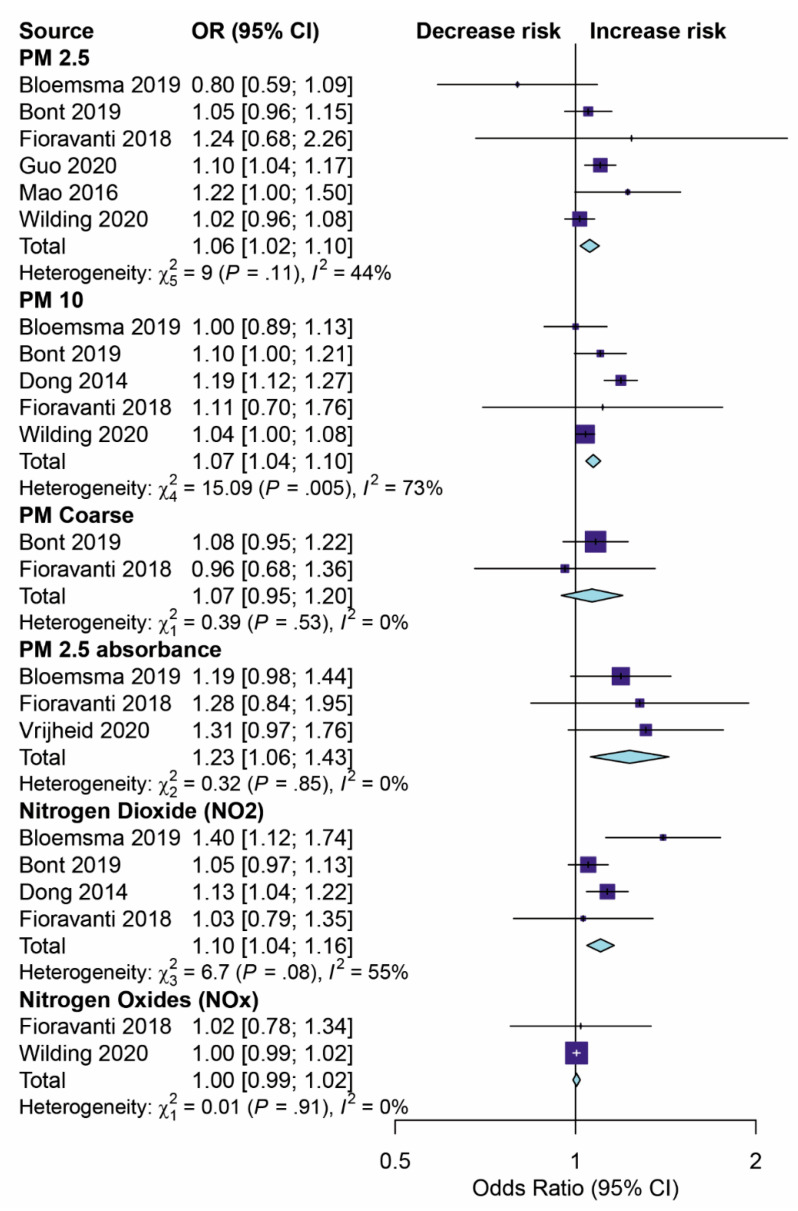
Air pollution exposure has been identified as being associated with childhood obesity. Nevertheless, strong evidence of such an association is still lacking. To analyze whether air pollution exposure affects childhood obesity, we conducted a systematic review and meta-analysis utilizing the PRISMA guidelines. Of 7343 studies identified, eight studies that investigated the effects of air pollutant characteristics, including PM2.5, PM10, PMcoarse, PMabsorbance, NOx, and NO2, on childhood obesity were included. The polled effects showed that air pollution is correlated with a substantially increased risk of childhood obesity. PM2.5 was found to be associated with a significantly increased risk (6%) of childhood obesity (OR 1.06, 95% CI 1.02-1.10, p = 0.003). In addition, PM10, PM2.5absorbance, and NO2 appeared to significantly increase the risk of obesity in children (OR 1.07, 95% CI 1.04-1.10, p < 0.00; OR 1.23, 95% CI 1.06-1.43, p = 0.07; and OR 1.10, 95% CI 1.04-1.16, p < 0.001, respectively). PMcoarse and NOx also showed trends towards being associated with an increased risk of childhood obesity (OR 1.07, 95% CI 0.95-1.20, p = 0.291, and OR 1.00, 95% CI 0.99-1.02, p = 0.571, respectively). Strong evidence was found to support the theory that air pollution exposure is one of the factors that increases the risk of childhood obesity.
Keywords: air pollution; children; obesity.
Conflict of interest statement
The authors declare no conflict of interest.
Figures
References
-
- World Health Organization Home Page. [(accessed on 20 June 2020)]; Available online: http://www.who.int/kobecentre/measuring/urban-global-report/en/
Publication types
Grants and funding
LinkOut - more resources
Full Text Sources
