


Host Epigenetic Alterations and Hepatitis B Virus-Associated Hepatocellular Carcinoma
- PMID: 33923385
- PMCID: PMC8071488
- DOI: 10.3390/jcm10081715
Host Epigenetic Alterations and Hepatitis B Virus-Associated Hepatocellular Carcinoma
Abstract
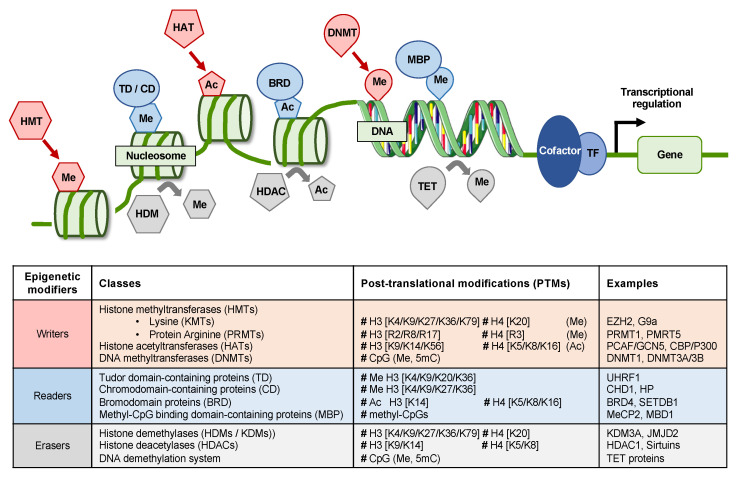
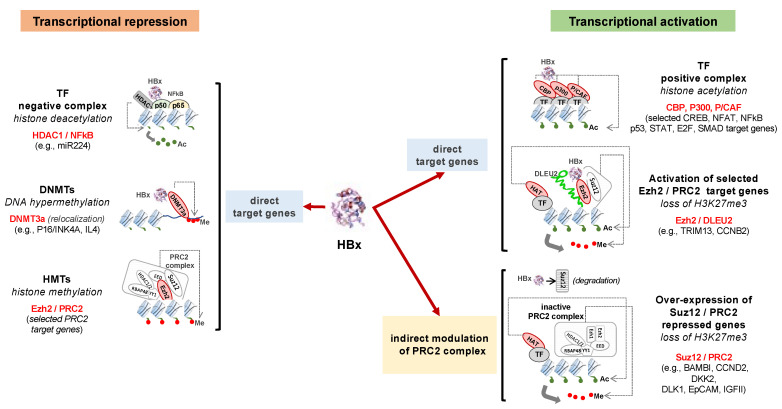
Hepatocellular carcinoma (HCC) is the most frequent primary malignancy of the liver and a leading cause of cancer-related deaths worldwide. Although much progress has been made in HCC drug development in recent years, treatment options remain limited. The major cause of HCC is chronic hepatitis B virus (HBV) infection. Despite the existence of a vaccine, more than 250 million individuals are chronically infected by HBV. Current antiviral therapies can repress viral replication but to date there is no cure for chronic hepatitis B. Of note, inhibition of viral replication reduces but does not eliminate the risk of HCC development. HBV contributes to liver carcinogenesis by direct and indirect effects. This review summarizes the current knowledge of HBV-induced host epigenetic alterations and their association with HCC, with an emphasis on the interactions between HBV proteins and the host cell epigenetic machinery leading to modulation of gene expression.
Keywords: HBx; epidrugs; epigenetic regulation; hepatitis B virus; hepatocellular carcinoma; virus–host interactions.
Conflict of interest statement
The authors declare no conflict of interest. The funders had no role in the writing of the manuscript, or in the decision to publish the review.
Figures

References
-
- Observatory I.-W.G.C. Globocan 2020 Database. [(accessed on 17 August 2020)]; Available online: https://gco.iarc.fr/
Publication types
LinkOut - more resources
Full Text Sources
Other Literature Sources
