


Multi-Strain Probiotics: Synergy among Isolates Enhances Biological Activities
- PMID: 33924344
- PMCID: PMC8070017
- DOI: 10.3390/biology10040322
Multi-Strain Probiotics: Synergy among Isolates Enhances Biological Activities
Abstract
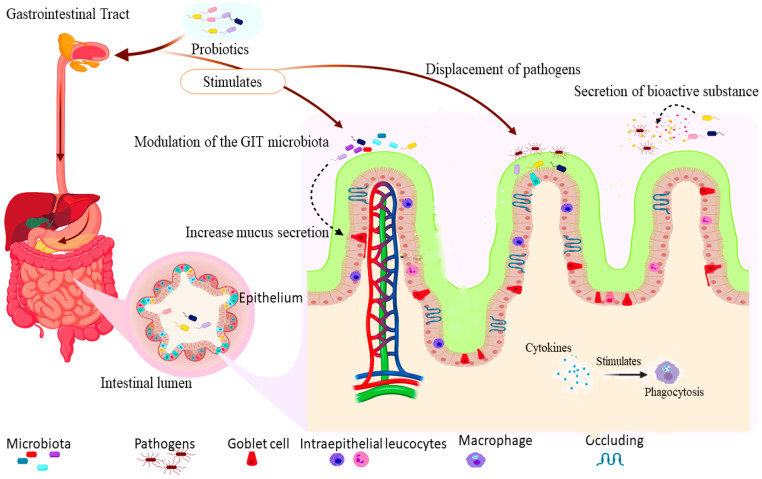
The use of probiotics for health benefits is becoming popular because of the quest for safer products with protective and therapeutic effects against diseases and infectious agents. The emergence and spread of antimicrobial resistance among pathogens had prompted restrictions over the non-therapeutic use of antibiotics for prophylaxis and growth promotion, especially in animal husbandry. While single-strain probiotics are beneficial to health, multi-strain probiotics might be more helpful because of synergy and additive effects among the individual isolates. This article documents the mechanisms by which multi-strain probiotics exert their effects in managing infectious and non-infectious diseases, inhibiting antibiotic-resistant pathogens and health improvement. The administration of multi-strain probiotics was revealed to effectively alleviate bowel tract conditions, such as irritable bowel syndrome, inhibition of pathogens and modulation of the immune system and gut microbiota. Finally, while most of the current research focuses on comparing the effects of multi-strain and single-strain probiotics, there is a dearth of information on the molecular mechanisms of synergy among multi-strain probiotics isolates. This forms a basis for future research in the development of multi-strain probiotics for enhanced health benefits.
Keywords: antagonism; antibiotics; cell-cell communication; probiotics; synergy.
Conflict of interest statement
The authors declare no conflict of interest.
Figures
References
-
- Hill C., Guarner F., Reid G., Gibson G.R., Merenstein D.J., Pot B., Morelli L., Canani R.B., Flint H.J., Salminen S. Expert consensus document: The International Scientific Association for Probiotics and Prebiotics consensus statement on the scope and appropriate use of the term probiotic. Nat. Rev. Gastroenterol. Hepatol. 2014;11:506. doi: 10.1038/nrgastro.2014.66. - DOI - PubMed
-
- VidyaLaxme B., Rovetto A., Grau R., Agrawal R. Synergistic effects of probiotic Leuconostoc mesenteroides and Bacillus subtilis in malted ragi (Eleucine corocana) food for antagonistic activity against V. cholerae and other beneficial properties. J. Food Sci. Technol. 2014;51:3072–3082. doi: 10.1007/s13197-012-0834-5. - DOI - PMC - PubMed
-
- Liu K.-F., Chiu C.-H., Shiu Y.-L., Cheng W., Liu C.-H. Effects of the probiotic, Bacillus subtilis E20, on the survival, development, stress tolerance, and immune status of white shrimp, Litopenaeus vannamei larvae. Fish Shellfish Immunol. 2010;28:837–844. doi: 10.1016/j.fsi.2010.01.012. - DOI - PubMed
Publication types
LinkOut - more resources
Full Text Sources
Other Literature Sources
Molecular Biology Databases
