


Facial Affect Recognition by Patients with Schizophrenia Using Human Avatars
- PMID: 33924939
- PMCID: PMC8124197
- DOI: 10.3390/jcm10091904
Facial Affect Recognition by Patients with Schizophrenia Using Human Avatars
Abstract
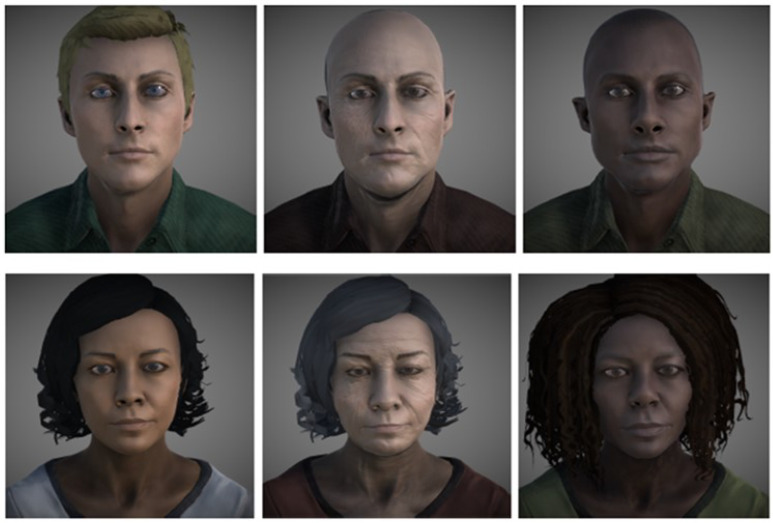
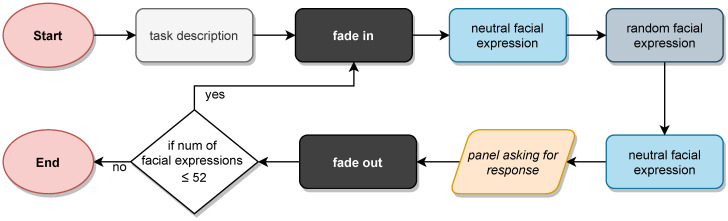
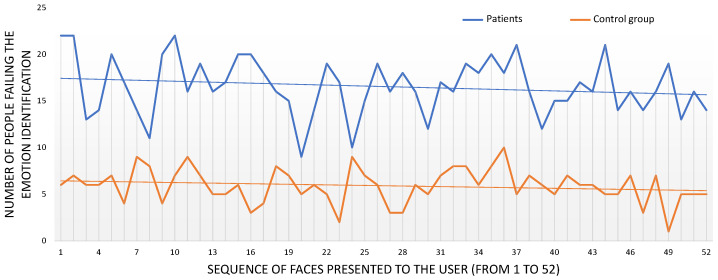
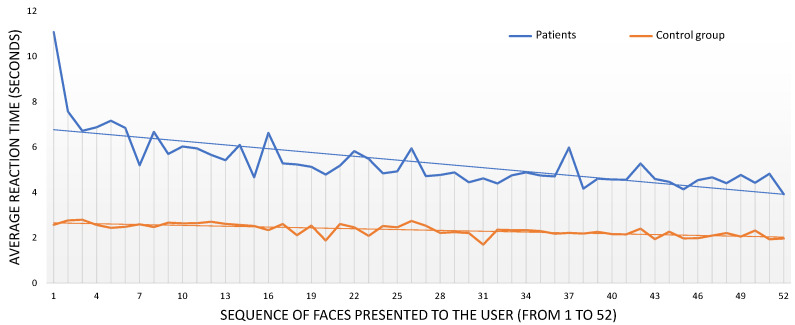
People with schizophrenia have difficulty recognizing the emotions in the facial expressions of others, which affects their social interaction and functioning in the community. Static stimuli such as photographs have been used traditionally to examine deficiencies in the recognition of emotions in patients with schizophrenia, which has been criticized by some authors for lacking the dynamism that real facial stimuli have. With the aim of overcoming these drawbacks, in recent years, the creation and validation of virtual humans has been developed. This work presents the results of a study that evaluated facial recognition of emotions through a new set of dynamic virtual humans previously designed by the research team, in patients diagnosed of schizophrenia. The study included 56 stable patients, compared with 56 healthy controls. Our results showed that patients with schizophrenia present a deficit in facial affect recognition, compared to healthy controls (average hit rate 71.6% for patients vs 90.0% for controls). Facial expressions with greater dynamism (compared to less dynamic ones), as well as those presented from frontal view (compared to profile view) were better recognized in both groups. Regarding clinical and sociodemographic variables, the number of hospitalizations throughout life did not correlate with recognition rates. There was also no correlation between functioning or quality of life and recognition. A trend showed a reduction in the emotional recognition rate as a result of increases in Positive and Negative Syndrome Scale (PANSS), being statistically significant for negative PANSS. Patients presented a learning effect during the progression of the task, slightly greater in comparison to the control group. This finding is relevant when designing training interventions for people with schizophrenia. Maintaining the attention of patients and getting them to improve in the proposed tasks is a challenge for today's psychiatry.
Keywords: dynamic virtual humans; emotion recognition; facial affect recognition; schizophrenia; social cognition.
Conflict of interest statement
R. Rodriguez-Jimenez has been a consultant for, spoken in activities of, or received grants from: Instituto de Salud Carlos III, Fondo de Investigación Sanitaria (FIS), Centro de Investigación Biomédica en Red de Salud Mental (CIBERSAM), Madrid Regional Government (S2010/ BMD-2422 AGES; S2017/BMD-3740), JanssenCilag, Lundbeck, Otsuka, Pfizer, Ferrer, Juste, Takeda, Exeltis, Angelini, Casen-Recordati. The other authors declare no competing financial interests. The sponsors had no role in the design, execution, interpretation, or writing of the study.
Figures
References
Grants and funding
LinkOut - more resources
Full Text Sources
Other Literature Sources
