


The New Therapeutic Strategies in Pediatric T-Cell Acute Lymphoblastic Leukemia
- PMID: 33925883
- PMCID: PMC8123476
- DOI: 10.3390/ijms22094502
The New Therapeutic Strategies in Pediatric T-Cell Acute Lymphoblastic Leukemia
Abstract
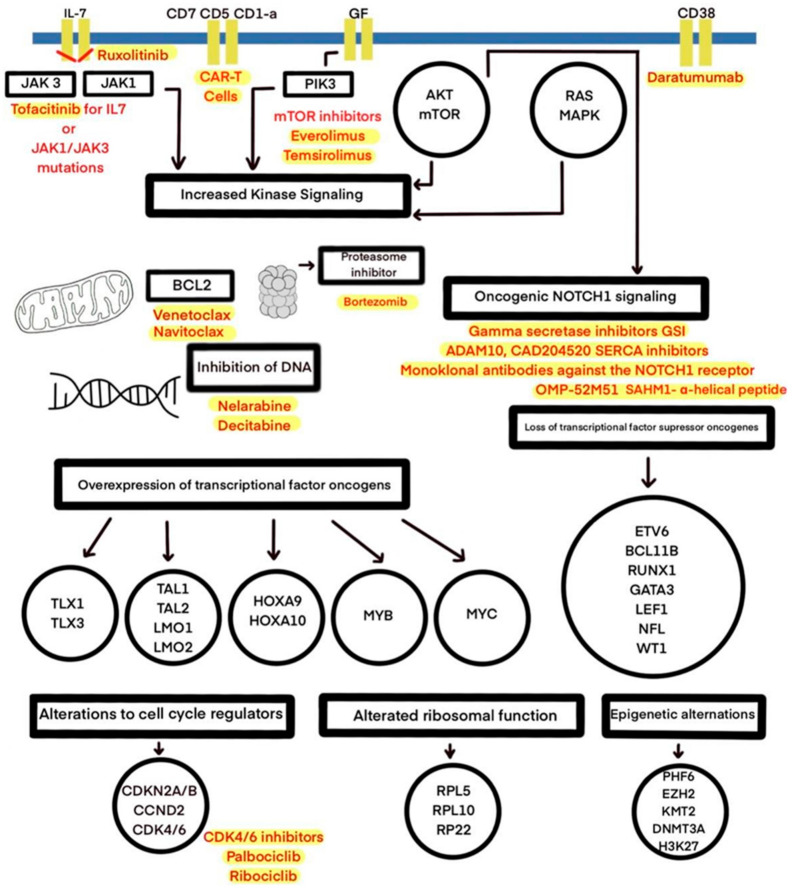
Childhood acute lymphoblastic leukemia is a genetically heterogeneous cancer that accounts for 10-15% of T-cell acute lymphoblastic leukemia (T-ALL) cases. The T-ALL event-free survival rate (EFS) is 85%. The evaluation of structural and numerical chromosomal changes is important for a comprehensive biological characterization of T-ALL, but there are currently no genetic prognostic markers. Despite chemotherapy regimens, steroids, and allogeneic transplantation, relapse is the main problem in children with T-ALL. Due to the development of high-throughput molecular methods, the ability to define subgroups of T-ALL has significantly improved in the last few years. The profiling of the gene expression of T-ALL has led to the identification of T-ALL subgroups, and it is important in determining prognostic factors and choosing an appropriate treatment. Novel therapies targeting molecular aberrations offer promise in achieving better first remission with the hope of preventing relapse. The employment of precisely targeted therapeutic approaches is expected to improve the cure of the disease and quality of life of patients. These include therapies that inhibit Notch1 activation (bortezomib), JAK inhibitors in ETP-ALL (ruxolitinib), BCL inhibitors (venetoclax), and anti-CD38 therapy (daratumumab). Chimeric antigen receptor T-cell therapy (CAR-T) is under investigation, but it requires further development and trials. Nelarabine-based regimens remain the standard for treating the relapse of T-ALL.
Keywords: T-ALL; novel therapies; pediatrics.
Conflict of interest statement
The authors declare no conflict of interest.
Figures
References
Publication types
MeSH terms
Substances
LinkOut - more resources
Full Text Sources
Other Literature Sources
Medical
Research Materials
