


Midwives' experiences of cultural competency training and providing perinatal care for migrant women a mixed methods study: Operational Refugee and Migrant Maternal Approach (ORAMMA) project
- PMID: 33926420
- PMCID: PMC8082812
- DOI: 10.1186/s12884-021-03799-1
Midwives' experiences of cultural competency training and providing perinatal care for migrant women a mixed methods study: Operational Refugee and Migrant Maternal Approach (ORAMMA) project
Abstract
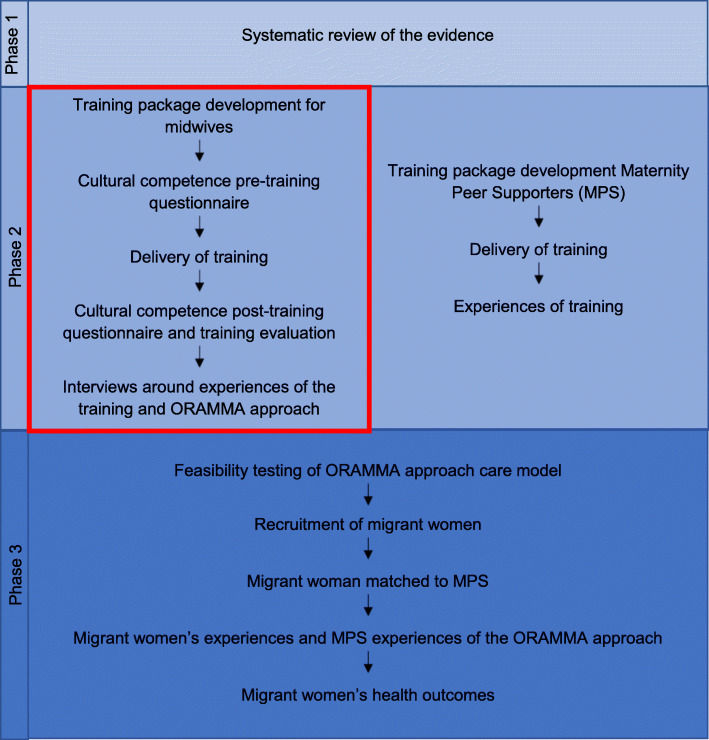
Background: The number of international migrants continues to increase worldwide. Depending on their country of origin and migration experience, migrants may be at greater risk of maternal and neonatal morbidity and mortality. Having compassionate and culturally competent healthcare providers is essential to optimise perinatal care. The "Operational Refugee and Migrant Maternal Approach" (ORAMMA) project developed cultural competence training for health professionals to aid with providing perinatal care for migrant women. This presents an evaluation of ORAMMA training and explores midwives' experiences of the training and providing care within the ORAMMA project.
Methods: Cultural competence was assessed before and after midwives (n = 35) received ORAMMA compassionate and culturally sensitive maternity care training in three different European countries. Semi-structured interviews (n = 12) explored midwives' experiences of the training and of caring for migrant women within the ORAMMA project.
Results: A significant improvement of the median score pre to post-test was observed for midwives' knowledge (17 to 20, p < 0.001), skills (5 to 6, p = 0.002) and self-perceived cultural competence (27 to 29, p = 0.010). Exploration of midwives' experiences of the training revealed themes of "appropriate and applicable", "made a difference" and "training gaps" and data from ORAMMA project experiences identified three further themes; "supportive care", "working alongside peer supporters" and "challenges faced".
Conclusions: The training improved midwives' knowledge and self-perceived cultural competence in three European countries with differing contexts and workforce provision. A positive experience of ORAMMA care model was expressed by midwives, however clearer expectations of peer supporters' roles and more time within appointments to assess the psychosocial needs of migrant women were desired. Future large-scale research is required to assess the long-term impact of the ORAMMA model and training on practice and clinical perinatal outcomes.
Keywords: Cultural competency; Maternal health service; Midwifery; ORAMMA; Perinatal care; Staff development; Transients and migrants.
Conflict of interest statement
Professor Hora Soltani declares to be a Senior Editorial Board Member for the BMC Pregnancy and Childbirth journal. Otherwise the authors declare that they have no conflicts of interest to disclose.
Figures


References
-
- International Organisation for Migration . World Migration Report 2018. Geneva: International organisation for migration publications; 2018.
-
- World Health Organization . Report on the health of refugees and migrants in the WHO European Region: No public health without refugees and migrant health. Copenhagen: World Health Organization, Regional Office for Europe; 2018.
MeSH terms
Grants and funding
LinkOut - more resources
Full Text Sources
Other Literature Sources
