


Twelve years of GWAS discoveries for osteoporosis and related traits: advances, challenges and applications
- PMID: 33927194
- PMCID: PMC8085014
- DOI: 10.1038/s41413-021-00143-3
Twelve years of GWAS discoveries for osteoporosis and related traits: advances, challenges and applications
Abstract
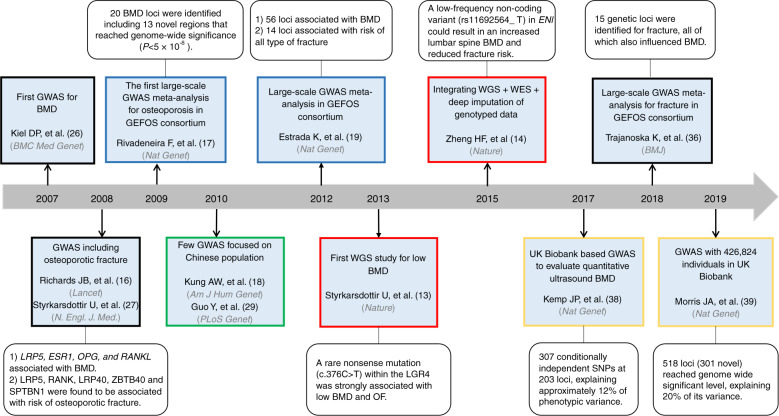
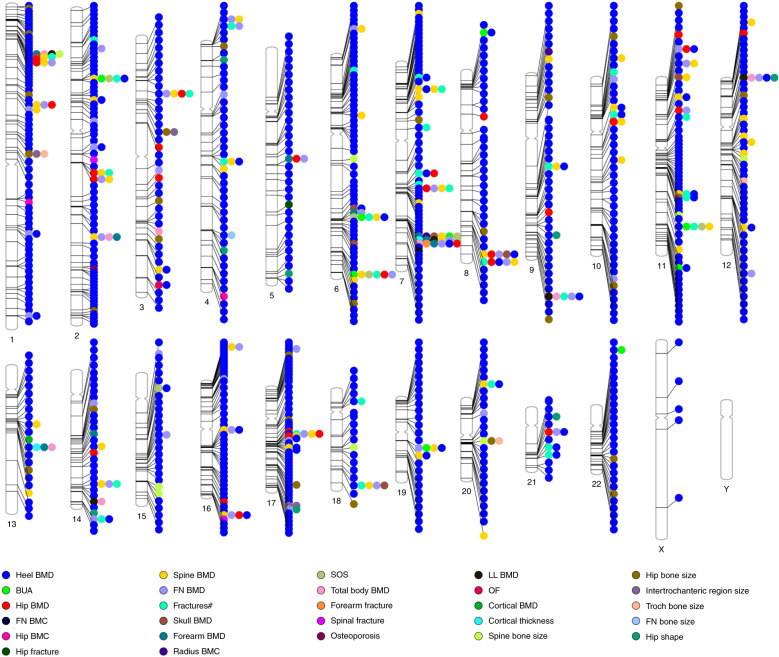
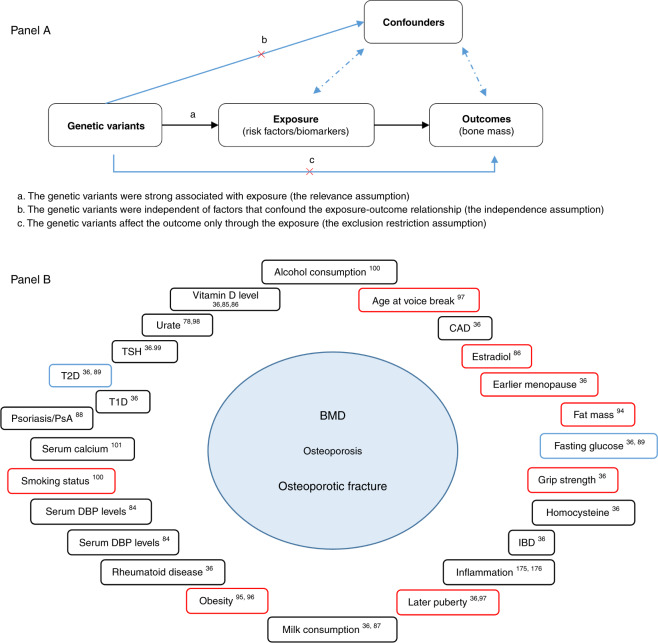
Osteoporosis is a common skeletal disease, affecting ~200 million people around the world. As a complex disease, osteoporosis is influenced by many factors, including diet (e.g. calcium and protein intake), physical activity, endocrine status, coexisting diseases and genetic factors. In this review, we first summarize the discovery from genome-wide association studies (GWASs) in the bone field in the last 12 years. To date, GWASs and meta-analyses have discovered hundreds of loci that are associated with bone mineral density (BMD), osteoporosis, and osteoporotic fractures. However, the GWAS approach has sometimes been criticized because of the small effect size of the discovered variants and the mystery of missing heritability, these two questions could be partially explained by the newly raised conceptual models, such as omnigenic model and natural selection. Finally, we introduce the clinical use of GWAS findings in the bone field, such as the identification of causal clinical risk factors, the development of drug targets and disease prediction. Despite the fruitful GWAS discoveries in the bone field, most of these GWAS participants were of European descent, and more genetic studies should be carried out in other ethnic populations to benefit disease prediction in the corresponding population.
Conflict of interest statement
The authors declare no competing interests.
Figures
References
-
- Zhu X, Zheng H. Factors influencing peak bone mass gain. Front Med. 2021;15:53–69. - PubMed
-
- Hernlund E, et al. Osteoporosis in the European Union: medical management, epidemiology and economic burden. A report prepared in collaboration with the International Osteoporosis Foundation (IOF) and the European Federation of Pharmaceutical Industry Associations (EFPIA) Arch. Osteoporos. 2013;8:136. - PMC - PubMed
-
- Burge R, et al. Incidence and economic burden of osteoporosis-related fractures in the United States, 2005-2025. J. Bone Miner. Res. 2007;22:465–475. - PubMed
-
- Liu ZH, Zhao YL, Ding GZ, Zhou Y. Epidemiology of primary osteoporosis in China. Osteoporos. Int. 1997;7(Suppl 3):S84–S87. - PubMed
Publication types
LinkOut - more resources
Full Text Sources
Other Literature Sources
Research Materials
