


Late Effects after Chimeric Antigen Receptor T cell Therapy for Lymphoid Malignancies
- PMID: 33928266
- PMCID: PMC8078596
- DOI: 10.1016/j.jtct.2020.10.002
Late Effects after Chimeric Antigen Receptor T cell Therapy for Lymphoid Malignancies
Abstract
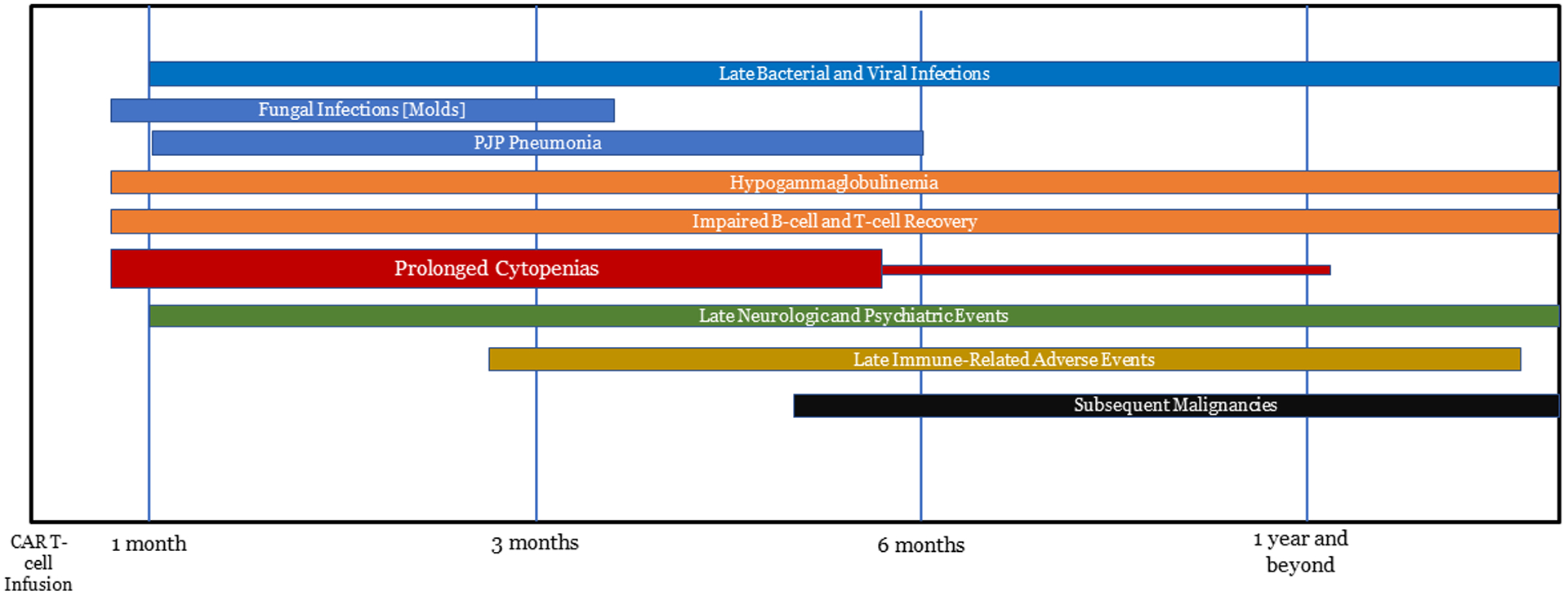
Chimeric Antigen Receptor T-cell [CAR T] therapy has changed the treatment landscape of relapsed/refractory lymphoid malignancies. With an expanding pool of post CAR T-cell therapy survivors, prevention and management of late toxicities is emerging as an important component of survivorship care. This review summarizes the current state of evidence on late toxicities after CAR T-cell therapy in lymphoid malignancies. Late effects that are well described in clinical trials and observational studies include hypogammaglobulinemia, prolonged cytopenias, late infections, neurologic and neuropsychiatric effects, immune-related late effects, and subsequent malignancies. Hypogammaglobulinemia is the most common late effect in the setting of CD19-directed CAR T-cell therapy, which necessitates immunoglobulin replacement. Common determinants of late toxicities are age, underlying tumor type, prior therapy, CAR construct, and acute toxicities. Among currently approved indications, the incidence of hypogammaglobulinemia and prolonged cytopenia is higher in patients with acute lymphoblastic leukemia compared to aggressive non-Hodgkin lymphoma. Patient-reported physical and mental quality of life in long-term survivors is comparable to general population, albeit, with limited data thus far. This review provides an overview of the incidence, known risk-factors, and strategies for prevention and management of late toxicities in this population. Further research is needed to characterize the trajectory of late effects from population-based registries and long-term follow-up of ongoing clinical trials.
Conflict of interest statement
Conflicts of Interest: No relevant financial conflicts of interest.
Figures
References
-
- Schuster SJ, Bishop MR, Tam CS, et al. Tisagenlecleucel in Adult Relapsed or Refractory Diffuse Large B-Cell Lymphoma. The New England journal of medicine. 2019;380(1):45–56. - PubMed
Publication types
MeSH terms
Substances
Grants and funding
LinkOut - more resources
Full Text Sources
Other Literature Sources