


Covid-19 vaccine acceptance, hesitancy, and refusal among Canadian healthcare workers: A multicenter survey
- PMID: 33930516
- PMCID: PMC8079260
- DOI: 10.1016/j.ajic.2021.04.079
Covid-19 vaccine acceptance, hesitancy, and refusal among Canadian healthcare workers: A multicenter survey
Abstract
Background: Determinants of COVID-19 vaccine acceptance among healthcare workers (HCW) remains poorly understood. We assessed HCWs' willingness to be vaccinated and reasons underlying hesitancy.
Methods: Cross-sectional survey across 17 healthcare institutions. HCWs eligible for vaccination (Pfizer-BioNTech mRNA) in December 2020 were invited to receive immunization. Multivariate logistic regression was performed to identify predictors of acceptance. Reasons for refusal among those who never intended to be vaccinated (ie, firm refusers) and those who preferred delaying vaccination (ie, vaccine hesitants) were assessed.
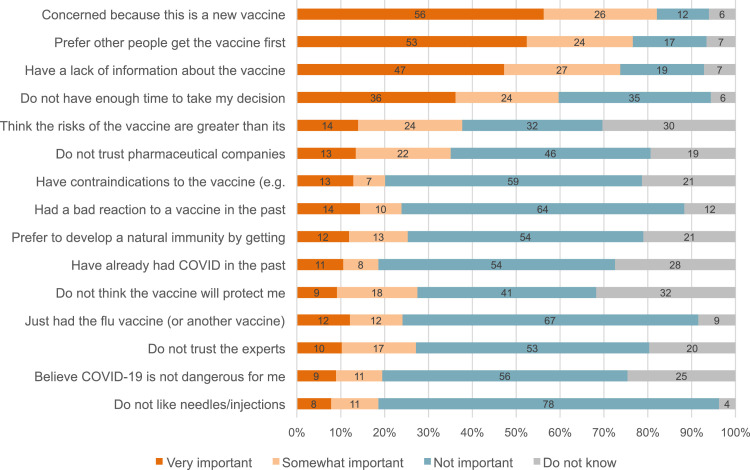
Results: Among 2,761 respondents (72% female, average age, 44), 2,233 (80.9%) accepted the vaccine. Physicians, environmental services workers and healthcare managers were more likely to accept vaccination compared to nurses. Male sex, age over 50, rehabilitation center workers, and occupational COVID-19 exposure were independently associated with vaccine acceptance by multivariate analysis. Factors for refusal included vaccine novelty, wanting others to receive it first, and insufficient time for decision-making. Among those who declined, 74% reported they may accept future vaccination. Vaccine firm refusers were more likely than vaccine hesitants to distrust pharmaceutical companies and to prefer developing a natural immunity by getting COVID-19.
Conclusions: Vaccine hesitancy exists among HCWs. Our findings provide useful information to plan future interventions and improve acceptance.
Keywords: Attitudes; Healthcare personnel; SARS-CoV-2; Vaccination campaigns; Vaccine hesitancy; Vaccine safety.
Copyright © 2021. Published by Elsevier Inc.
Figures
References
-
- World Health Organization . World Health Organization; Geneva: 2020. WHO Director-General's Opening Remarks at the Media Briefing on COVID-19 - 11 March 2020.https://www.who.int/director-general/speeches/detail/who-director-genera... Available at: Accessed March 13, 2021.
-
- World Health Organization . World Health Organization; Geneva: 2021. WHO Coronavirus Disease (COVID-19) Dashboard.https://covid19.who.int/ Available at: Accessed March 13, 2021.
-
- National Advisory Committee on Immunization (NACI) Government of Canada; Ottawa: 2021. Recommendations on the Use of COVID-19 Vaccines. 2021.https://www.canada.ca/en/public-health/services/immunization/national-ad... Available at: Accessed March 13, 2021.
-
- National Advisory Committee on Immunization (NACI) Government of Canada; Ottawa: 2020. Guidance on the Prioritization of Key Populations for COVID-19 Immunization.
-
- Macdonald NE. Vaccine hesitancy: definition, scope and determinants. Vaccine. 2015;33:4161–4164. - PubMed
Publication types
MeSH terms
Substances
LinkOut - more resources
Full Text Sources
Other Literature Sources
Medical
Miscellaneous
