


Epigenomics and immunotherapeutic advances in pediatric brain tumors
- PMID: 33931704
- PMCID: PMC8087701
- DOI: 10.1038/s41698-021-00173-4
Epigenomics and immunotherapeutic advances in pediatric brain tumors
Abstract
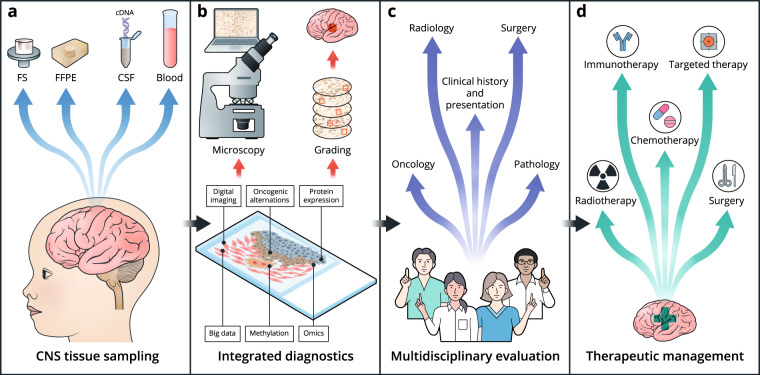
Brain tumors are the leading cause of childhood cancer-related deaths. Similar to adult brain tumors, pediatric brain tumors are classified based on histopathological evaluations. However, pediatric brain tumors are often histologically inconsistent with adult brain tumors. Recent research findings from molecular genetic analyses have revealed molecular and genetic changes in pediatric tumors that are necessary for appropriate classification to avoid misdiagnosis, the development of treatment modalities, and the clinical management of tumors. As many of the molecular-based therapies developed from clinical trials on adults are not always effective against pediatric brain tumors, recent advances have improved our understanding of the molecular profiles of pediatric brain tumors and have led to novel epigenetic and immunotherapeutic treatment approaches currently being evaluated in clinical trials. In this review, we focus on primary malignant brain tumors in children and genetic, epigenetic, and molecular characteristics that differentiate them from brain tumors in adults. The comparison of pediatric and adult brain tumors highlights the need for treatments designed specifically for pediatric brain tumors. We also discuss the advancements in novel molecularly targeted drugs and how they are being integrated with standard therapy to improve the classification and outcomes of pediatric brain tumors in the future.
Conflict of interest statement
The authors declare no competing interests.
Figures
References
Publication types
Grants and funding
LinkOut - more resources
Full Text Sources
Other Literature Sources
Research Materials
