


The central role of mitochondrial fitness on antiviral defenses: An advocacy for physical activity during the COVID-19 pandemic
- PMID: 33932869
- PMCID: PMC8062414
- DOI: 10.1016/j.redox.2021.101976
The central role of mitochondrial fitness on antiviral defenses: An advocacy for physical activity during the COVID-19 pandemic
Abstract
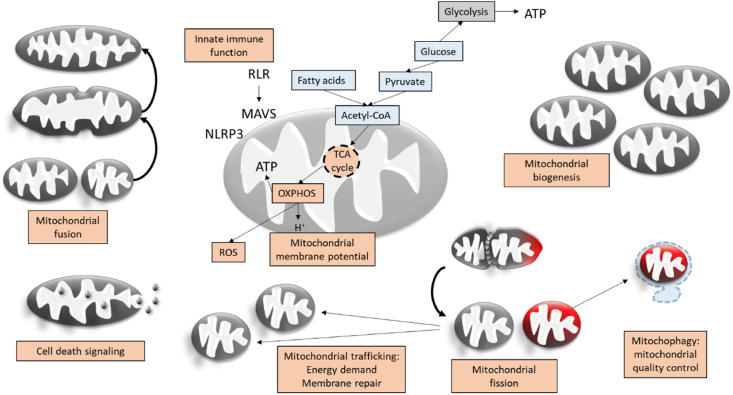
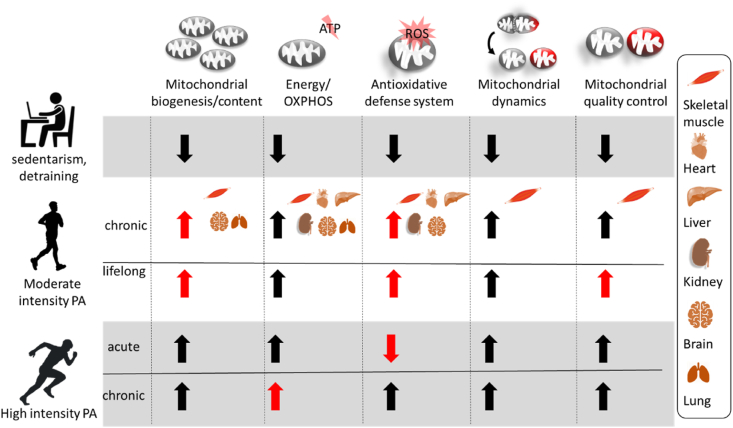
Mitochondria are central regulators of cellular metabolism, most known for their role in energy production. They can be "enhanced" by physical activity (including exercise), which increases their integrity, efficiency and dynamic adaptation to stressors, in short "mitochondrial fitness". Mitochondrial fitness is closely associated with cardiorespiratory fitness and physical activity. Given the importance of mitochondria in immune functions, it is thus not surprising that cardiorespiratory fitness is also an integral determinant of the antiviral host defense and vulnerability to infection. Here, we first briefly review the role of physical activity in viral infections. We then summarize mitochondrial functions that are relevant for the antiviral immune response with a particular focus on the current Coronavirus Disease (COVID-19) pandemic and on innate immune function. Finally, the modulation of mitochondrial and cardiorespiratory fitness by physical activity, aging and the chronic diseases that represent the most common comorbidities of COVID-19 is discussed. We conclude that a high mitochondrial - and related cardiorespiratory - fitness should be considered as protective factors for viral infections, including COVID-19. This assumption is corroborated by reduced mitochondrial fitness in many established risk factors of COVID-19, like age, various chronic diseases or obesity. We argue for regular analysis of the cardiorespiratory fitness of COVID-19 patients and the promotion of physical activity - with all its associated health benefits - as preventive measures against viral infection.
Keywords: COVID; Cardiorespiratory fitness; Exercise; Immune system; Mitochondria; Physical activity; Virus.
Copyright © 2021 The Author(s). Published by Elsevier B.V. All rights reserved.
Conflict of interest statement
All authors contributed to writing the manuscript, all read and agreed to submit the final version of it.
The authors declare no conflicts of interest related to the topic of this review.
Figures
References
-
- Narici M., De Vito G., Franchi M. Impact of sedentarism due to the COVID-19 home confinement on neuromuscular, cardiovascular and metabolic health: physiological and pathophysiological implications and recommendations for physical and nutritional countermeasures. Eur. J. Sport Sci. 2020:1–22. - PubMed
Publication types
MeSH terms
Substances
LinkOut - more resources
Full Text Sources
Other Literature Sources
Medical
