


Heart rate detection properties of dry-electrode ECG compared to conventional 3-lead gel-electrode ECG in newborns
- PMID: 33933159
- PMCID: PMC8088562
- DOI: 10.1186/s13104-021-05576-x
Heart rate detection properties of dry-electrode ECG compared to conventional 3-lead gel-electrode ECG in newborns
Abstract
Objective: To compare the accuracy of heart rate detection properties of a novel, wireless, dry-electrode electrocardiogram (ECG) device, NeoBeat®, to that of a conventional 3-lead gel-electrode ECG monitor (PropaqM®) in newborns.
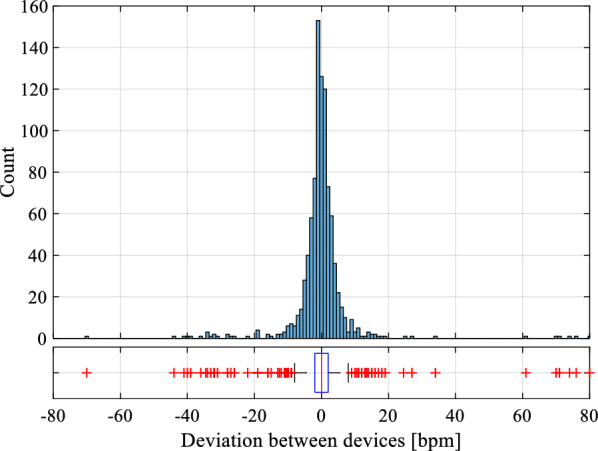
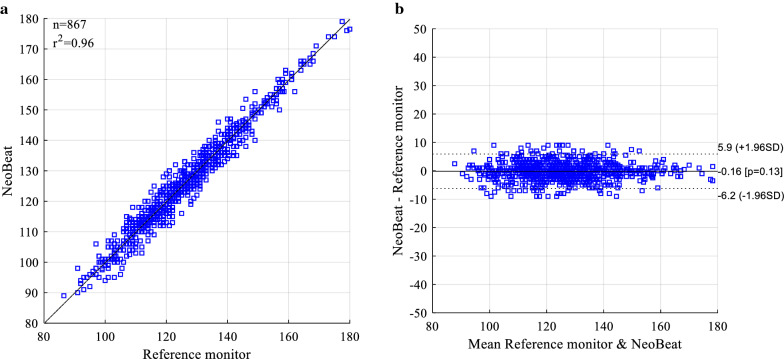
Results: The study population had a mean gestational age of 39 weeks and 2 days (1.5 weeks) and birth weight 3528 g (668 g). There were 950 heart rate notations from each device, but heart rate was absent from the reference monitor in 14 of these data points, leaving 936 data pairs to compare. The mean (SD) difference when comparing NeoBeat to the reference monitor was -0.25 (9.91) beats per minute (bpm) (p = 0.44). There was a deviation of more than 10 bpm in 7.4% of the data pairs, which primarily (78%) was attributed to ECG signal disturbance, and secondly (22%) due to algorithm differences between the devices. Excluding these outliers, the correlation was equally consistent (r2 = 0.96) in the full range of heart rate captured measurements with a mean difference of - 0.16 (3.09) bpm. The mean difference was less than 1 bpm regardless of whether outliers were included or not.
Keywords: Dry-electrode ECG; Electrocardiogram; Heart rate; NeoBeat; Neonate; Newborn; Resuscitation; Validation.
Conflict of interest statement
JL is an employee of Laerdal Medical. JL`s spouse is an employee at Laerdal Global Health.
Figures
References
-
- Skare C, Kramer-Johansen J, Steen T, Odegaard S, Niles DE, Nakstad B, et al. Incidence of newborn stabilization and resuscitation measures and guideline compliance during the first minutes of life in Norway. Neonatology. 2015;108(2):100–107. - PubMed
-
- Wyckoff MH, Wyllie J, Aziz K, de Almeida MF, Fabres J, Fawke J, et al. Neonatal life support: 2020 international consensus on cardiopulmonary resuscitation and emergency cardiovascular care science with treatment recommendations. Circulation. 2020;142(16_suppl_1):S185–221. - PubMed
-
- van Vonderen JJ, Hooper SB, Kroese JK, Roest AA, Narayen IC, van Zwet EW, et al. Pulse oximetry measures a lower heart rate at birth compared with electrocardiography. J Pediatr. 2015;166(1):49–53. - PubMed
-
- Mizumoto H, Tomotaki S, Shibata H, Ueda K, Akashi R, Uchio H, et al. Electrocardiogram shows reliable heart rates much earlier than pulse oximetry during neonatal resuscitation. Pediatr Int. 2012;54(2):205–207. - PubMed
MeSH terms
Grants and funding
LinkOut - more resources
Full Text Sources
Other Literature Sources
