


Promoting Successful Cognitive Aging: A Ten-Year Update
- PMID: 33935078
- PMCID: PMC8293659
- DOI: 10.3233/JAD-201462
Promoting Successful Cognitive Aging: A Ten-Year Update
Abstract
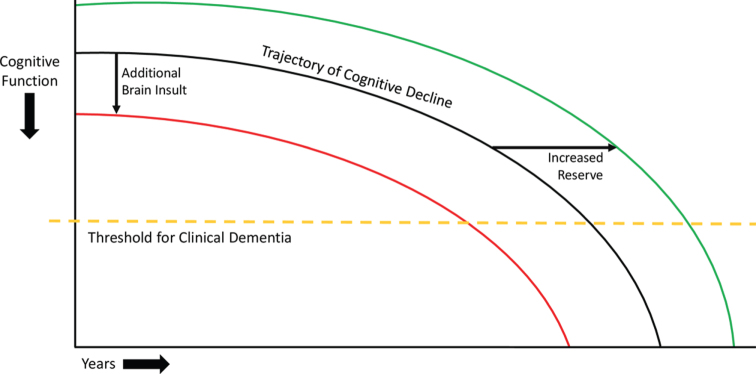
A decade has passed since we published a comprehensive review in this journal addressing the topic of promoting successful cognitive aging, making this a good time to take stock of the field. Because there have been limited large-scale, randomized controlled trials, especially following individuals from middle age to late life, some experts have questioned whether recommendations can be legitimately offered about reducing the risk of cognitive decline and dementia. Despite uncertainties, clinicians often need to at least make provisional recommendations to patients based on the highest quality data available. Converging lines of evidence from epidemiological/cohort studies, animal/basic science studies, human proof-of-concept studies, and human intervention studies can provide guidance, highlighting strategies for enhancing cognitive reserve and preventing loss of cognitive capacity. Many of the suggestions made in 2010 have been supported by additional research. Importantly, there is a growing consensus among major health organizations about recommendations to mitigate cognitive decline and promote healthy cognitive aging. Regular physical activity and treatment of cardiovascular risk factors have been supported by all of these organizations. Most organizations have also embraced cognitively stimulating activities, a heart-healthy diet, smoking cessation, and countering metabolic syndrome. Other behaviors like regular social engagement, limiting alcohol use, stress management, getting adequate sleep, avoiding anticholinergic medications, addressing sensory deficits, and protecting the brain against physical and toxic damage also have been endorsed, although less consistently. In this update, we review the evidence for each of these recommendations and offer practical advice about behavior-change techniques to help patients adopt brain-healthy behaviors.
Keywords: Cognitive aging; cognitive decline; cognitive reserve; dementia; healthy aging; healthy lifestyle; mild cognitive impairment; preventive medicine; risk reduction.
Conflict of interest statement
Authors’ disclosures available online (
Figures
References
-
- Institute of Medicine (2015) Cognitive aging: Progress in understanding and opportunities for action, The National Academies Press, Washington DC. - PubMed
-
- Alzheimer’s Association, 10 Ways to Love Your Brain, https://alz.org/help-support/brain_health/10_ways_to_love_your_brain, Accessed on 9 September 2020.
-
- Livingston G, Huntley J, Sommerlad A, Ames D, Ballard C, Banerjee S, Brayne C, Burns A, Cohen-Mansfield J, Cooper C, Costafreda SG, Dias A, Fox N, Gitlin LN, Howard R, Kales HC, Kivimäki M, Larson EB, Ogunniyi A, Orgeta V, Ritchie K, Rockwood K, Sampson EL, Samus Q, Schneider LS, Selbæk G, Teri L, Mukadam N (2020) Dementia prevention, intervention, and care: 2020 report of the Lancet Commission. Lancet 396, 413–446. - PMC - PubMed
-
- American Heart Association, My Life Check | Life’s Simple 7, https://www.heart.org/en/healthy-living/healthy-lifestyle/my-life-check–..., Last updated 2 May 2018, Accessed on 5 September 2019.
Publication types
MeSH terms
LinkOut - more resources
Full Text Sources
Other Literature Sources
Medical
