


Biosynthesis of silver nanoparticles using Malva parviflora and their antifungal activity
- PMID: 33935565
- PMCID: PMC8071962
- DOI: 10.1016/j.sjbs.2021.01.012
Biosynthesis of silver nanoparticles using Malva parviflora and their antifungal activity
Abstract
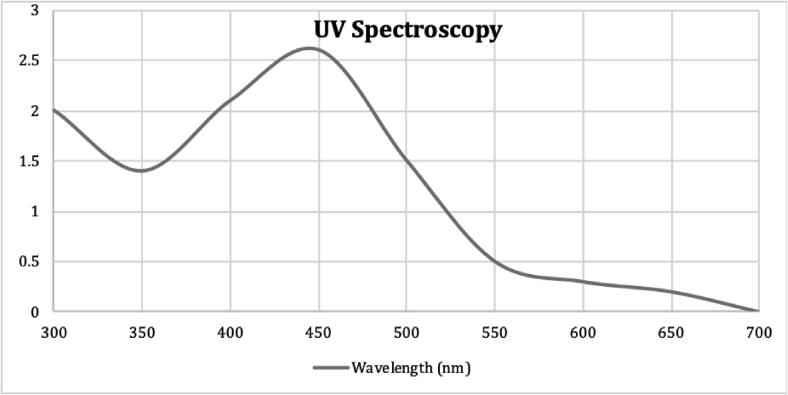
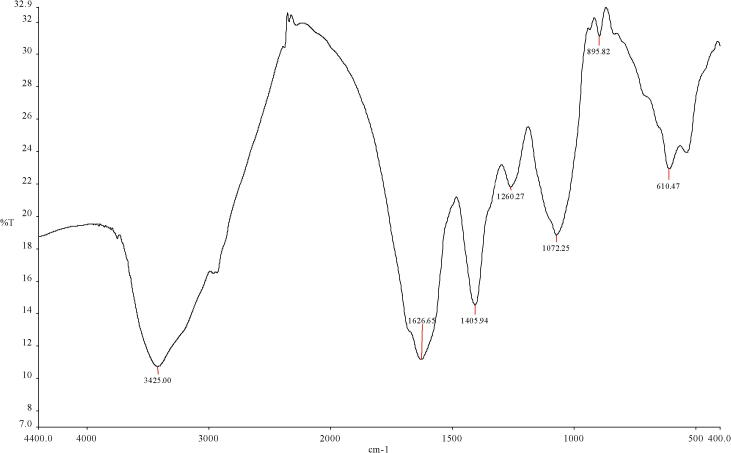
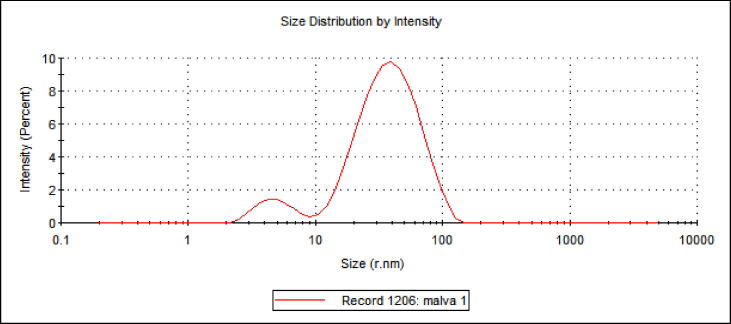
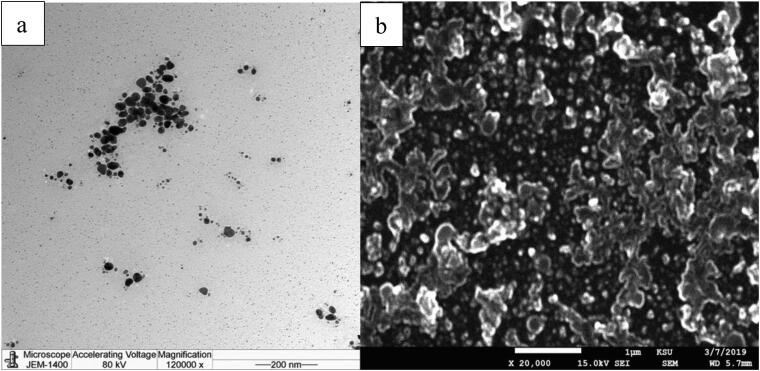
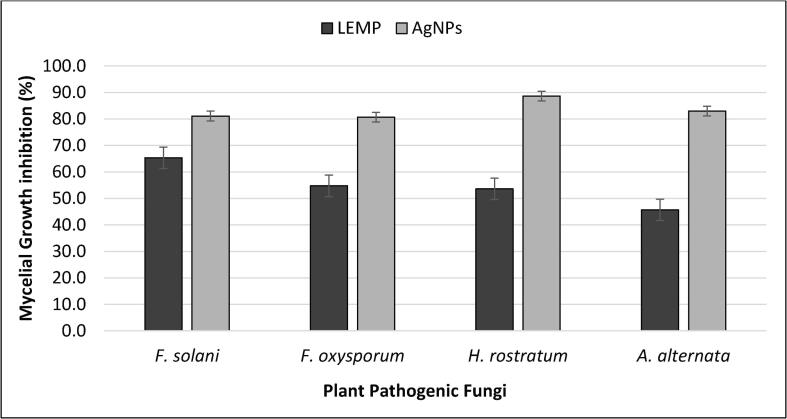
Cheeseweed mallow (Malva parviflora L.) was used to biosynthesize silver nanoparticles. The biosynthesized silver nanoparticles were classified by UV-vis Spectroscopy and Fourier-Transform Infrared Spectroscopy (FT-IR). The shape and size distribution were visualized by Transmission Electron Microscopy (TEM), Field Emission Scanning Electron Microscopy (FE-SEM), and Zeta potential analysis. The chemical composition of M. parviflora leaf extract was identified by Gas Chromatography and Mass Spectroscopy (GC/MS). Finally, in vitro antifungal assay was done to assess the potential of biosynthesized silver nanoparticles and crude leaf extract of M. parviflora for inhibiting the mycelial growth of phytopathogenic fungi. The UV-vis analysis manifests the formation of silver nanoparticles. FTIR analysis established that chemicals of the leaf extract stabilized the biosynthesized silver nanoparticles by binding with the free silver ions. The TEM, FE-SEM and zeta potential analyzer confirmed that the biosynthesized silver nanoparticles were mostly spherical with an average diameter of 50.6 nm. The biosynthesized silver nanoparticles and leaf extract of M. parviflora effectively mitigate the mycelial growth of Helminthosporium rostratum, Fusarium solani, Fusarium oxysporum, and Alternaria alternata. The maximum reduction in mycelial growth by biosynthesized nanoparticles was observed against H. rostratum (88.6%). Whereas, the leaf extract of M. parviflora was most effective against F. solani (65.3%). Thus, the biosynthesis of nanoparticle assisted by M. parviflora is a feasible and eco-friendly method for the synthesis of silver nanoparticles. Further the silver nanoparticles and leaf extract of M. parviflora could be explored for the development of the fungicide.
Keywords: AgNPs, silver nanoparticles; Antifungal activity; DLS, Dynamic Light Scattering; FE-SEM; FE-SEM, Field Emission Scanning Electron Microscopy; FT-IR; FT-IR, Fourier-Transform Infrared Spectroscopy; GC/MS, Gas Chromatography/Mass Spectrometry; Helminthosporium rostratum; LEMP, leaf extract of M. parviflora; Malva parviflora; PDI, Polydispersity Index; SPR, Surface Plasmon Resonance; Silver nanoparticles.
© 2021 The Author(s).
Conflict of interest statement
The authors declare that they have no conflict of interest
Figures

References
-
- Abad, M. J., Ansuategui, M., Bermejo, P., 2007. Active antifungal substances from natural sources. In Arkivoc (Vol. 2007, Issue 7). doi: 10.3998/ark.5550190.0008.711.
-
- Akhtar M.S., Panwar J., Yun Y.S. Biogenic synthesis of metallic nanoparticles by plant extracts. ACS Sustain. Chem. Eng. 2013;1(6) doi: 10.1021/sc300118u. - DOI
-
- Almagboul A.Z., Bashir A.K., Farouk A., Salih A.K.M. Antimicrobial activity of certain Sudanese plants used in folkloric medicine. Screening for antibacterial activity (IV) Fitoterapia. 1985;56(6) - PubMed
LinkOut - more resources
Full Text Sources
Other Literature Sources
Miscellaneous
