


"Help! I Need Somebody": Music as a Global Resource for Obtaining Wellbeing Goals in Times of Crisis
- PMID: 33935907
- PMCID: PMC8079817
- DOI: 10.3389/fpsyg.2021.648013
"Help! I Need Somebody": Music as a Global Resource for Obtaining Wellbeing Goals in Times of Crisis
Abstract
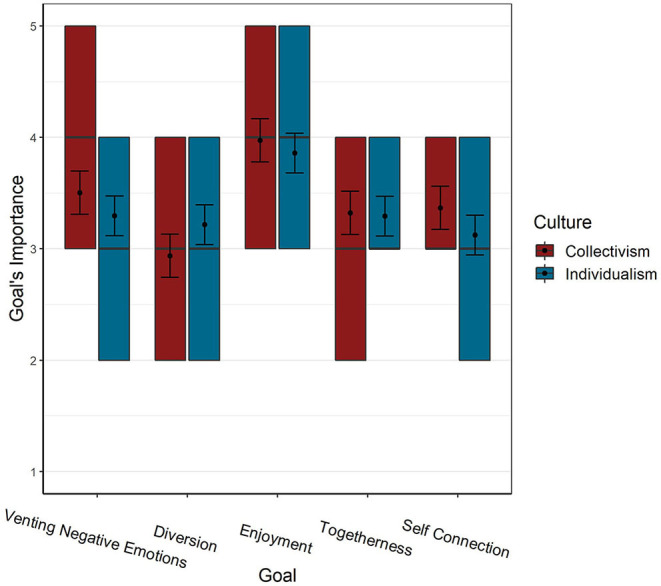
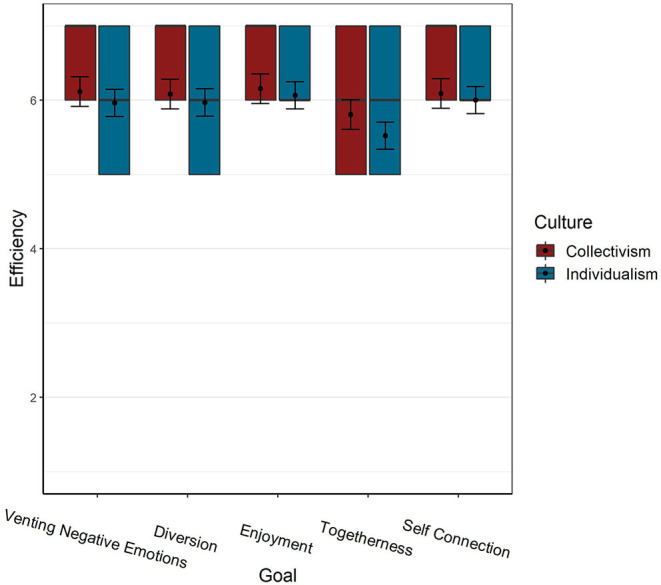
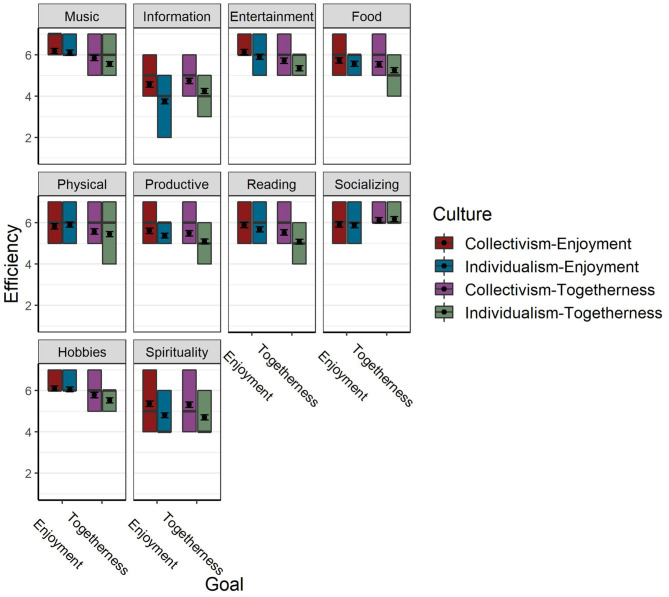
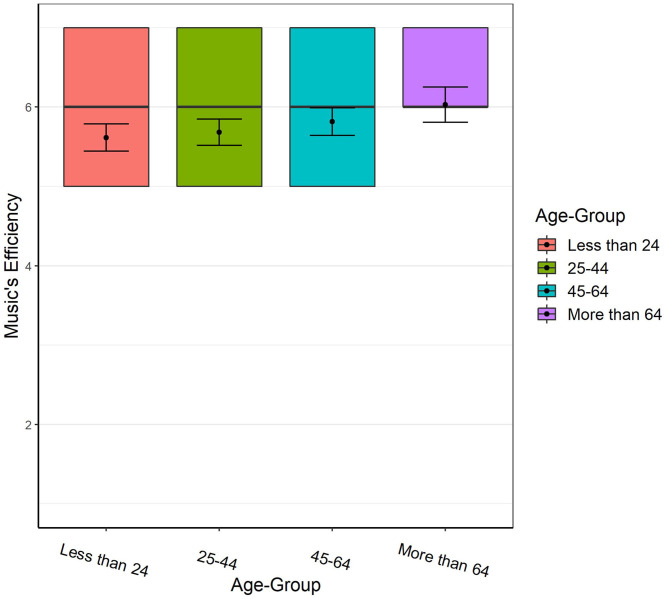
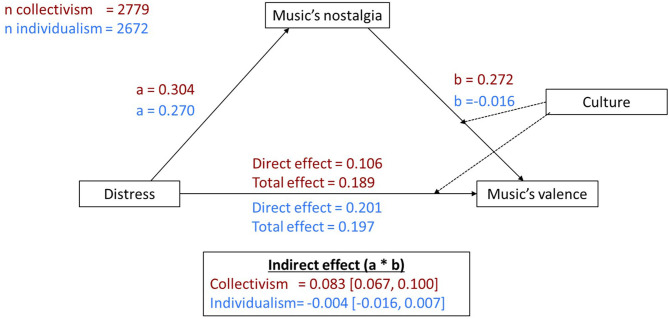
Music can reduce stress and anxiety, enhance positive mood, and facilitate social bonding. However, little is known about the role of music and related personal or cultural (individualistic vs. collectivistic) variables in maintaining wellbeing during times of stress and social isolation as imposed by the COVID-19 crisis. In an online questionnaire, administered in 11 countries (Argentina, Brazil, China, Colombia, Italy, Mexico, the Netherlands, Norway, Spain, the UK, and USA, N = 5,619), participants rated the relevance of wellbeing goals during the pandemic, and the effectiveness of different activities in obtaining these goals. Music was found to be the most effective activity for three out of five wellbeing goals: enjoyment, venting negative emotions, and self-connection. For diversion, music was equally good as entertainment, while it was second best to create a sense of togetherness, after socialization. This result was evident across different countries and gender, with minor effects of age on specific goals, and a clear effect of the importance of music in people's lives. Cultural effects were generally small and surfaced mainly in the use of music to obtain a sense of togetherness. Interestingly, culture moderated the use of negatively valenced and nostalgic music for those higher in distress.
Keywords: COVID-19; age; gender; individualistic and collectivistic cultures; mood regulation; music; nostalgia; wellbeing.
Copyright © 2021 Granot, Spitz, Cherki, Loui, Timmers, Schaefer, Vuoskoski, Cárdenas-Soler, Soares-Quadros, Li, Lega, La Rocca, Martínez, Tanco, Marchiano, Martínez-Castilla, Pérez-Acosta, Martínez-Ezquerro, Gutiérrez-Blasco, Jiménez-Dabdoub, Coers, Treider, Greenberg and Israel.
Conflict of interest statement
The authors declare that the research was conducted in the absence of any commercial or financial relationships that could be construed as a potential conflict of interest.
Figures
References
-
- Allik J., McCrae R. R. (2002). A five-factor theory perspective, in The Five-Factor Model of Personality Across Cultures, eds McCrae R. R., Allik J. (Boston, MA: Springer; ), 303–322. 10.1007/978-1-4615-0763-5_15 - DOI
-
- Baltazar M., Saarikallio S. (2016). Toward a better understanding and conceptualization of affect self-regulation through music: a critical, integrative literature review. Psychol. Music 44, 1500–1521. 10.1177/0305735616663313 - DOI
LinkOut - more resources
Full Text Sources
Other Literature Sources
