Review
. 2021 Jan 7;12(4):448-471.
doi: 10.1039/d0md00370k. eCollection 2021 Apr 28.

Put a ring on it: application of small aliphatic rings in medicinal chemistry

Affiliations
Review

Put a ring on it: application of small aliphatic rings in medicinal chemistry

Matthias R Bauer et al. RSC Med Chem. .

Abstract

Aliphatic three- and four-membered rings including cyclopropanes, cyclobutanes, oxetanes, azetidines and bicyclo[1.1.1]pentanes have been increasingly exploited in medicinal chemistry for their beneficial physicochemical properties and applications as functional group bioisosteres. This review provides a historical perspective and comparative up to date overview of commonly applied small rings, exemplifying key principles with recent literature examples. In addition to describing the merits and advantages of each ring system, potential hazards and liabilities are also illustrated and explained, including any significant chemical or metabolic stability and toxicity risks.


Conflict of interest statement

All authors are employees of AstraZeneca.

Figures
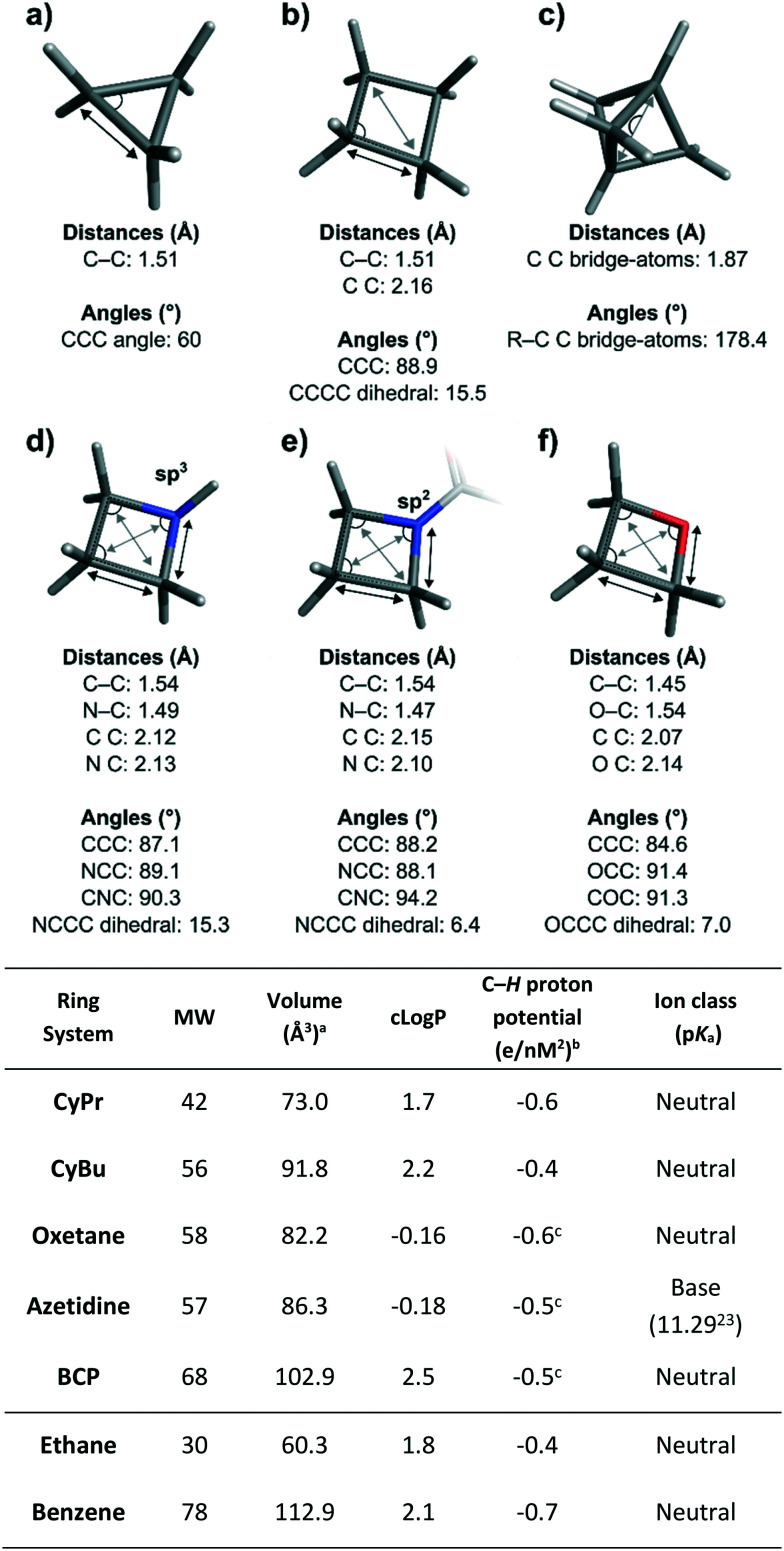
Fig. 1
Fig. 1. Top: Median values for key structural parameters of the small rings featured in this review. a) Cyclopropane. b) Cyclobutane. c) Bicyclo[1.1.1]pentane. d) Azetidine with sp3 hybridised nitrogen atom. e) Azetidine with sp2 hybridised nitrogen atom. f) Oxetane. Ring systems are depicted without substituents except for the azetidine with sp2 nitrogen. Bonded (A–A) and non-bonded atom distances (A A) are highlighted respectively with black and grey arrows and non-redundant angles are shown as circular segments. Statistics were generated via analysis of data from the Cambridge Structural Database, the Protein Data Bank, and in-house X-ray data using RDkit for substructure matching and computation of geometric values, and Spotfire for statistical analysis. The analysis included spirocyclic derivatives but not fused and bridged systems (with the exception of bicyclo[1.1.1]pentanes). Bottom: Structural and physicochemical features of the ring systems featured in this review. Benzene and ethane are included for comparison. aVan der Waals volume. bMeasured using COSMO surfaces.cMost polarized protons (C–H adjacent to heteroatom for oxetane and azetidine; bridgehead C–H for BCP).
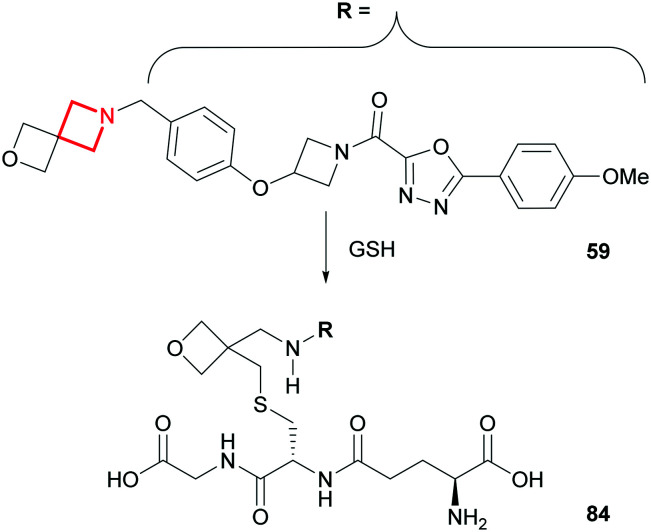
Fig. 2
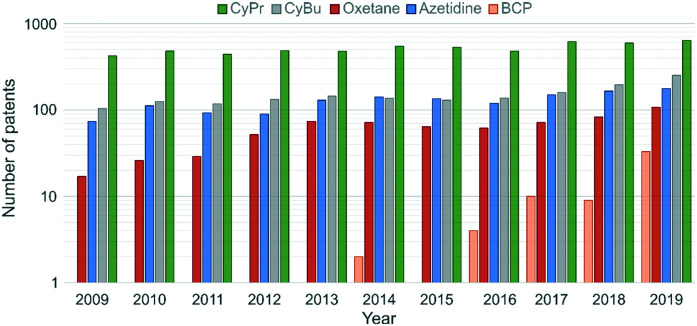
Fig. 2. Number of drug substance patents containing CyPr, CyBu, oxetane, azetidine and BCP substructures filed between 2009 and 2019. β-Lactones and β-lactams were excluded from the analysis.
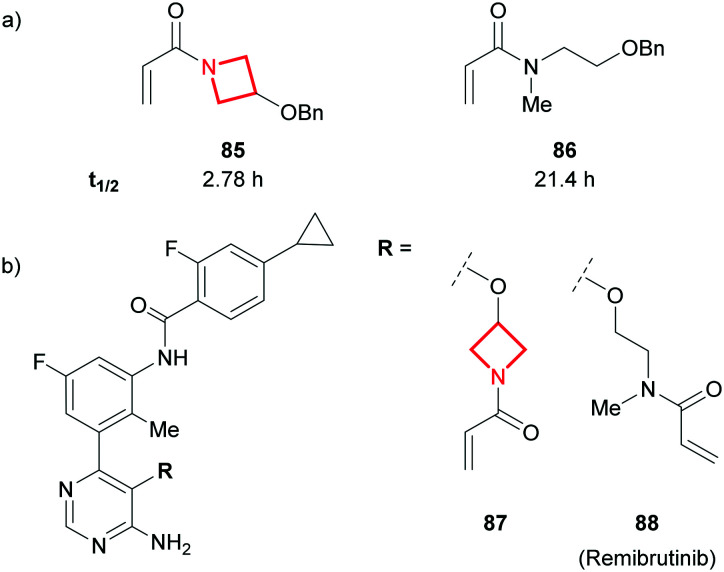
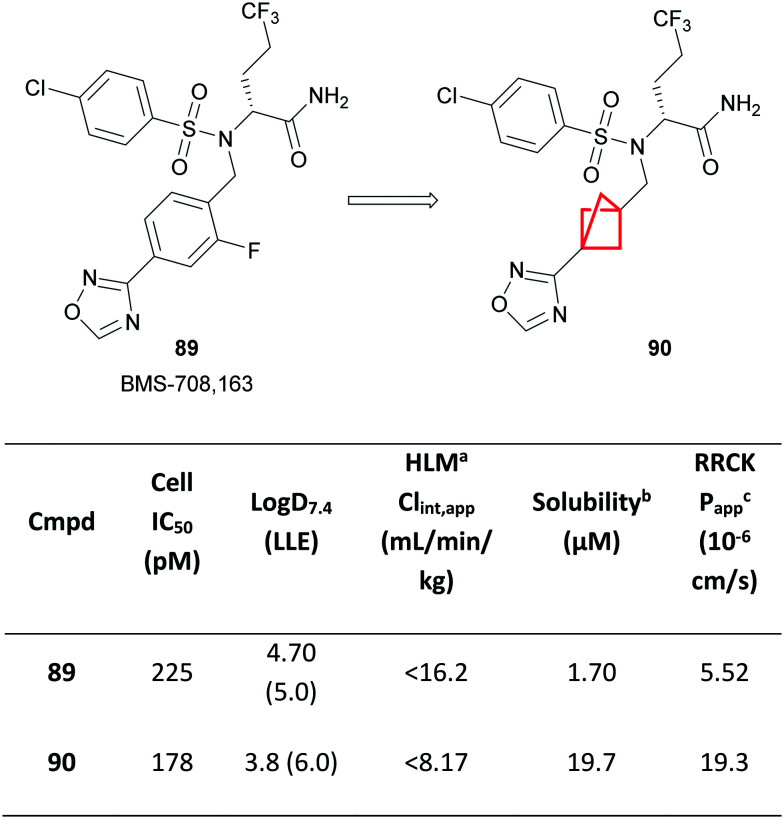
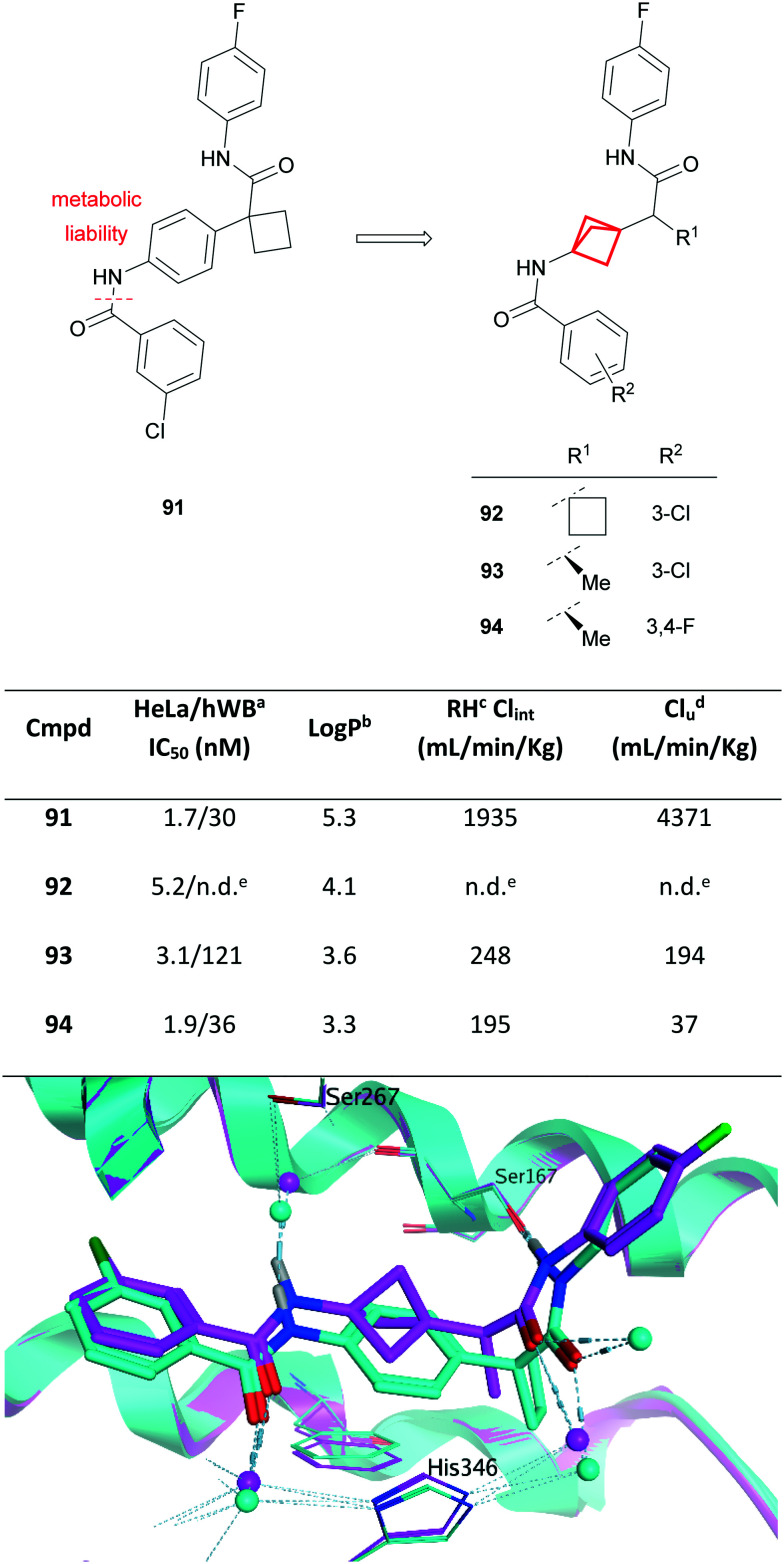
Fig. 3
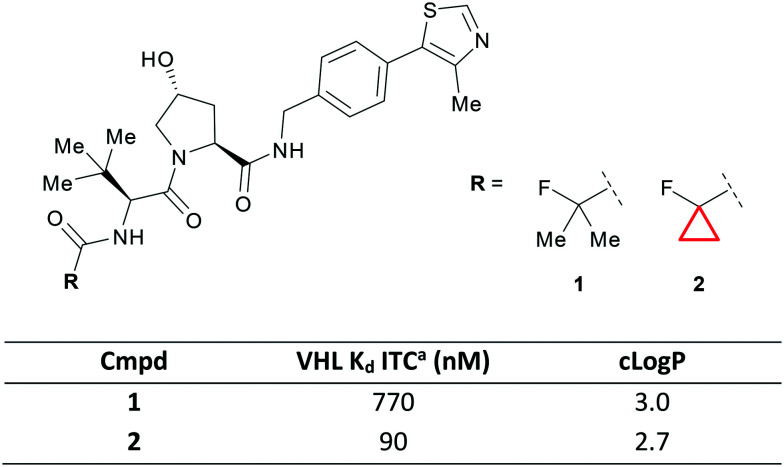
Fig. 3. CyPr as an iPr isostere in the optimisation of VHL ligands.aIsothermal titration calorimetry.
Fig. 4
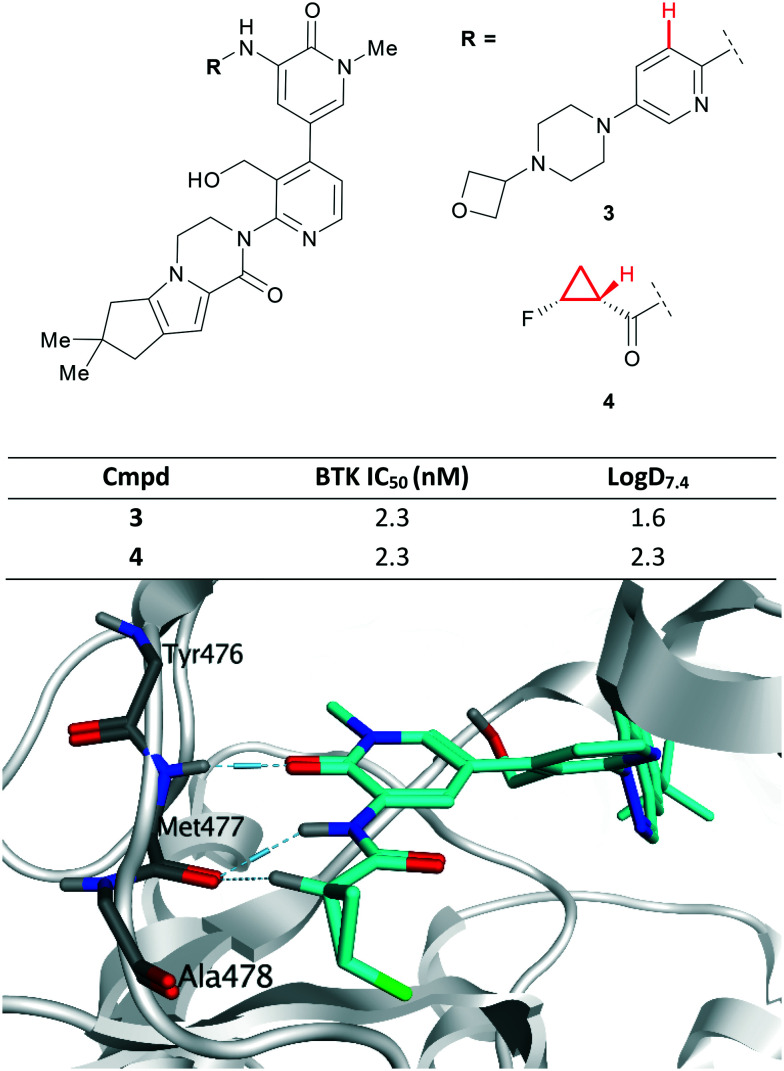
Fig. 4. Top: Optimisation of BTK inhibitors by replacement of a 2,5-diaminopyridine, a potential structural hazard. Bottom: Close-up view of 4 (cyan) bound to BTK (PDB code: 6XE4), highlighting hydrogen bonding interactions (pale blue dashed lines) with the hinge (Met477), including nonclassical hydrogen bond with the polarised CyPr proton.
Fig. 5
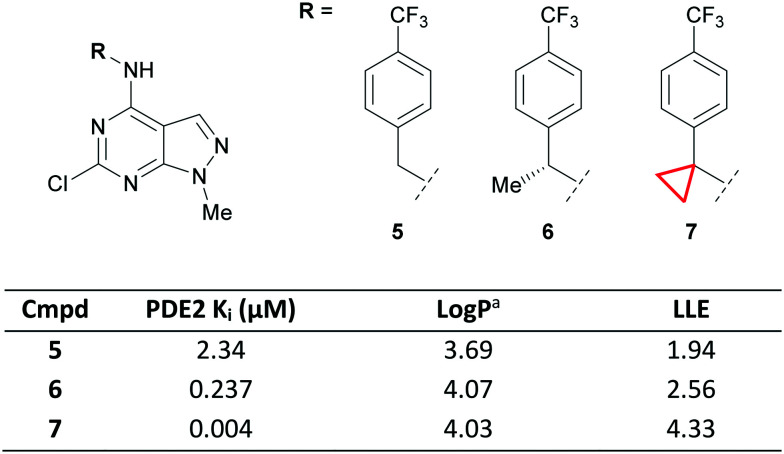
Fig. 5. Optimisation of PDE2 ligands via conformational stabilisation.aLog P = Alog P98.
Fig. 6
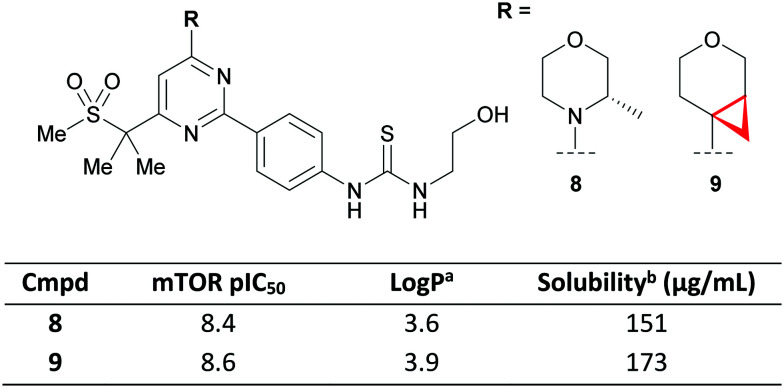
Fig. 6. CyPr THP as a morpholine isostere in a PI3K–mTOR inhibitor.aLog P = measured ChromLog P.bKinetic solubility measured at pH 7.4.
Fig. 7
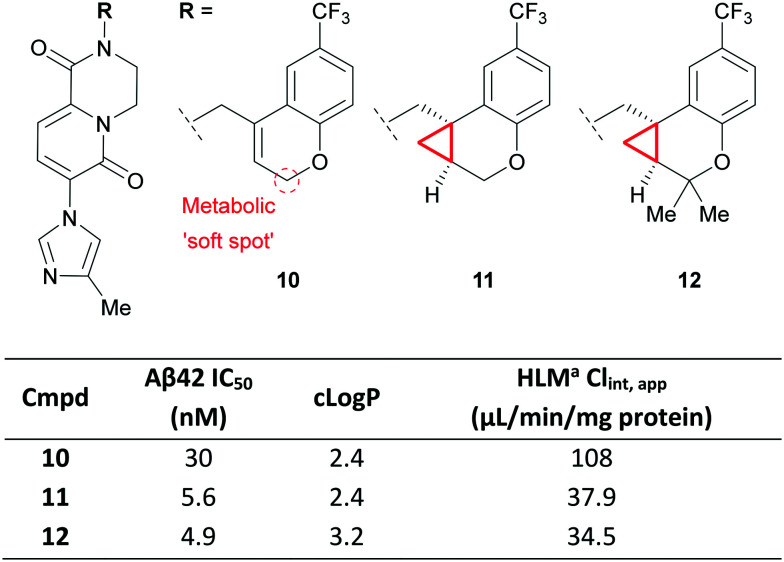
Fig. 7. Exploration of CyPr as an alkene isostere.aHuman liver microsomes.
Fig. 8
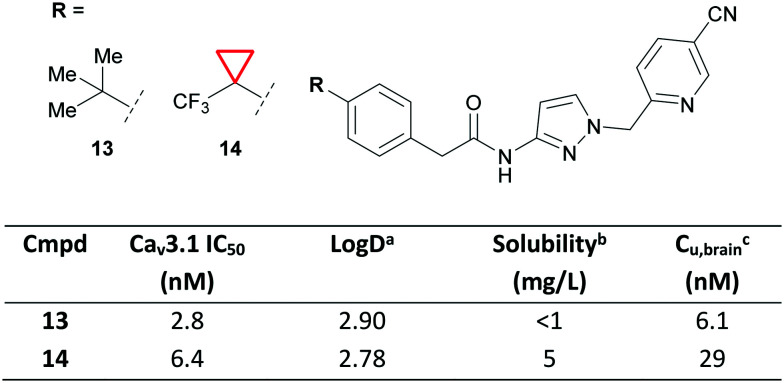
Fig. 8. Improving the solubility of TTCC blockers using CyPr.aLog D = AZ log D, calculated Log D at pH 7.4. bSolubility measured at pH 7.0. cUnbound concentration in the brain. Wistar rats were dosed orally with 10 mg kg−1 of 13 and 14.
Fig. 9
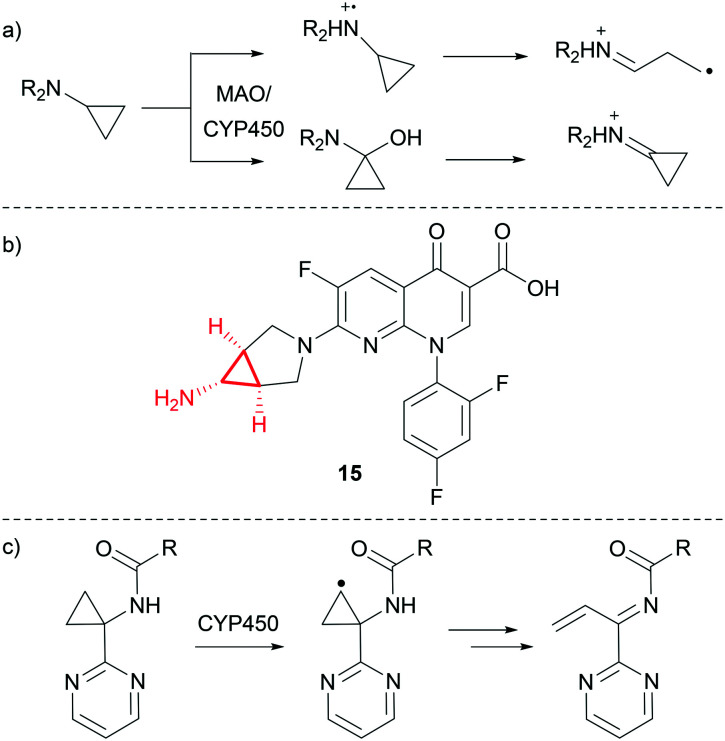
Fig. 9. a) Mechanisms of reactive metabolite formation from CyPr amines. b) Trovafloxacin. c) CYP450-mediated oxidation of a cyclopropylamine β-carbon.
Fig. 10
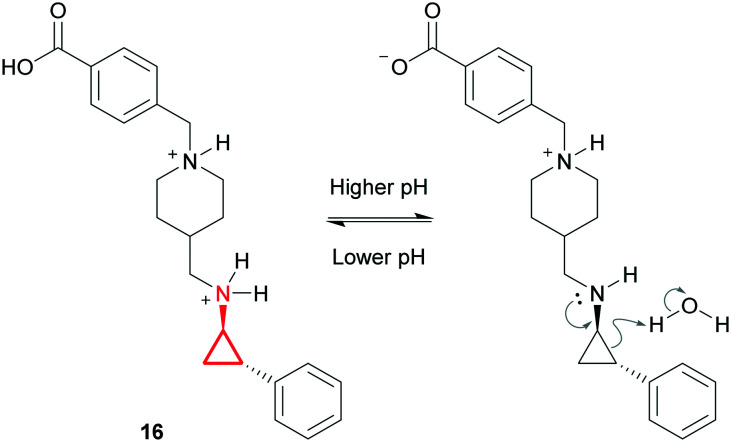
Fig. 10. Chemical degradation of GSK2879552 (16).
Fig. 11
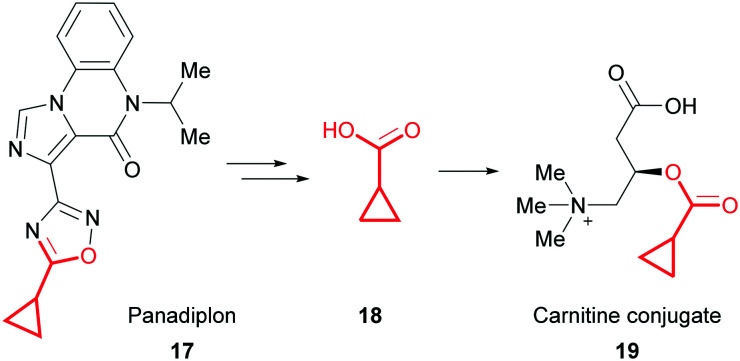
Fig. 11. Formation of a CyPr carnitine conjugate from panadiplon (17).
Fig. 12
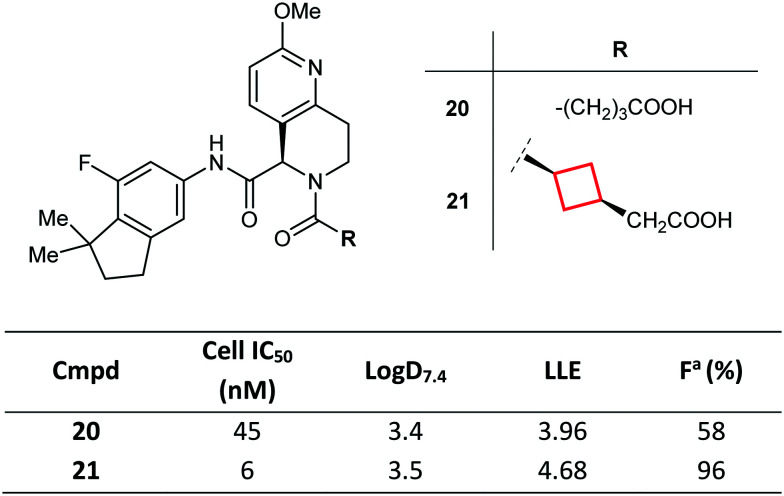
Fig. 12. Optimisation of RORγt inverse agonists via conformational rigidification of the acid tether with a CyBu group.aFraction of dose reaching systemic circulation (bioavailability). Mice were dosed orally with 10 mg kg−1 of 20 and 21.
Fig. 13
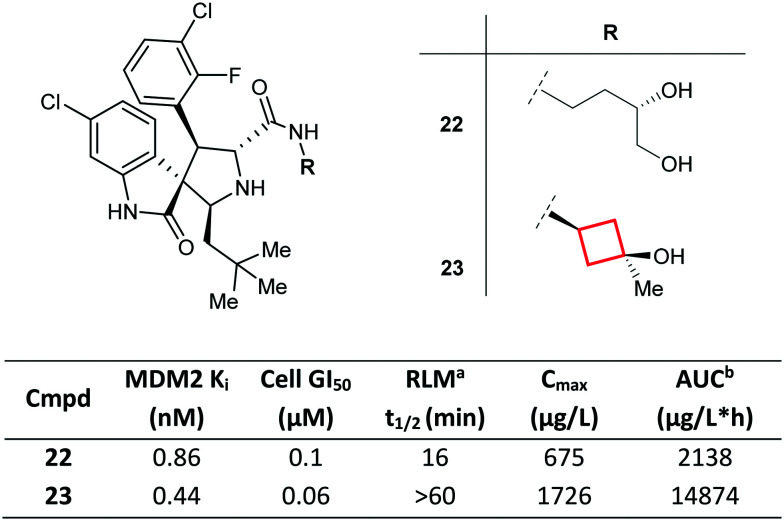
Fig. 13. Optimisation of inhibitors of the MDM2-p53 interaction via conformational rigidification of the carbinol side chain with a CyBu group.aRat liver microsomes. bArea under the plasma concentration time curve. Rats were dosed orally with 25 mg kg−1 of 22 and 23.
Fig. 14
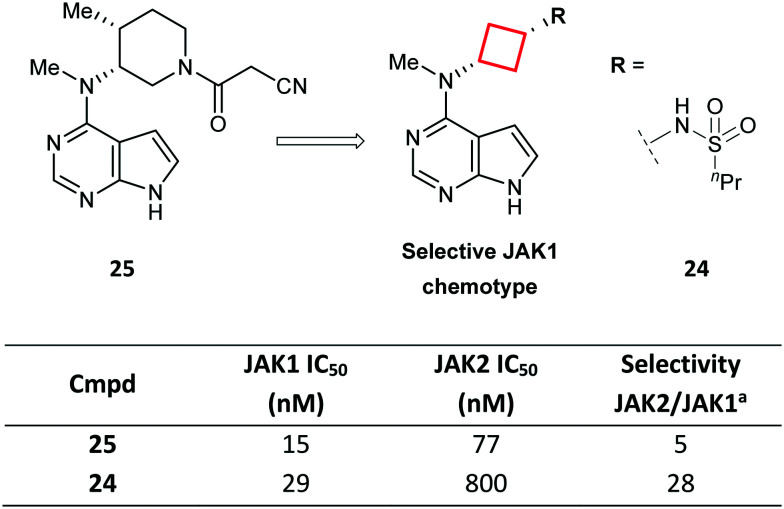
Fig. 14. Optimisation of selective JAK1 inhibitors via ring contraction of a piperidyl ring to a CyBu core.aRatio of IC50 for JAK2 vs. JAK1.
Fig. 15
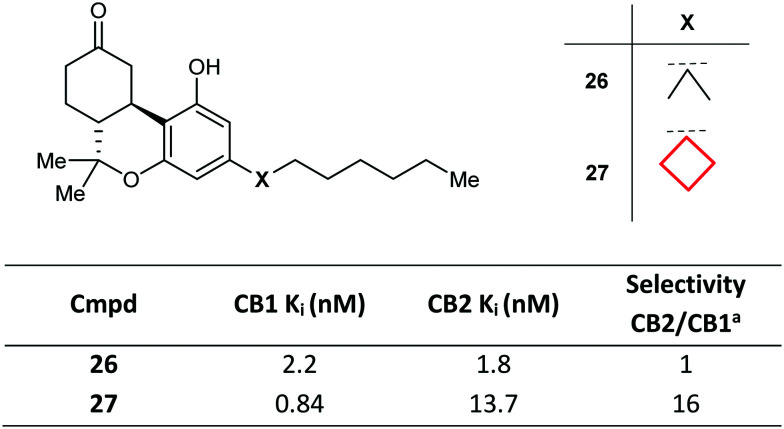
Fig. 15. Development of cannabinoid receptor 1 (CB1) agonists via gem-dimethyl replacement with a CyBu group.aRatio of binding affinities for CB2 vs. CB1.
Fig. 16
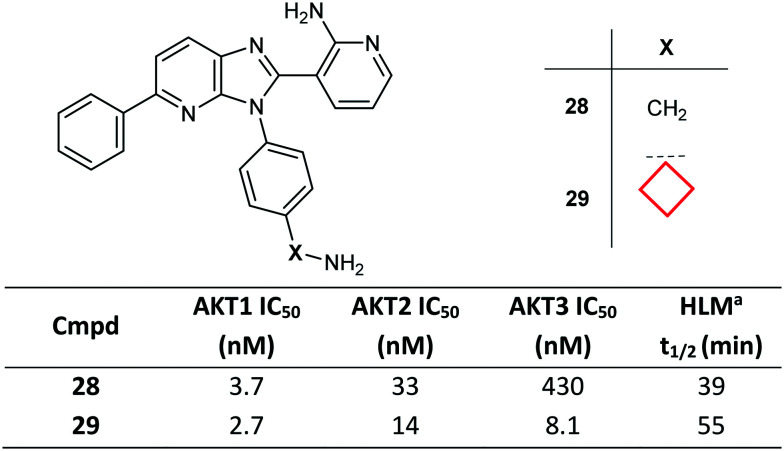
Fig. 16. Optimisation of AKT inhibitors via side chain branching with a CyBu group.aHuman liver microsomal stability at 1 μM test compound.
Fig. 17
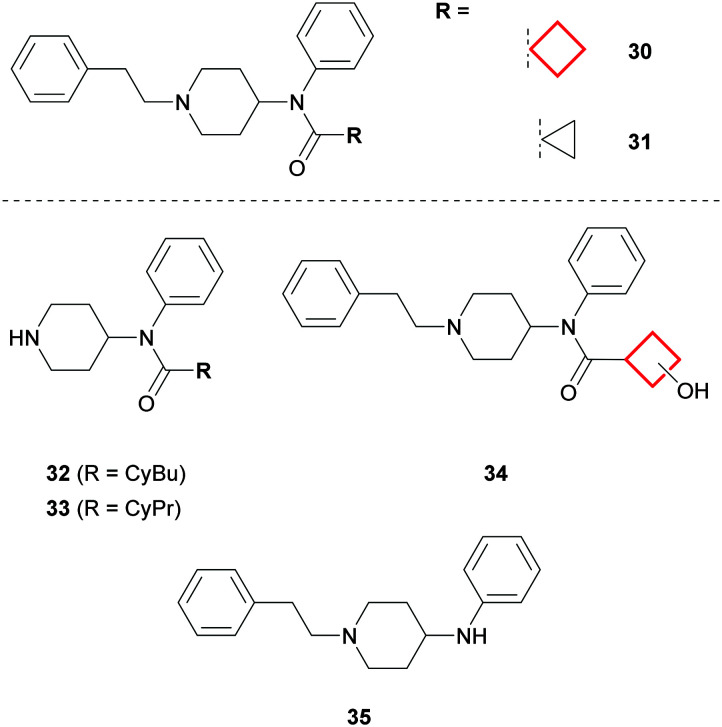
Fig. 17. MetID studies on CyBu-fentanyl (30) and CyPr-fentanyl (31).
Fig. 18
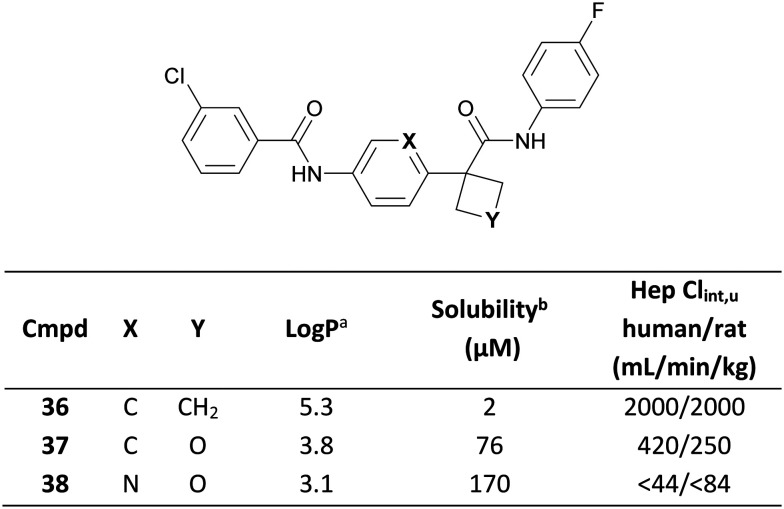
Fig. 18. Reducing lipophilicity of IDO1 inhibitors through oxetane incorporation.aLog P = Alog P98.bFasted state simulated intestinal fluid (FaSSIF) solubility measured at pH 6.5.
Fig. 19
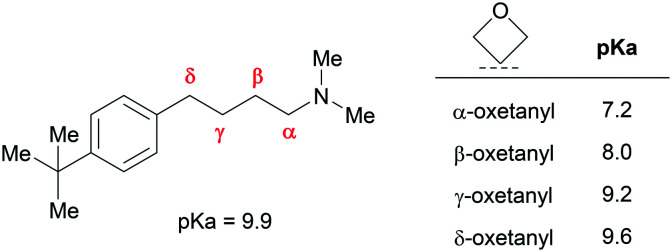
Fig. 19. Effect of oxetane introduction on amine pKa for a series of alkylamines.
Fig. 20
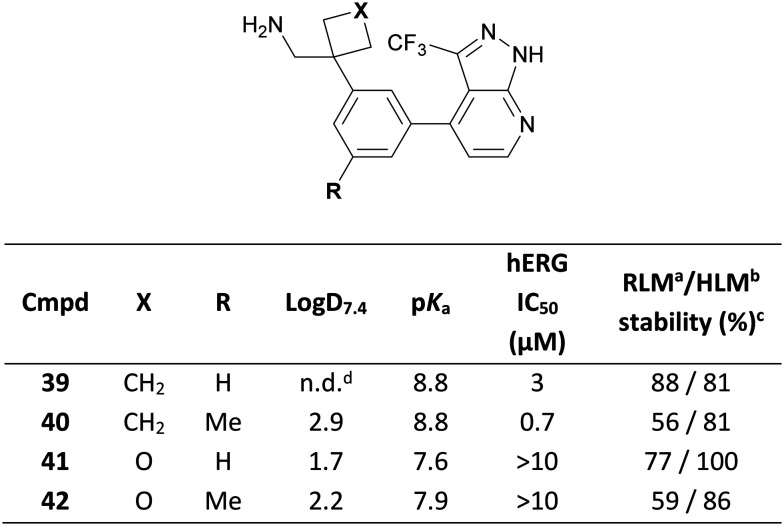
Fig. 20. Reducing hERG inhibition of PKCθ inhibitors through oxetane incorporation.aRat liver microsomes. bHuman liver microsomes. c% remaining after 30 minutes incubation. dNot determined.
Fig. 21
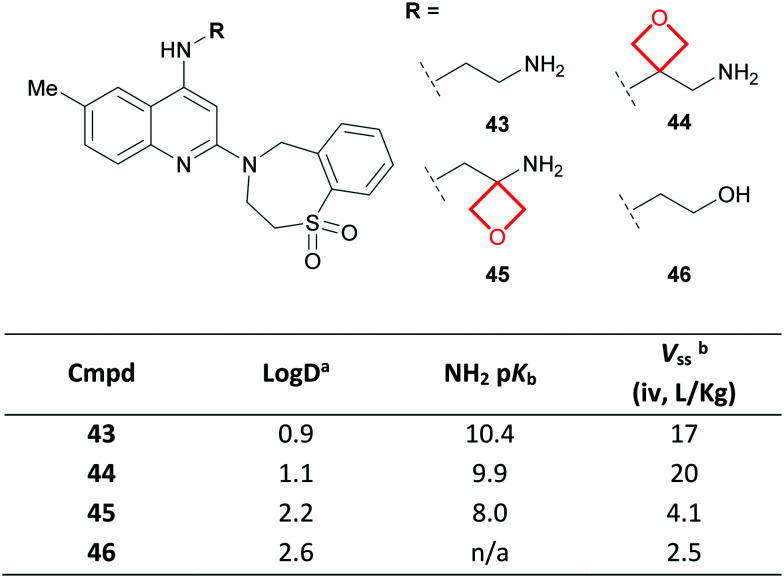
Fig. 21. Improving the PK of RSVF inhibitors via incorporation of an oxetane.aLog D = machine learning Log D. bVolume of distribution at steady state.
Fig. 22
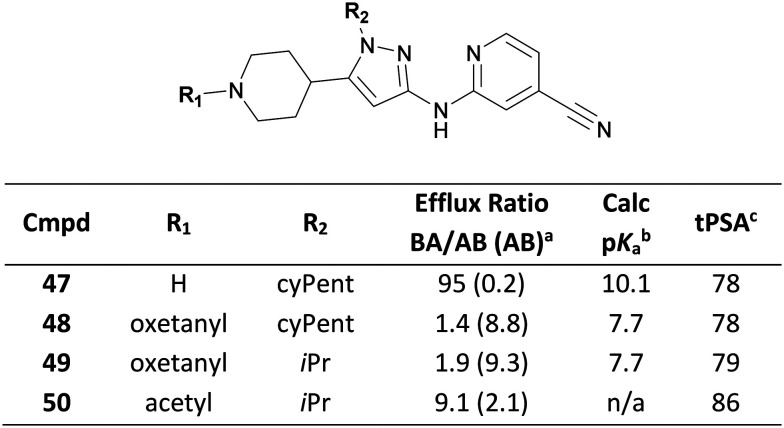
Fig. 22. Improving efflux of DLK, MAP3K12 inhibitors via oxetane incorporation.aMDCK-MDR1 permeability; AB = apical-to-basolateral; BA = basolateral-to-apical. bPiperidine pKa values were calculated using ACDLabs.cTopological polar surface area.
Fig. 23
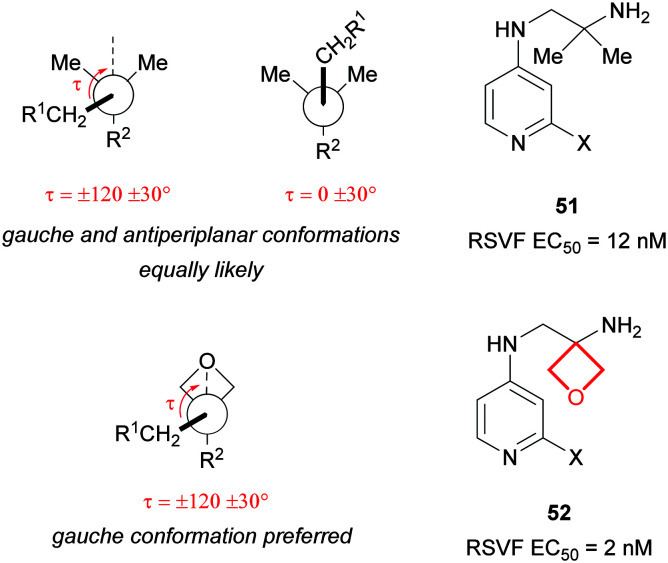
Fig. 23. Comparison of conformational preferences of alkyl chains bearing an oxetane vs. a gem-dimethyl group and effect on potency for a matched pair of RSVF inhibitors (X = undisclosed substitution).
Fig. 24
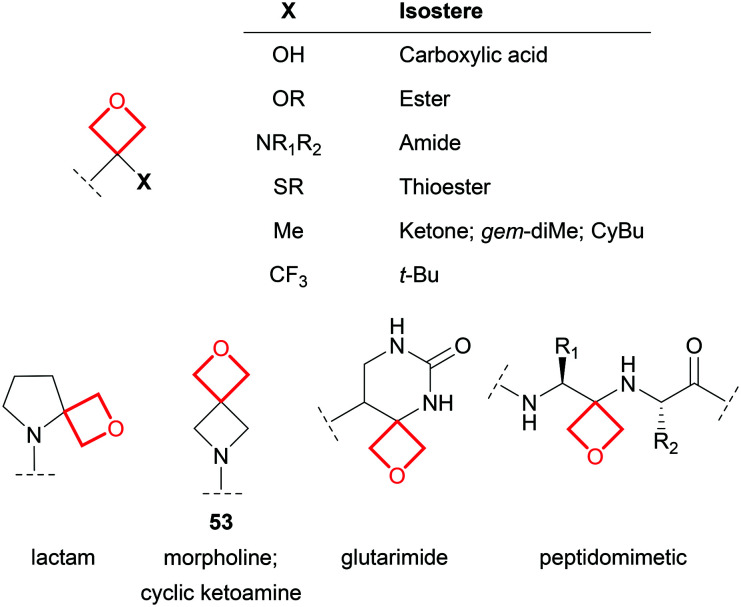
Fig. 24. Examples of proposed oxetanyl isosteres of various functional groups.
Fig. 25
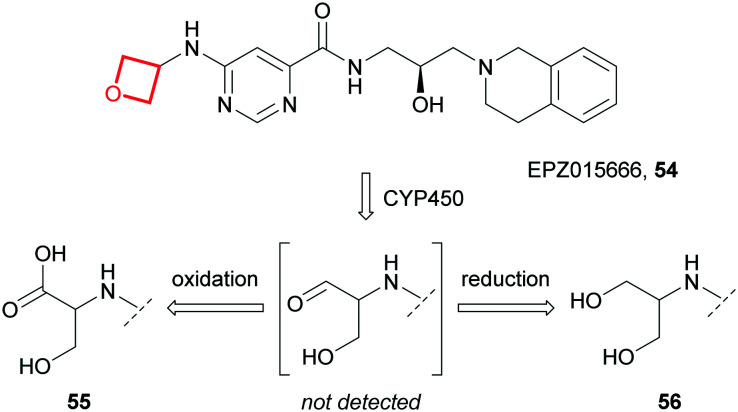
Fig. 25. The major metabolites of EPZ015666 (54), formed via CYP450-mediated oxidation of the oxetane ring.
Fig. 26
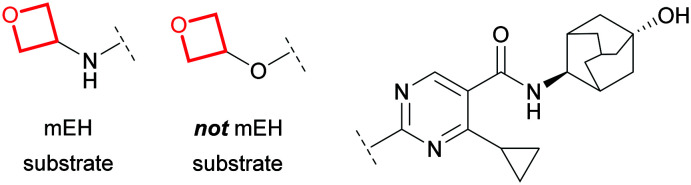
Fig. 26. Subtle structural changes can influence mEH recognition.
Fig. 27
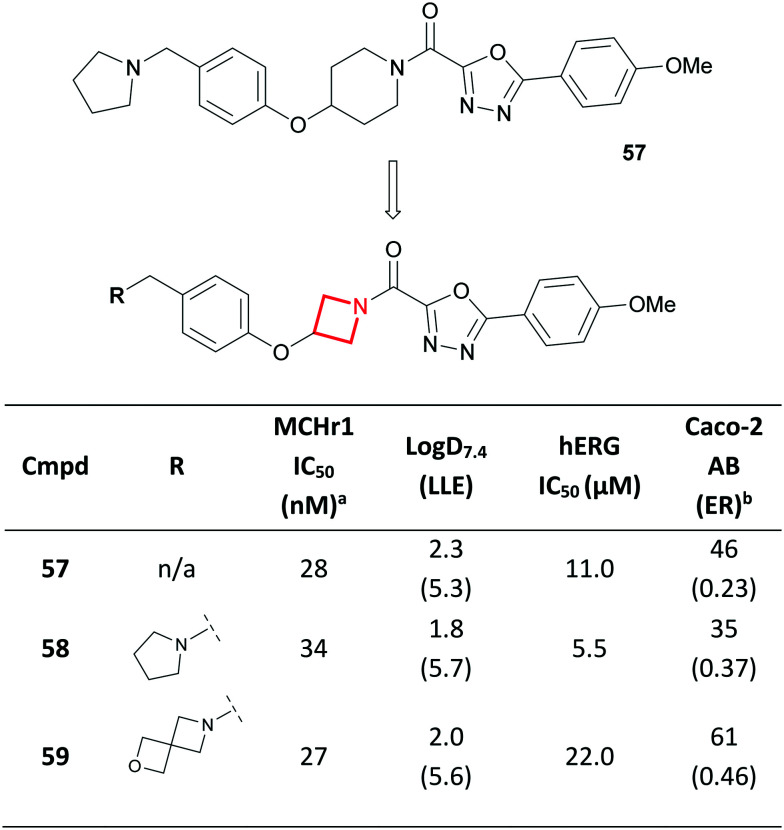
Fig. 27. Discovery of azetidine-containing MCHr1 antagonist AZD1979 (59).aFunctional [35S]GTPγS assay developed for MCHr1. bCaco-2 permeability; AB = apical-to-basolateral; ER = efflux ratio.
Fig. 28
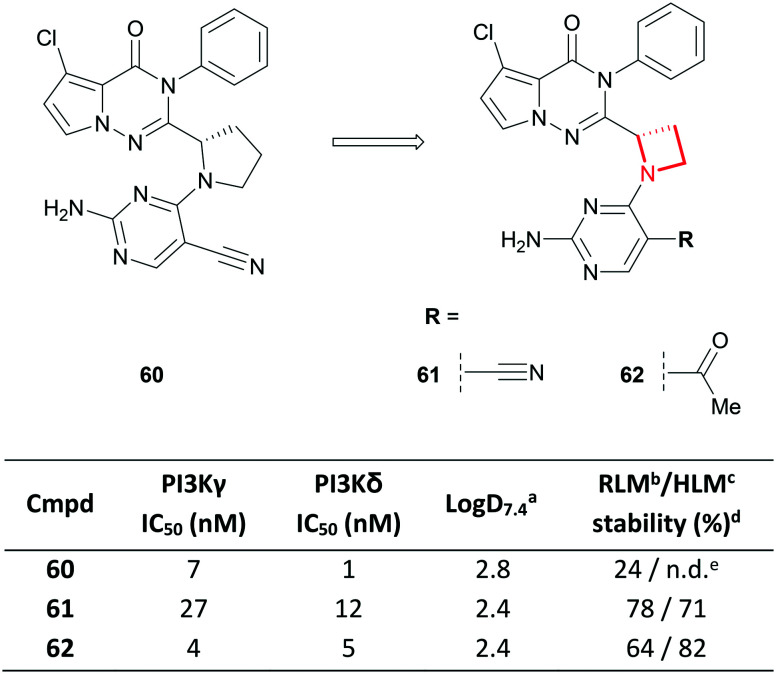
Fig. 28. Replacement of the 1,2-disubstituted pyrrolidine core of a series of PI3Kγ/δ dual inhibitors with an azetidine.aLog D = AZ log D, calculated Log D at pH 7.4. bRat liver microsomes. cHuman liver microsomes. d% remaining after 30 minutes incubation. eNot determined.
Fig. 29
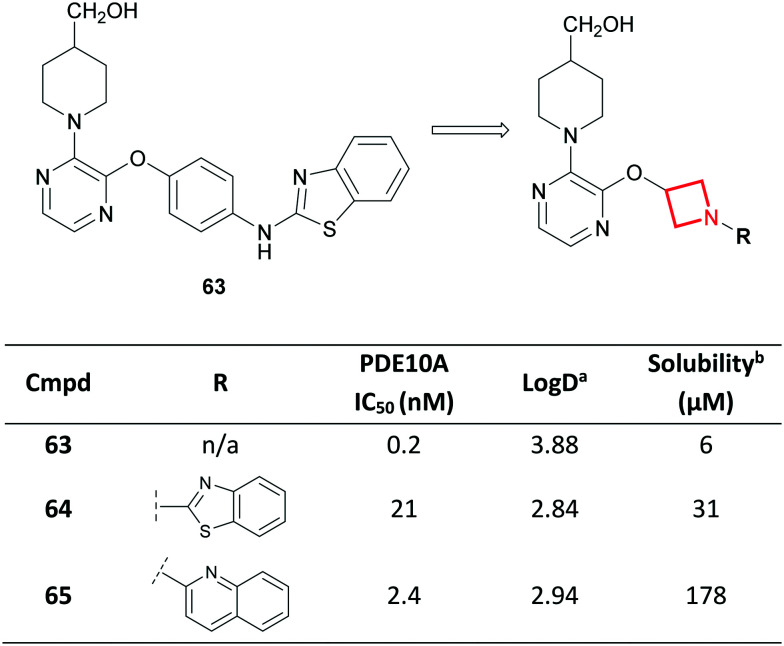
Fig. 29. Solubility enhancements in Amgen's PDE10A inhibitor drug discovery program.aLog D = AZ log D, calculated Log D at pH 7.4. bAqueous solubility measured at pH 7.4 using a phosphate buffered saline solubility assay.
Fig. 30
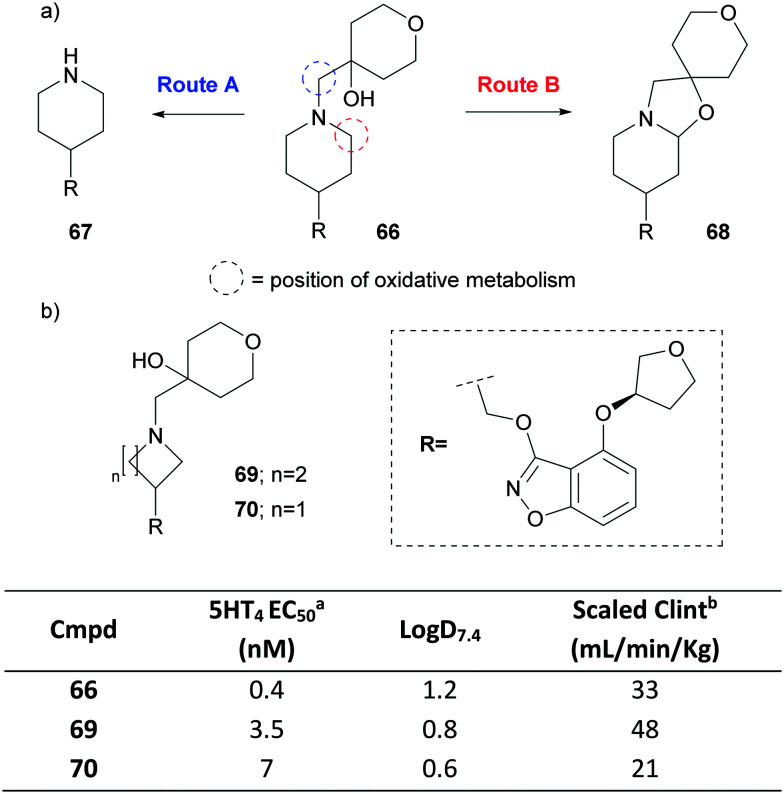
Fig. 30. a) Metabolites observed in pooled human plasma for PF-04995274 (66). b) Optimisation of the 5-HT4 partial agonist.acAMP HTRF agonist assay. bHuman liver microsomes scaled to the whole liver using physiological parameters (not corrected for incubational binding).
Fig. 31
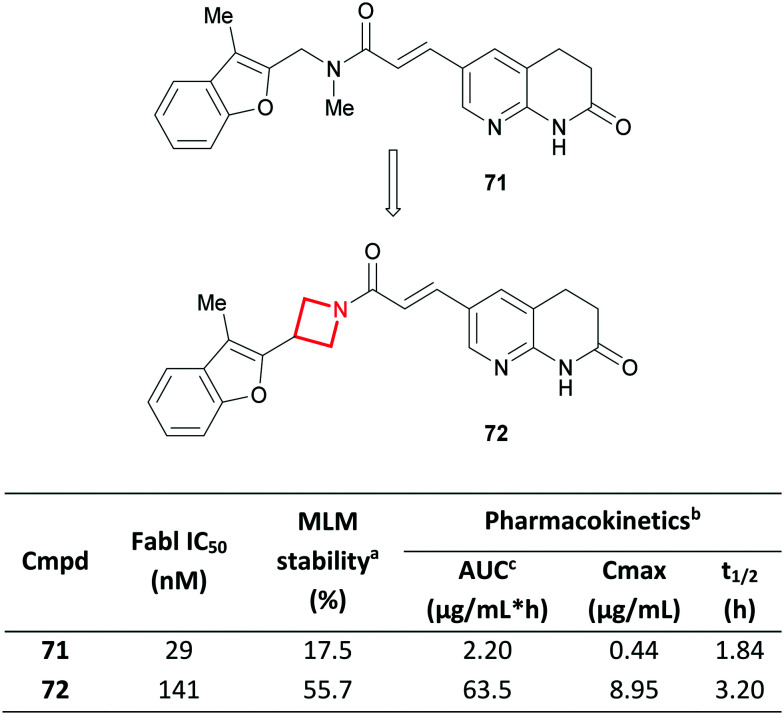
Fig. 31. Conformational restriction of Fabl inhibitors and their effect on in vitro metabolism and in vivo PK.aIn vitro metabolism study in mouse liver microsomes; value indicates % of compound remaining after a 60 min incubation. bSingle dose in mice (P.O., 10 mg kg−1). cArea under plasma concentration time curve.
Fig. 32
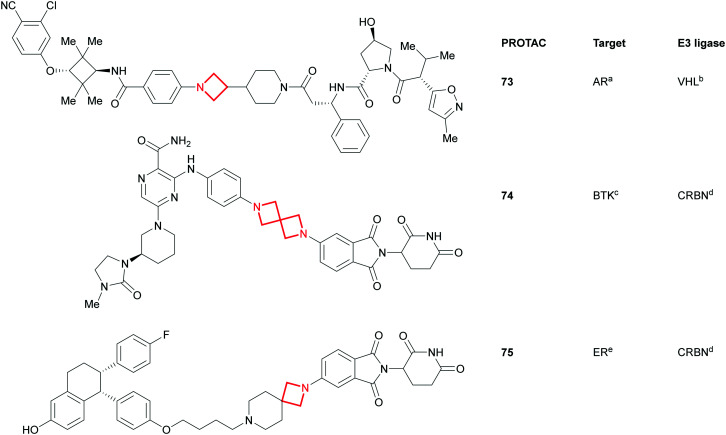
Fig. 32. Azetidine- and spiroazetidine-containing PROTACs. PROTACs are aligned with the target binding ligand, linker and E3 ligase binding ligand from left to right. aAndrogen receptor; bVon-Hippel Lindau; cBruton's tyrosine kinase; dcereblon; e estrogen receptor.
Fig. 33
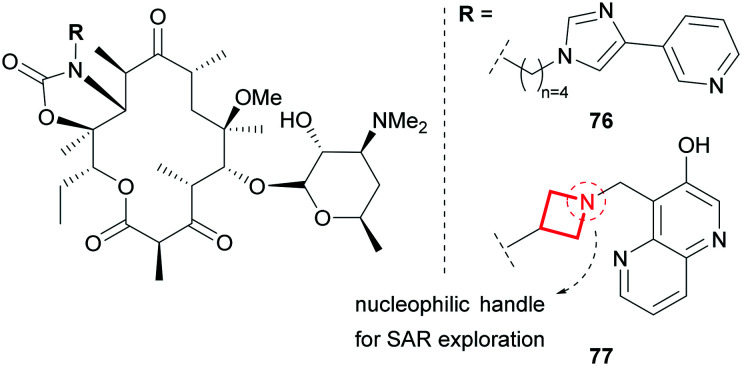
Fig. 33. Azetidine as a tether in the optimisation of ketolide antibiotics.
Fig. 34
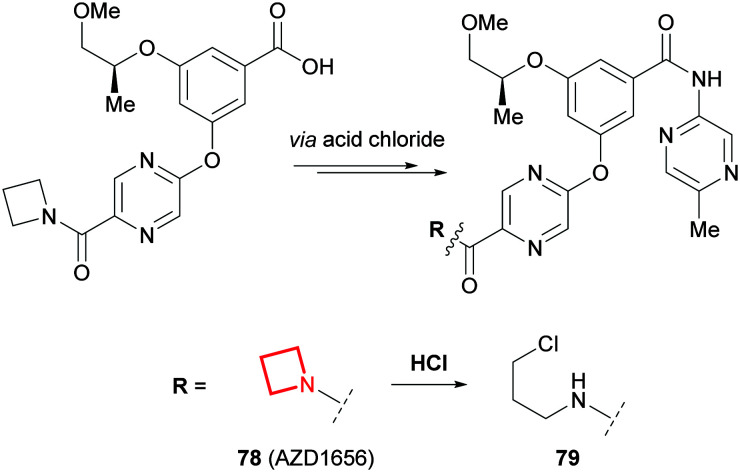
Fig. 34. Hydrochloric acid promoted ring opening of the azetidine in AZD1656 (78).
Fig. 35
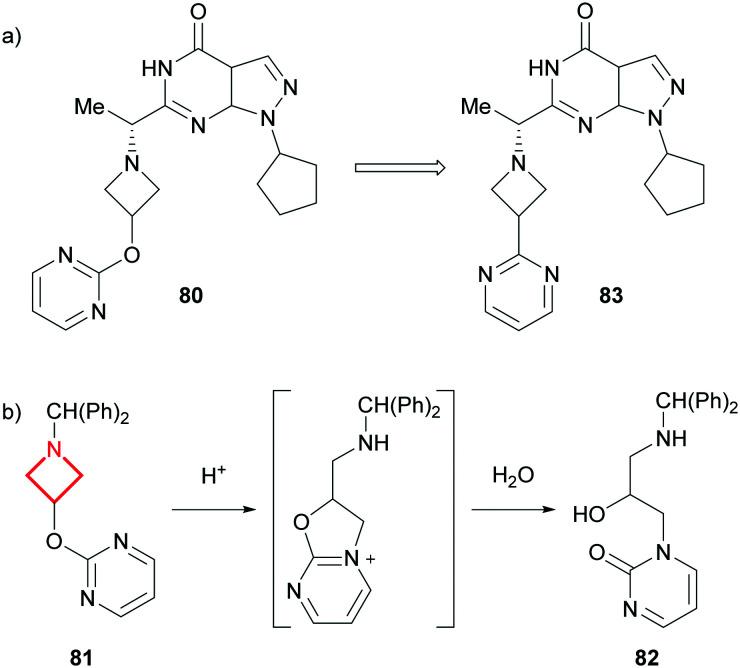
Fig. 35. a) Overall modification of the PDE9A inhibitor 80. b) Intramolecular ring opening of the azetidine-containing model system (81).
Fig. 36
Fig. 36. Glutathione transferase catalysed metabolism of AZD1979 (59).
Fig. 37
Fig. 37. a) Half-life (t1/2) measurement at 0.1–1 mM of acrylamide, 10 mM glutathione, 70 mM phosphate buffer (pH = 7.4), 30% MeCN at 37 °C. b) Novartis' acrylamide BTK covalent inhibitors.
Fig. 38
Fig. 38. Optimisation of a γ-secretase inhibitor.aHuman liver microsomes; Clint,app = total apparent intrinsic clearance from scaling in vitro t1/2 in HLM. bThermodynamic solubility measured at pH 6.5. cApparent permeability coefficient in Ralph Russ canine kidney (RRCK) cells with low transporter activity.
Fig. 39
Fig. 39. Top: Development of IDO1 inhibitors.aHuman whole blood assay. bLog P = Alog P98.cRat hepatocytes, in vitro unbound clearance. dIn vivo PK study performed in rat. eNot determined. Bottom: Overlay of IDO1-bound structures of 93 (magenta; PDB code: 6WJY) and related aryl-linked bisamide (cyan; PDB code: 6V52) illustrating the utility of BCP as an isostere of a phenyl spacer. Water molecules are shown as spheres; hydrogen bonds are shown as pale blue dashed lines.
Fig. 40
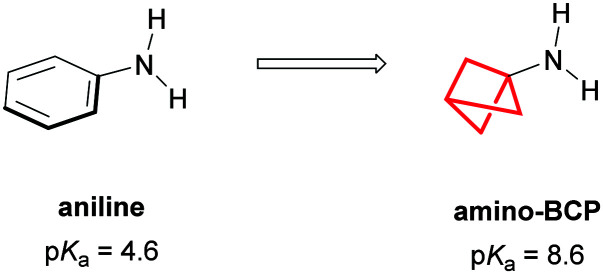
Fig. 40. Amino-BCP as an isostere of aniline.
Fig. 41
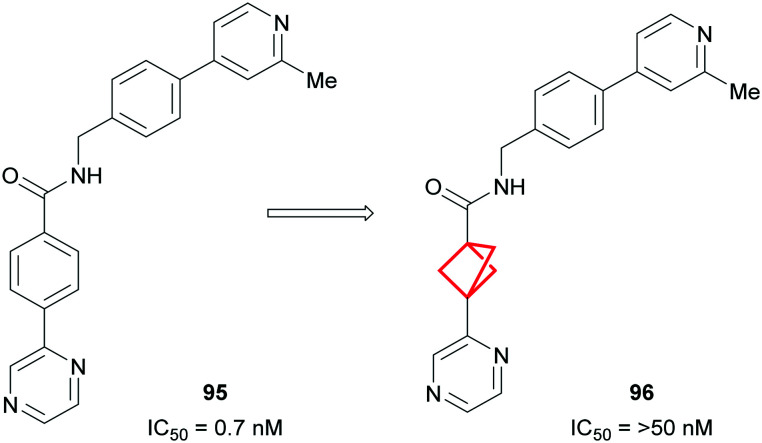
Fig. 41. Replacement of phenyl ring with BCP in known Wnt inhibitor causing loss of biological activity.

References

    1. Lovering F. MedChemComm. 2013;4:515–519. doi: 10.1039/C2MD20347B. - DOI
    1. Sun H. Tawa G. Wallqvist A. Drug Discovery Today. 2012;17:310–324. - PMC - PubMed
    1. Westphal M. V. Wolfstädter B. T. Plancher J.-M. Gatfield J. Carreira E. M. ChemMedChem. 2015;10:461–469. doi: 10.1002/cmdc.201402502. - DOI - PubMed
    1. Wuitschik G. Carreira E. M. Wagner B. Fischer H. Parrilla I. Schuler F. Rogers-Evans M. Müller K. J. Med. Chem. 2010;53:3227–3246. doi: 10.1021/jm9018788. - DOI - PubMed
    1. McLaughlin M. Yazaki R. Fessard T. C. Carreira E. M. Org. Lett. 2014;16:4070–4073. - PMC - PubMed