


Association between medical male circumcision and HIV risk compensation among heterosexual men: a systematic review and meta-analysis
- PMID: 33939956
- PMCID: PMC8690595
- DOI: 10.1016/S2214-109X(21)00102-9
Association between medical male circumcision and HIV risk compensation among heterosexual men: a systematic review and meta-analysis
Abstract
Background: Medical male circumcision (MMC) reduces HIV infection among heterosexual men. There are concerns MMC might prompt higher-risk sexual behaviours because of lower self-perceived risk of HIV infection. We reviewed the published literature to examine associations between MMC and both condom use and number of sex partners among heterosexual men.
Methods: In this systematic review and meta-analysis, we searched PubMed, Embase, and the Cochrane Library for studies published before Nov 15, 2020. Interventional and observational studies were included if they contained original quantitative data describing the association between MMC and condom use or number of sex partners among heterosexual men. We excluded data from men whose circumcisions were ritual or religious and data from men who have sex with men. We extracted odds ratios (ORs) and 95% CIs for the associations between MMC and condomless sex and MMC and multiple sex partners directly from the publications if available, selecting adjusted ORs when provided; when necessary, we calculated ORs and 95% CIs using original study data provided in the publication. We used the Mantel-Haenszel random effects model to calculate pooled ORs and 95% CIs.
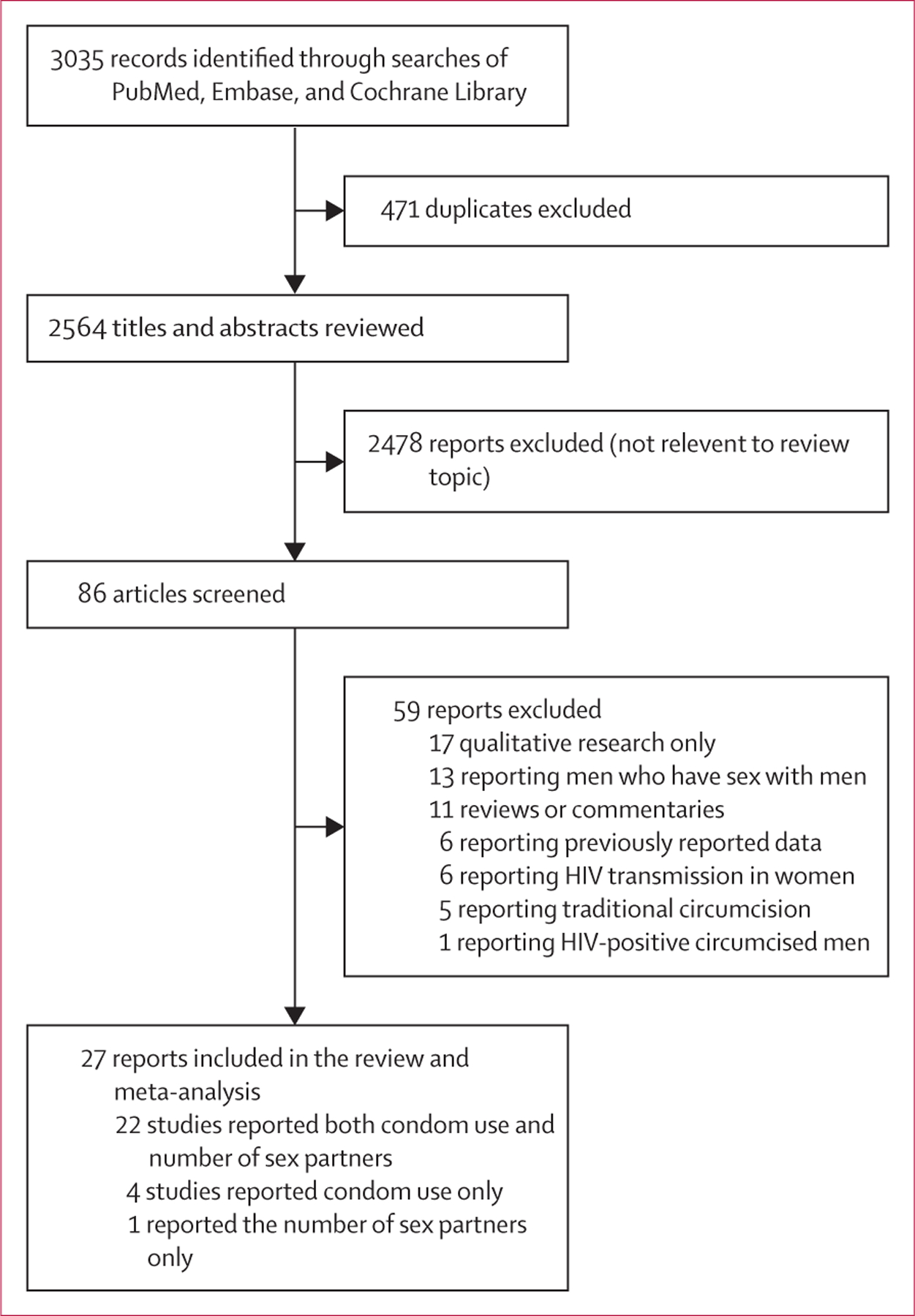
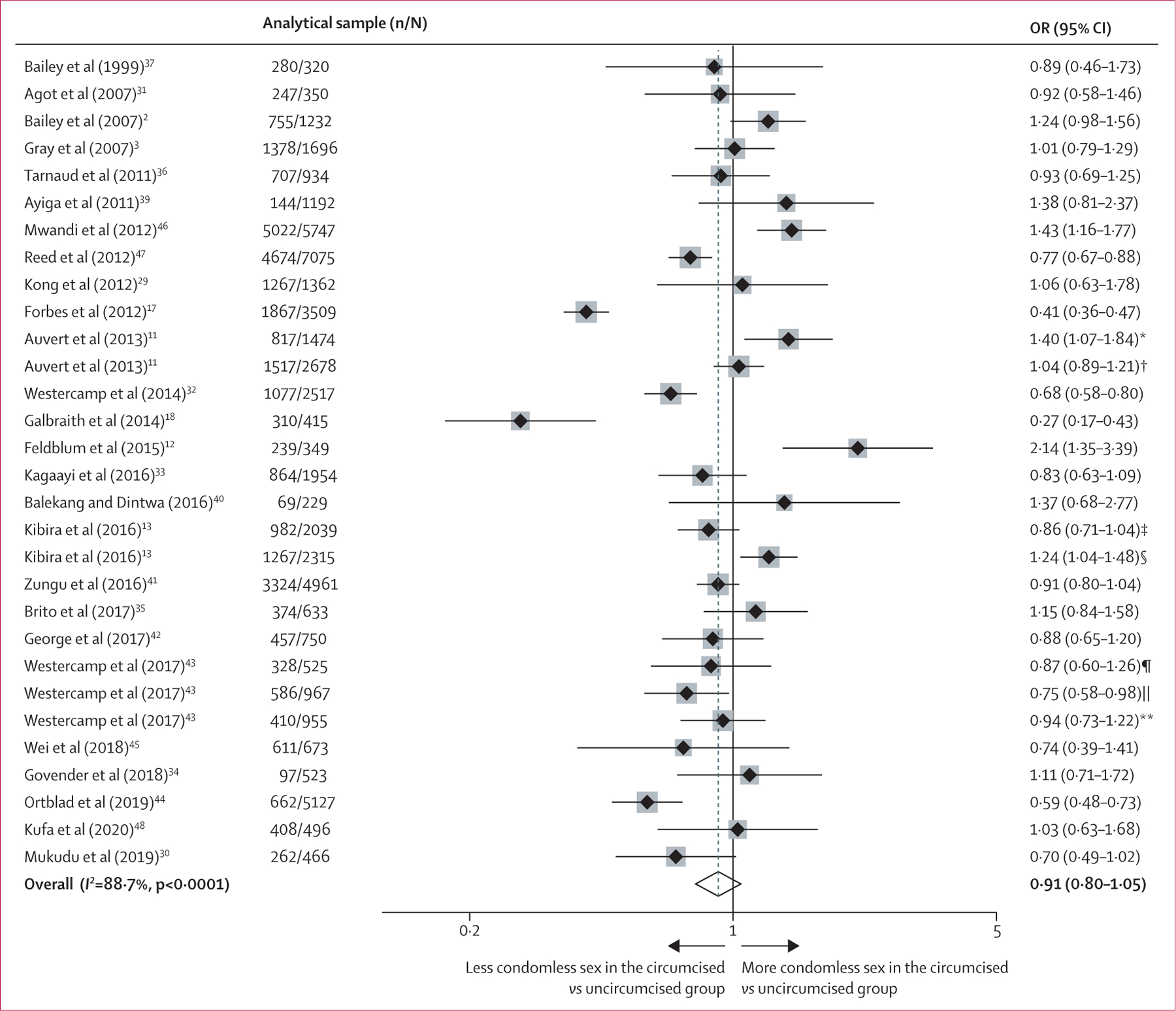
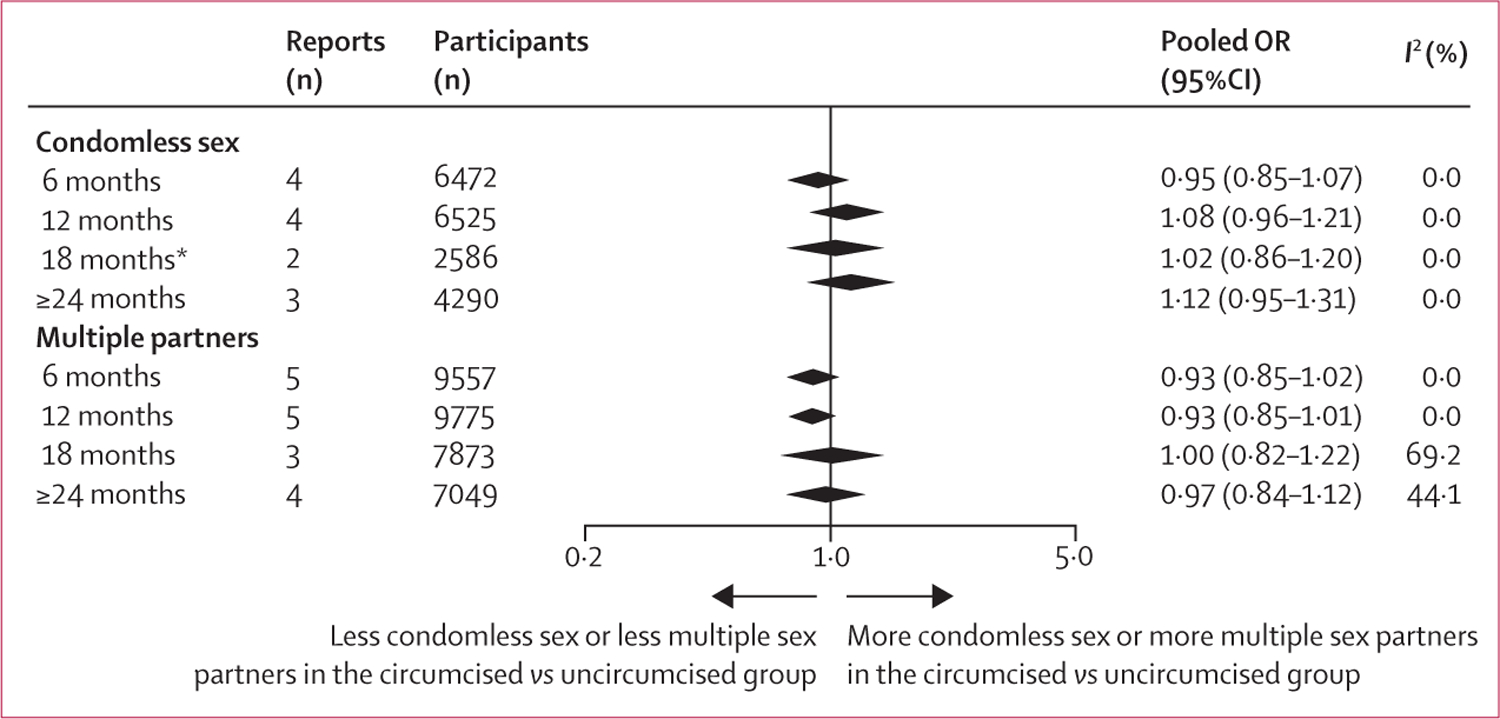
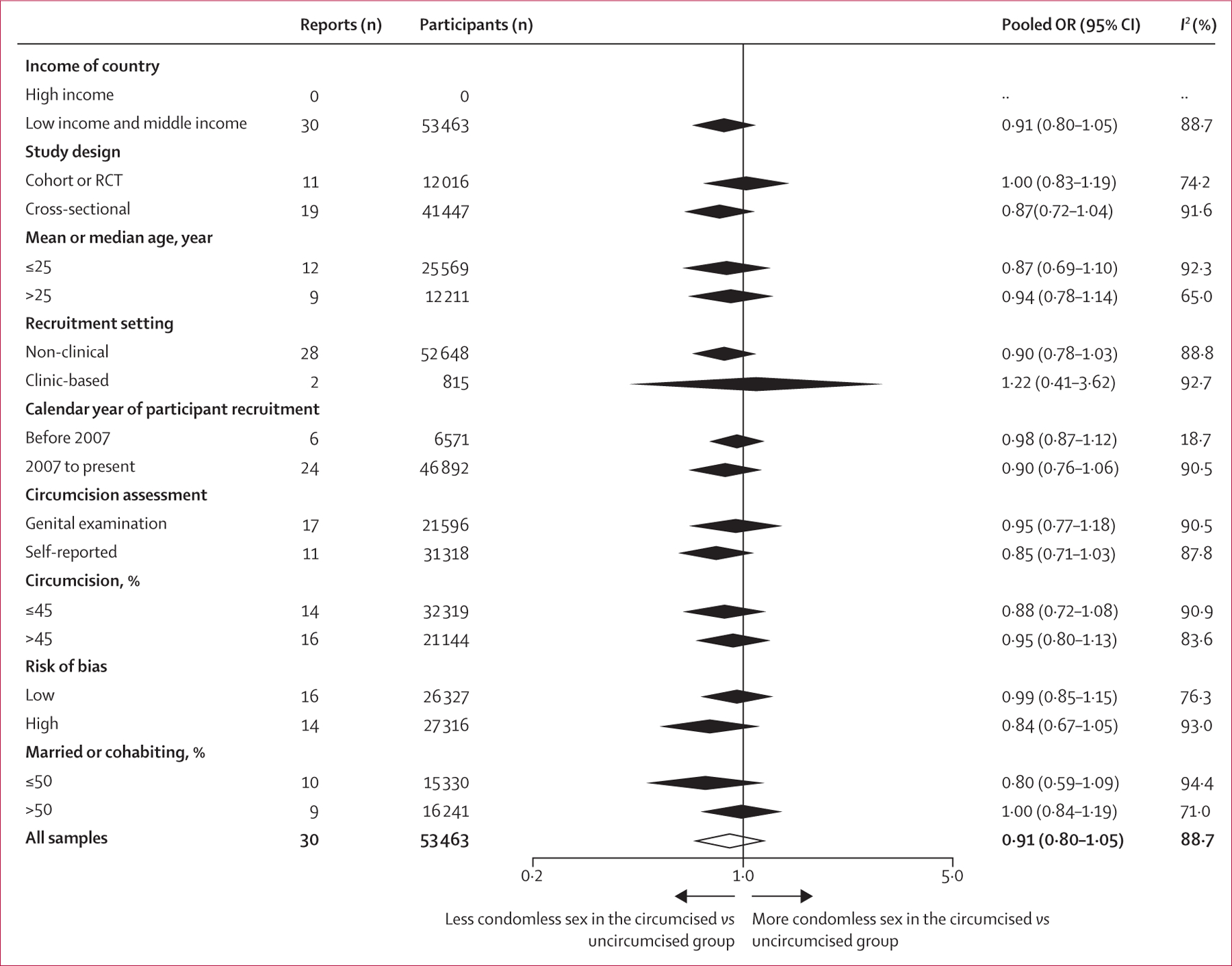
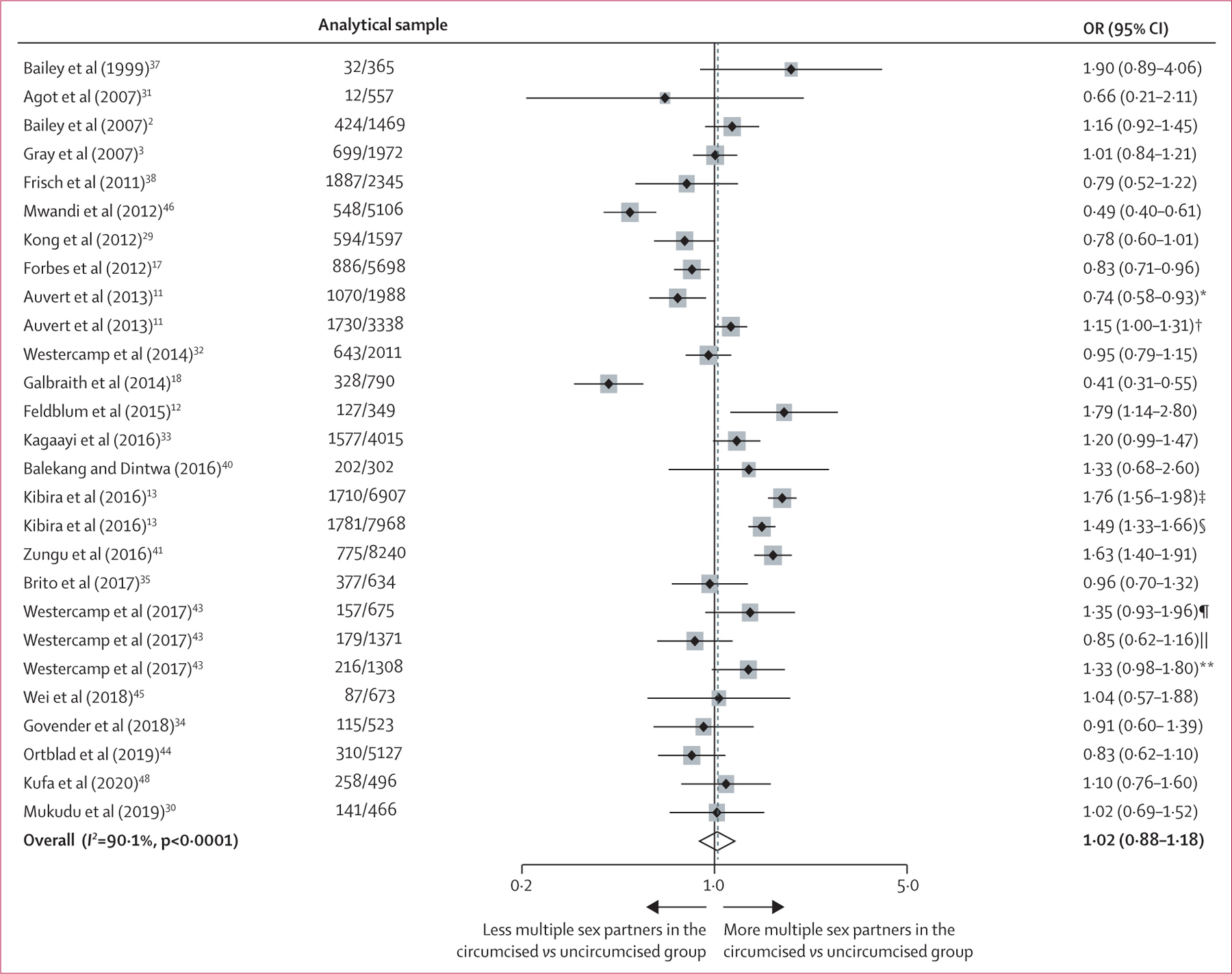
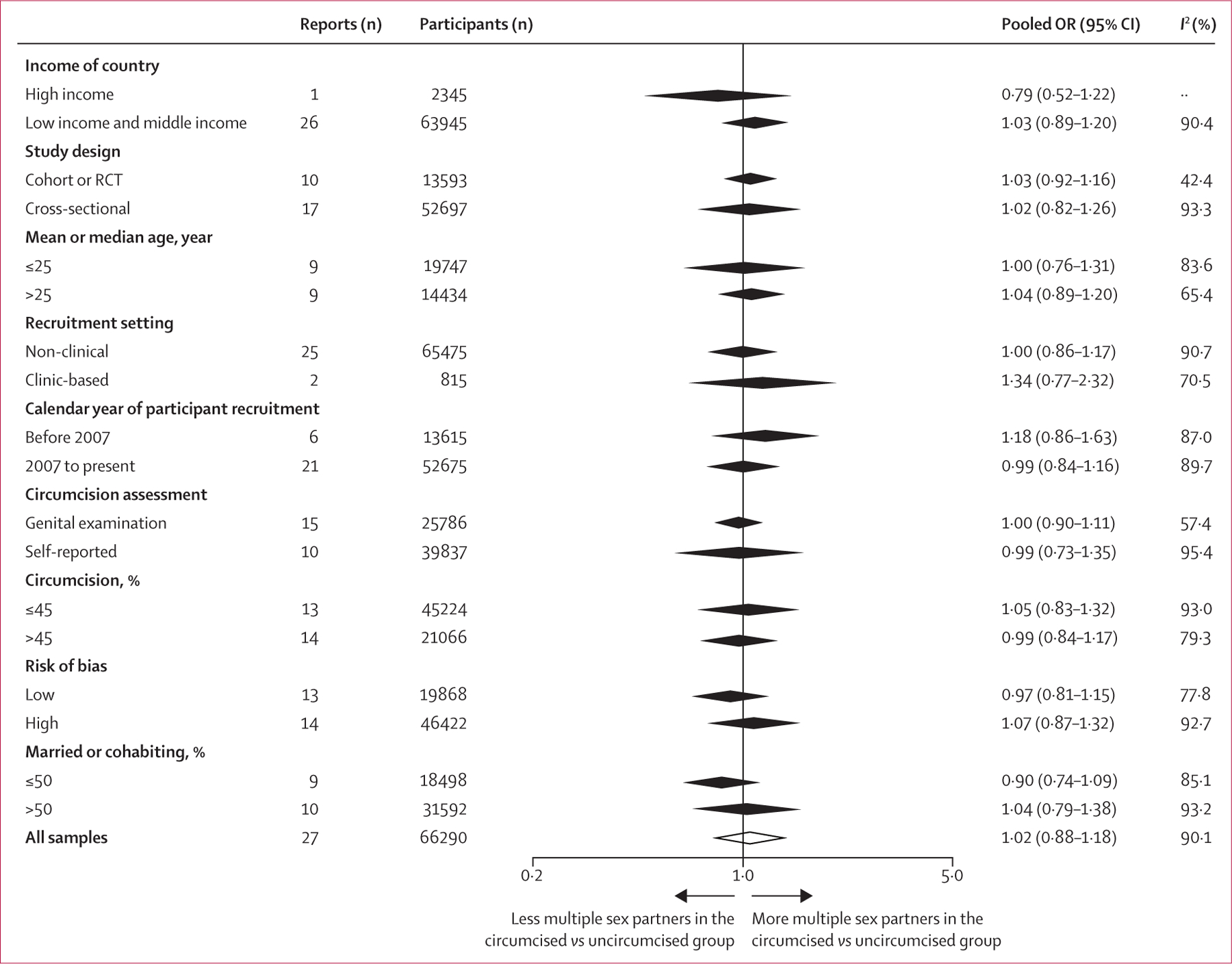
Findings: Our search yielded 3035 results, of which 471 were duplicates and 2537 did not meet the inclusion criteria. From the remaining 27 eligible studies, we identified 99 292 men from 31 independent population samples. 24 studies were done in Africa. We found no statistically significant associations between MMC and condomless sex (OR 0·91, 95% CI 0·80-1·05; k=30; I2=88·7%) or multiple sex partners (1·02, 0·88-1·18; k=27; I2=90·1%). No associations between MMC and condomless sex or multiple sexual partners were found in any subgroup analyses by study design, income of country, age, recruitment setting, circumcision assessment, circumcision prevalence, and risk of publication bias.
Interpretation: The promotion of circumcision as an HIV preventive measure does not appear to increase higher-risk sexual behaviours in heterosexual men. Ongoing sexual health education should be maintained as a vital component of effective MMC programmes.
Funding: National Science and Technology Major Project of China, the Fundamental Research Funds for the Central Universities, and the Shenzhen Science and Technology Innovation Commission Basic Research Program.
Copyright © 2021 The Author(s). Published by Elsevier Ltd. This is an Open Access article under the CC BY-NC-ND 4.0 license. Published by Elsevier Ltd.. All rights reserved.
Conflict of interest statement
Declaration of interests All authors declare no competing interests
Figures
Comment in
-
Does medical male circumcision result in sexual risk compensation in Africa?Lancet Glob Health. 2021 Jul;9(7):e883-e884. doi: 10.1016/S2214-109X(21)00177-7. Epub 2021 Apr 30. Lancet Glob Health. 2021. PMID: 33939957 No abstract available.
-
Medical male circumcision and risk compensation.Lancet Glob Health. 2021 Oct;9(10):e1368. doi: 10.1016/S2214-109X(21)00360-0. Lancet Glob Health. 2021. PMID: 34534482 No abstract available.
-
Medical male circumcision and risk compensation - Authors' reply.Lancet Glob Health. 2021 Oct;9(10):e1369. doi: 10.1016/S2214-109X(21)00358-2. Lancet Glob Health. 2021. PMID: 34534483 No abstract available.
-
Impact of excluded studies on medical male circumcision and HIV risk compensation.Lancet Glob Health. 2021 Nov;9(11):e1505. doi: 10.1016/S2214-109X(21)00435-6. Lancet Glob Health. 2021. PMID: 34678192 Free PMC article. No abstract available.
-
Impact of excluded studies on medical male circumcision and HIV risk compensation - Authors' reply.Lancet Glob Health. 2021 Nov;9(11):e1506. doi: 10.1016/S2214-109X(21)00437-X. Lancet Glob Health. 2021. PMID: 34678193 No abstract available.
References
-
- Bailey RC, Moses S, Parker CB, et al. Male circumcision for HIV prevention in young men in Kisumu, Kenya: a randomised controlled trial. Lancet 2007; 369: 643–56. - PubMed
-
- Gray RH, Kigozi G, Serwadda D, et al. Male circumcision for HIV prevention in men in Rakai, Uganda: a randomised trial. Lancet 2007; 369: 657–66. - PubMed
-
- McCoombe SG, Short RV. Potential HIV-1 target cells in the human penis. AIDS 2006; 20: 1491–95. - PubMed
Publication types
MeSH terms
Grants and funding
LinkOut - more resources
Full Text Sources
Medical
