Medical Records-Based Genetic Studies of the Complement System
- PMID: 33941608
- PMCID: PMC8455263
- DOI: 10.1681/ASN.2020091371
Medical Records-Based Genetic Studies of the Complement System
Abstract
Background: Genetic variants in complement genes have been associated with a wide range of human disease states, but well-powered genetic association studies of complement activation have not been performed in large multiethnic cohorts.
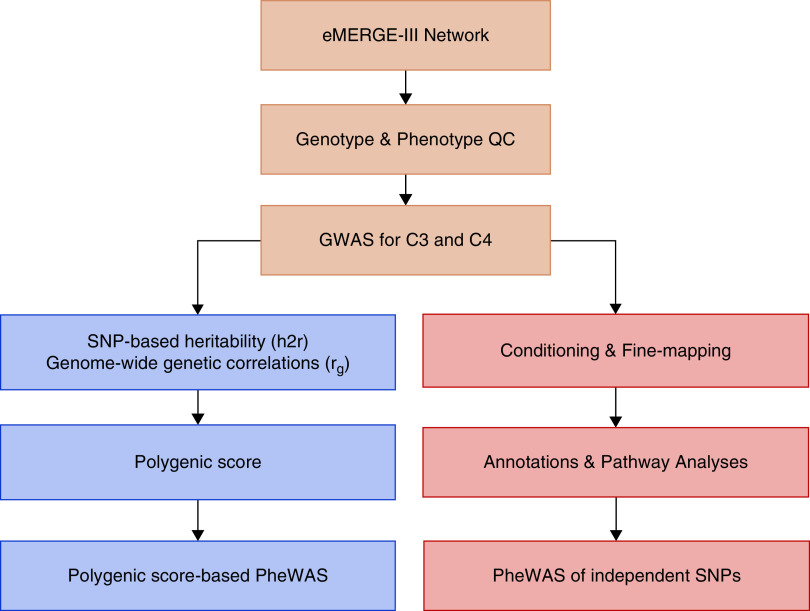
Methods: We performed medical records-based genome-wide and phenome-wide association studies for plasma C3 and C4 levels among participants of the Electronic Medical Records and Genomics (eMERGE) network.
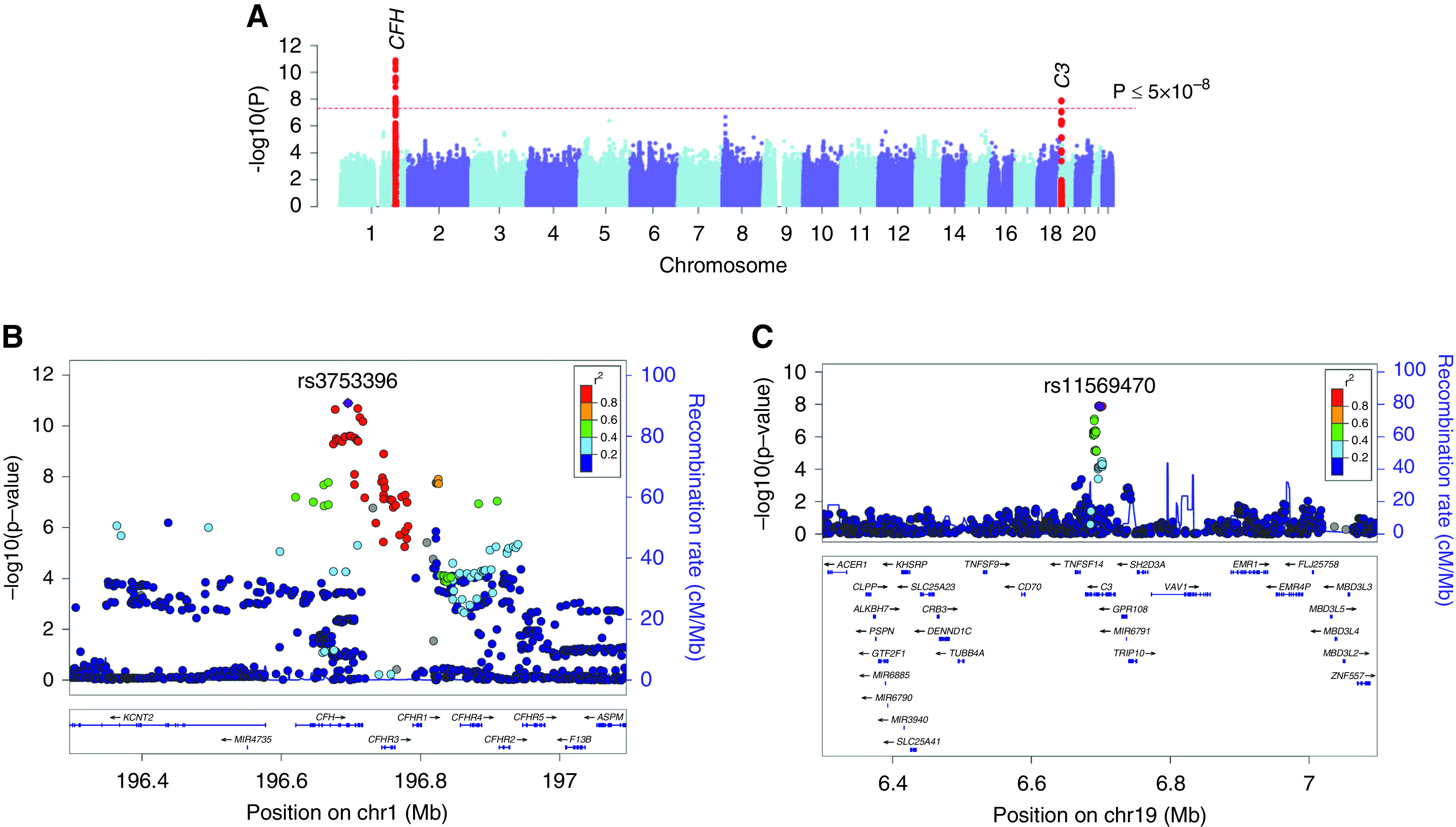
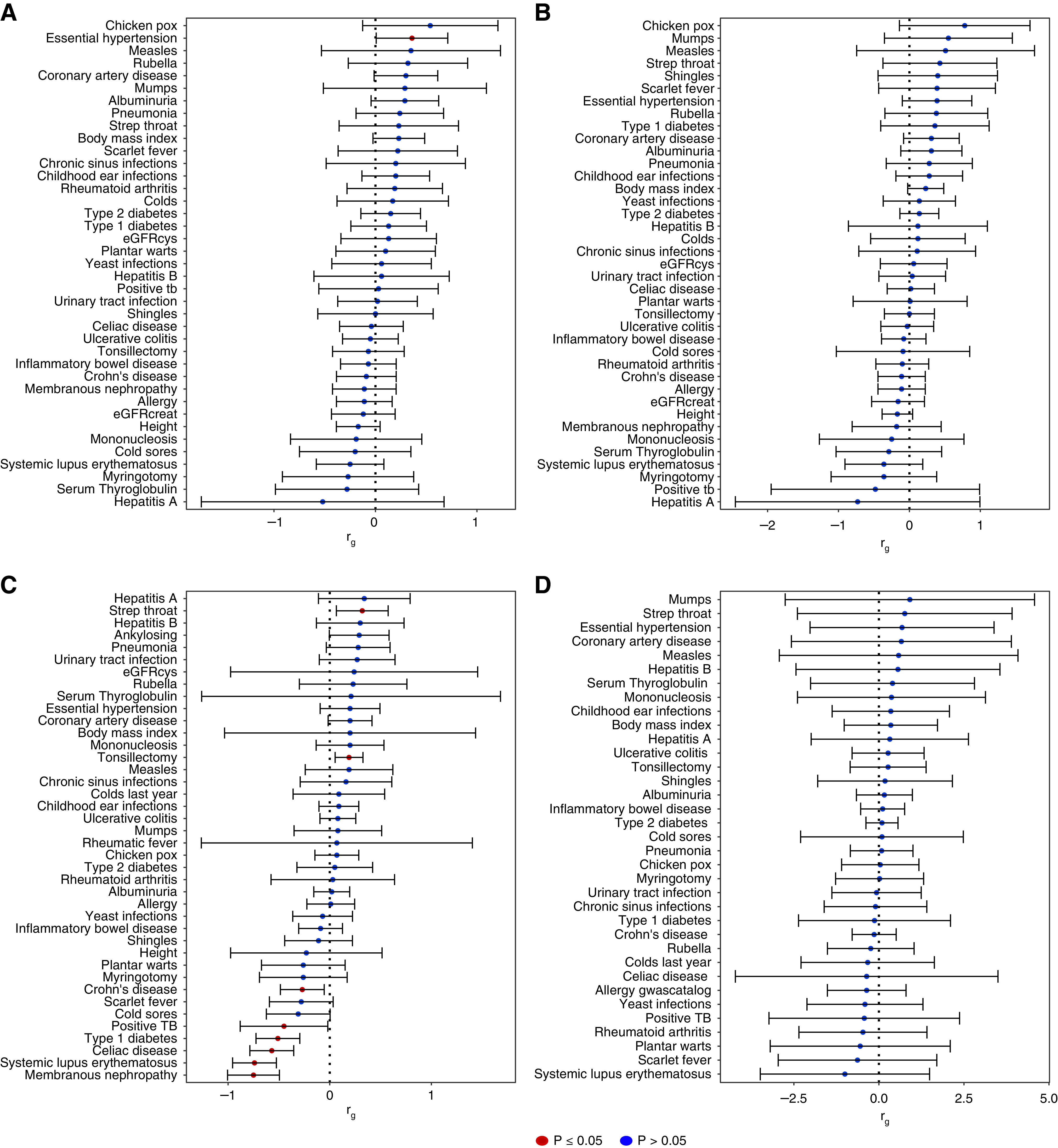
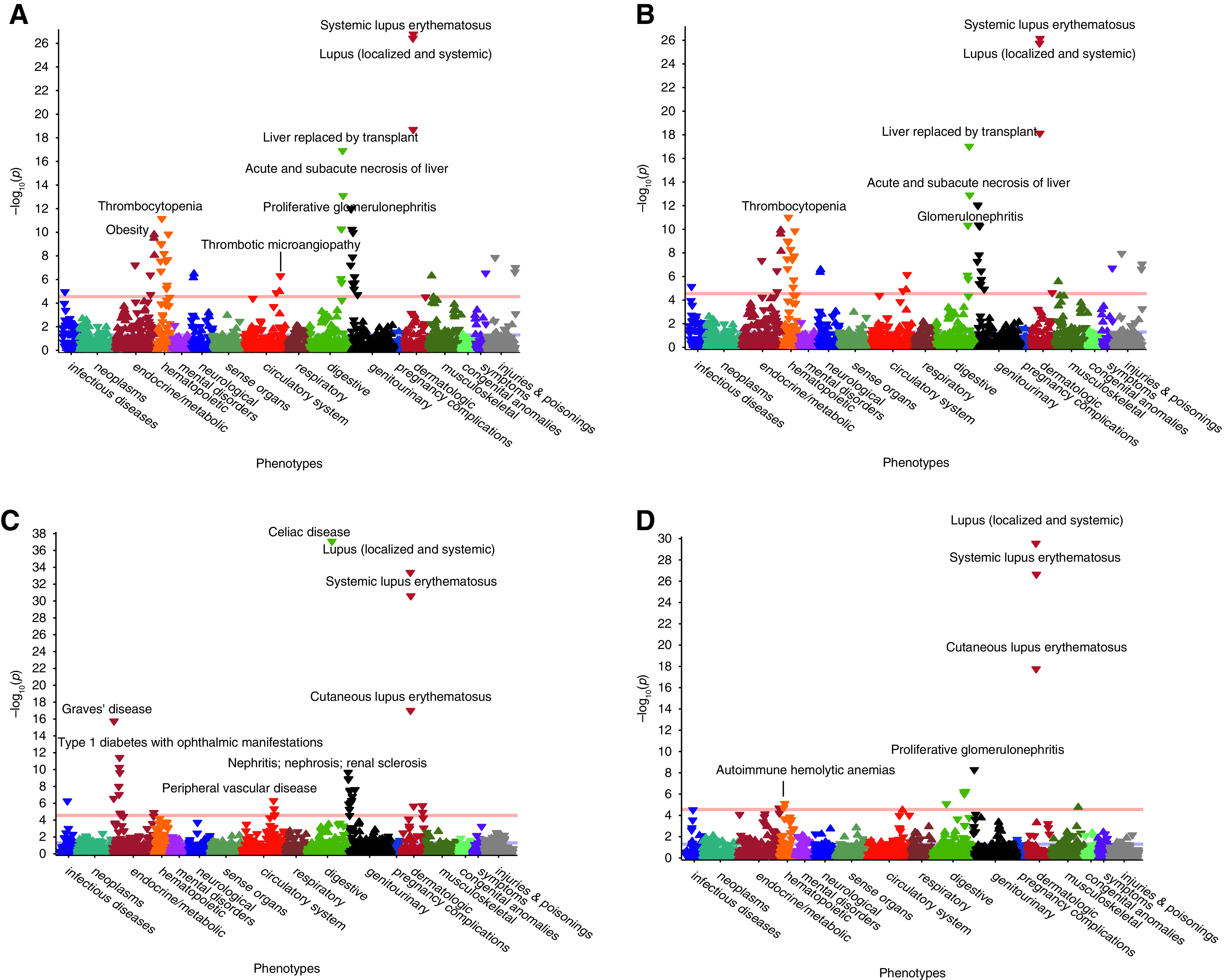
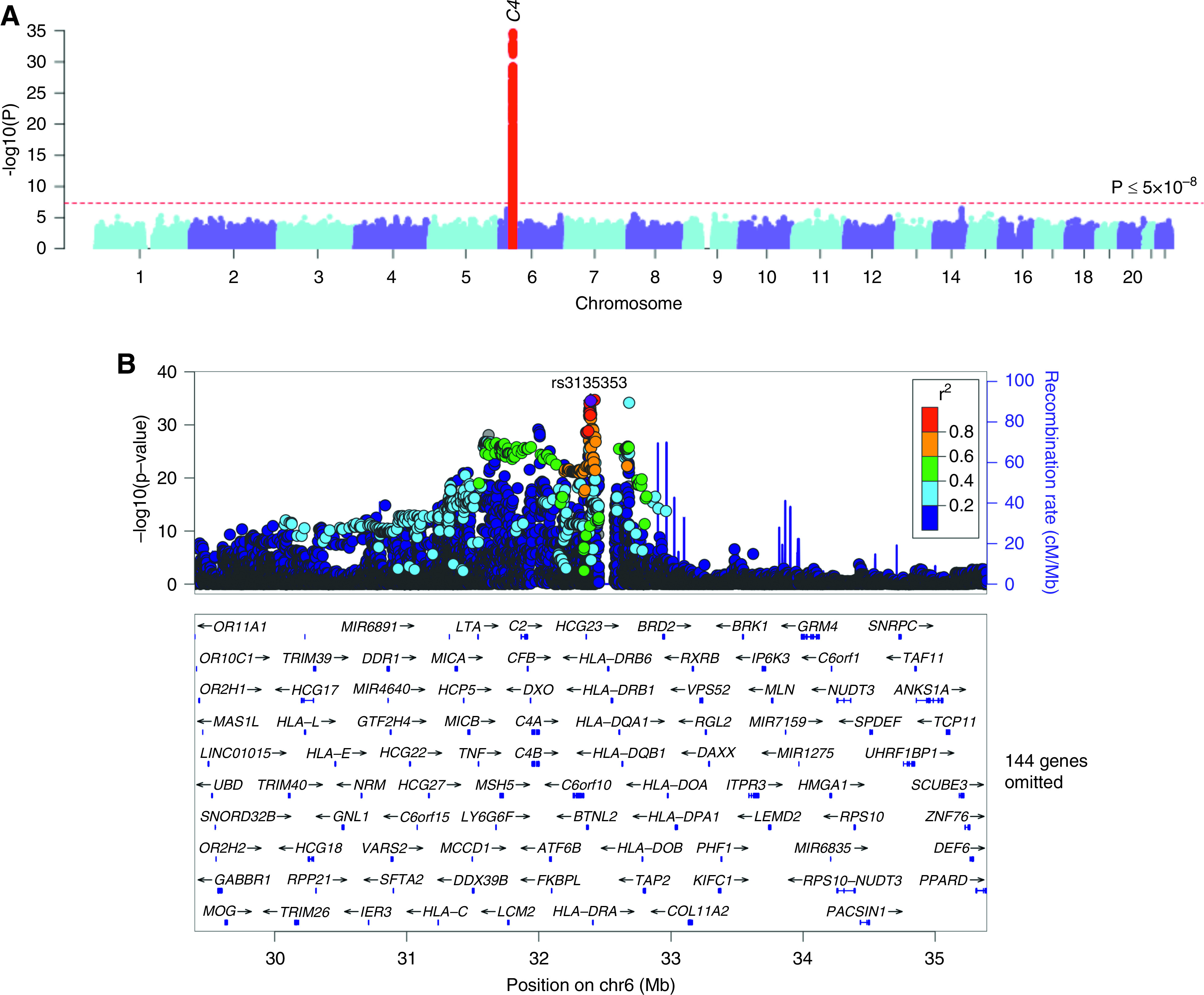
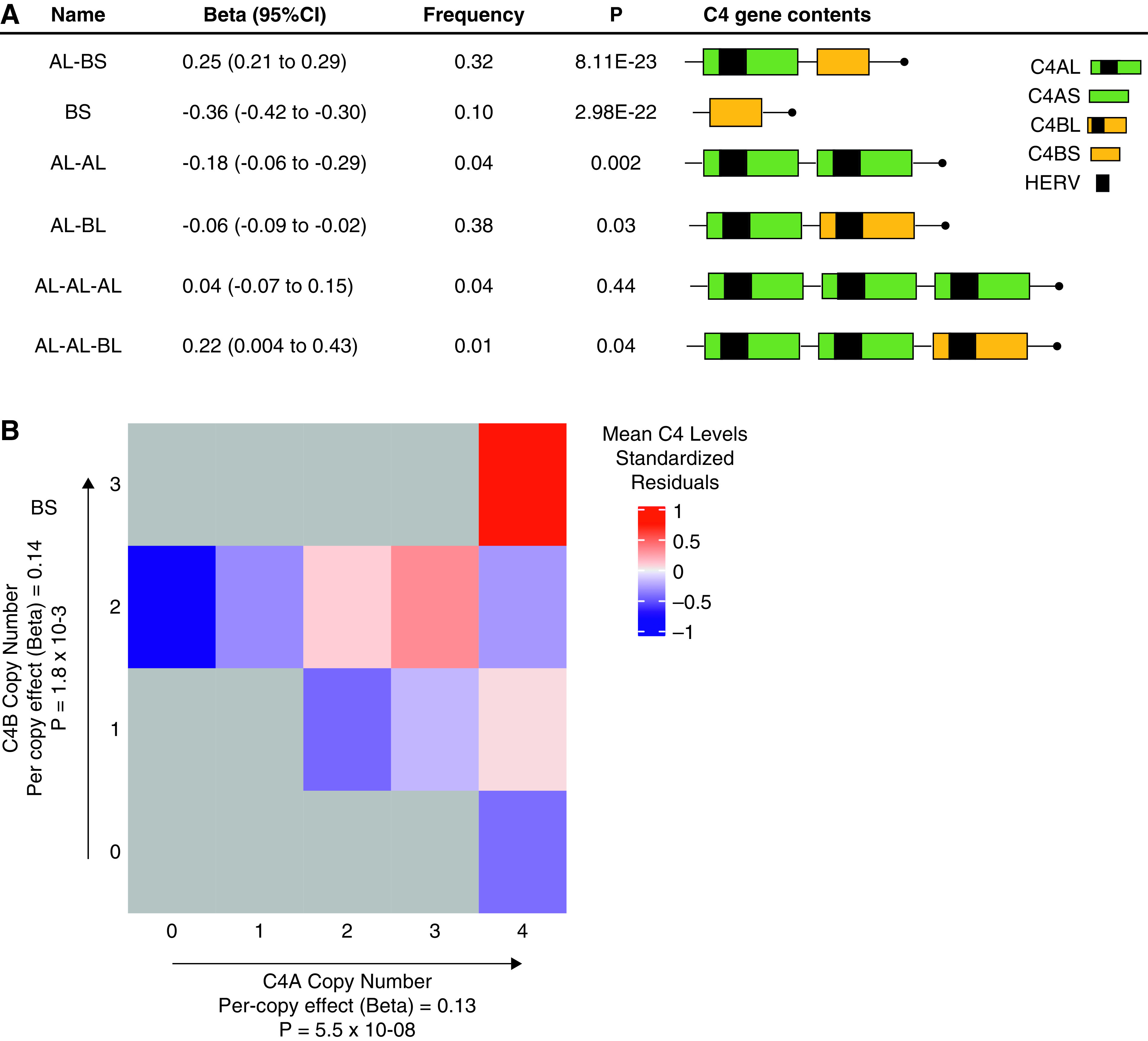
Results: In a GWAS for C3 levels in 3949 individuals, we detected two genome-wide significant loci: chr.1q31.3 (CFH locus; rs3753396-A; β=0.20; 95% CI, 0.14 to 0.25; P=1.52x10⁻¹¹) and chr.19p13.3 (C3 locus; rs11569470-G; β=0.19; 95% CI, 0.13 to 0.24; P=1.29x10⁻⁸). These two loci explained approximately 2% of variance in C3 levels. GWAS for C4 levels involved 3998 individuals and revealed a genome-wide significant locus at chr.6p21.32 (C4 locus; rs3135353-C; β=0.40; 95% CI, 0.34 to 0.45; P=4.58x10⁻³⁵). This locus explained approximately 13% of variance in C4 levels. The multiallelic copy number variant analysis defined two structural genomic C4 variants with large effect on blood C4 levels: C4-BS (β=-0.36; 95% CI, -0.42 to -0.30; P=2.98x10⁻²²) and C4-AL-BS (β=0.25; 95% CI, 0.21 to 0.29; P=8.11x10⁻²³). Overall, C4 levels were strongly correlated with copy numbers of C4A and C4B genes. In comprehensive phenome-wide association studies involving 102,138 eMERGE participants, we cataloged a full spectrum of autoimmune, cardiometabolic, and kidney diseases genetically related to systemic complement activation.
Conclusions: We discovered genetic determinants of plasma C3 and C4 levels using eMERGE genomic data linked to electronic medical records. Genetic variants regulating C3 and C4 levels have large effects and multiple clinical correlations across the spectrum of complement-related diseases in humans.
Keywords: autoimmunity; complement system; electronic health records; genome wide association study; phenome wide association study.
Copyright © 2021 by the American Society of Nephrology.
Figures
Comment in
-
Biobanks Linked to Electronic Health Records Accelerate Genomic Discovery.J Am Soc Nephrol. 2021 Aug;32(8):1828-1829. doi: 10.1681/ASN.2021060836. Epub 2021 Jul 9. J Am Soc Nephrol. 2021. PMID: 34244324 Free PMC article. No abstract available.
References
Publication types
MeSH terms
Substances
Grants and funding
- U01 HG008685/HG/NHGRI NIH HHS/United States
- U01 HG008664/HG/NHGRI NIH HHS/United States
- U01 HG006379/HG/NHGRI NIH HHS/United States
- K01 AR075111/AR/NIAMS NIH HHS/United States
- L60 AR077958/AR/NIAMS NIH HHS/United States
- R01 AI024717/AI/NIAID NIH HHS/United States
- U01 HG008666/HG/NHGRI NIH HHS/United States
- U01 HG008673/HG/NHGRI NIH HHS/United States
- U01 HG008679/HG/NHGRI NIH HHS/United States
- U01 HG008672/HG/NHGRI NIH HHS/United States
- U01 HG008676/HG/NHGRI NIH HHS/United States
- U01 HG008684/HG/NHGRI NIH HHS/United States
- U54 MD007593/MD/NIMHD NIH HHS/United States
- U01 HG008657/HG/NHGRI NIH HHS/United States
- U01 HG008680/HG/NHGRI NIH HHS/United States
- U01 HG008701/HG/NHGRI NIH HHS/United States
LinkOut - more resources
Full Text Sources
Other Literature Sources
Miscellaneous