


Ultra-processed Foods and Cardiovascular Diseases: Potential Mechanisms of Action
- PMID: 33942057
- PMCID: PMC8483964
- DOI: 10.1093/advances/nmab049
Ultra-processed Foods and Cardiovascular Diseases: Potential Mechanisms of Action
Abstract
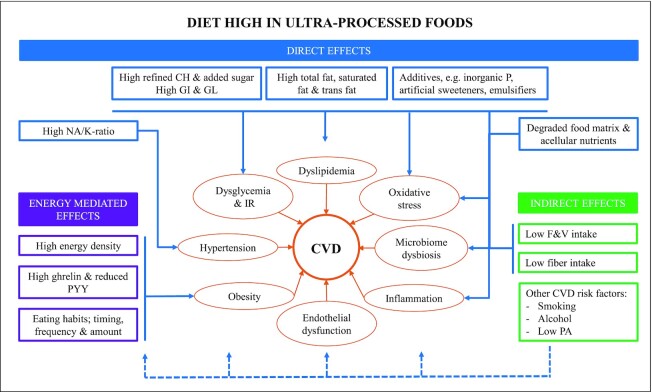
Ultra-processed foods are industrially manufactured ready-to-eat or ready-to-heat formulations containing food additives and little or no whole foods, in contrast to processed foods, which are whole foods preserved by traditional techniques such as canning or pickling. Recent epidemiological studies suggest that higher consumption of ultra-processed food is associated with increased risk of cardiovascular disease (CVD). However, epidemiological evidence needs to be corroborated with criteria of biological plausibility. This review summarizes the current evidence on the putative biological mechanisms underlying the associations between ultra-processed foods and CVD. Research ranging from laboratory-based to prospective epidemiological studies and experimental evidence suggest that ultra-processed foods may affect cardiometabolic health through a myriad of mechanisms, beyond the traditionally recognized individual nutrients. Processing induces significant changes to the food matrix, for which ultra-processed foods may affect health outcomes differently than unrefined whole foods with similar nutritional composition. Notably, the highly degraded physical structure of ultra-processed foods may affect cardiometabolic health by influencing absorption kinetics, satiety, glycemic response, and the gut microbiota composition and function. Food additives and neo-formed contaminants produced during processing may also play a role in CVD risk. Key biological pathways include altered serum lipid concentrations, modified gut microbiota and host-microbiota interactions, obesity, inflammation, oxidative stress, dysglycemia, insulin resistance, and hypertension. Further research is warranted to clarify the proportional harm associated with the nutritional composition, food additives, physical structure, and other attributes of ultra-processed foods. Understanding how ultra-processing changes whole foods and through which pathways these foods affect health is a prerequisite for eliminating harmful processing techniques and ingredients.
Keywords: NOVA; cardiometabolic health; food additives; microbiome; obesity.
© The Author(s) 2021. Published by Oxford University Press on behalf of the American Society for Nutrition.
Figures

References
-
- Virani SS, Alonso A, Aparicio HJ, Benjamin EJ, Bittencourt MS, Callaway CW, Carson AP, Chamberlain AM, Cheng S, Delling FNet al. Heart disease and stroke statistics—2021 update: a report from the American Heart Association. Circulation. 2021;143(8):e254–e743. - PubMed
Publication types
MeSH terms
LinkOut - more resources
Full Text Sources
Other Literature Sources
Medical
