Updates on Therapeutic Alternatives for Genitourinary Syndrome of Menopause: Hormonal and Non-Hormonal Managements
- PMID: 33942583
- PMCID: PMC8102810
- DOI: 10.6118/jmm.20034
Updates on Therapeutic Alternatives for Genitourinary Syndrome of Menopause: Hormonal and Non-Hormonal Managements
Abstract
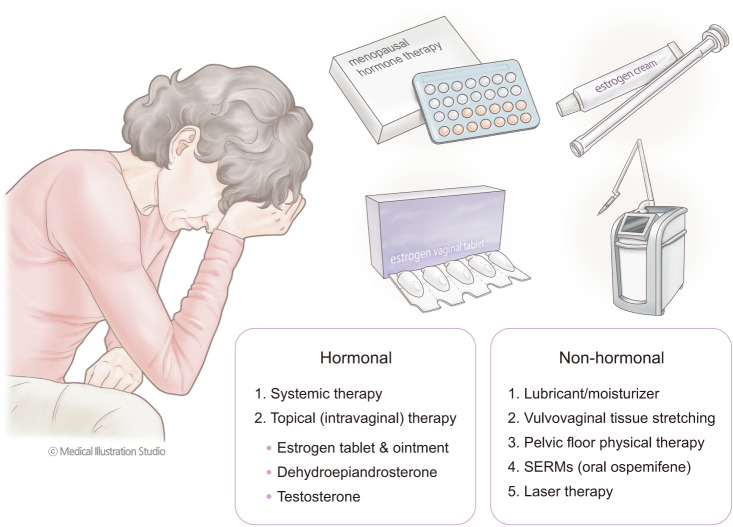
Postmenopausal atrophic vaginitis, along with vasomotor symptoms and sleep disorders, is one of the most troublesome symptoms of menopause. However, many women do not manage this symptom properly due to insufficient knowledge of the symptoms or sexual embarrassment. With appropriate treatment, many postmenopausal women can experience relief from discomforts, including burning sensation or dryness of the vagina and dyspareunia. Topical lubricants and moisturizers, systemic and local estrogens, testosterones, intravaginal dehydroepiandrosterones (DHEAs), selective estrogen receptor modulators, and energy-based therapies are possible treatment modalities. Systemic and local estrogen therapies effectively treat genitourinary syndrome of menopause (GSM), but they are contraindicated in patients with breast cancer, for whom lubricants and moisturizers must be considered as the primary treatment. Intravaginal DHEA and ospemifene can be recommended for moderate to severe GSM; however, there is insufficient data on the use of intravaginal DHEA or ospemifene in patients with breast cancer, and further studies are needed. Energy-based devices such as vaginal laser therapy reportedly alleviate GSM symptoms; however, the U.S. Food and Drug Administration warning has recently been issued because of complications such as chronic pain and burning sensations of the vagina. To summarize, clinicians should provide appropriate individualized treatment options depending on women's past history, symptom severity, and chief complaints.
Keywords: Atrophic vaginitis; Dyspareunia; Genitourinary syndrome of menopause; Menopause.
Copyright © 2021 by The Korean Society of Menopause.
Conflict of interest statement
No potential conflict of interest relevant to this article was reported.
Figures
References
-
- Portman DJ, Gass ML Vulvovaginal Atrophy Terminology Consensus Conference Panel. Genitourinary syndrome of menopause: new terminology for vulvovaginal atrophy from the International Society for the Study of Women's Sexual Health and the North American Menopause Society. Maturitas. 2014;79:349–354. - PubMed
-
- Robinson D, Cardozo LD. The role of estrogens in female lower urinary tract dysfunction. Urology. 2003;62(4 Suppl 1):45–51. - PubMed
-
- O'Connell TX, Nathan LS, Satmary WA, Goldstein AT. Non-neoplastic epithelial disorders of the vulva. Am Fam Physician. 2008;77:321–326. - PubMed
-
- Calleja-Agius J, Brincat MP. Urogenital atrophy. Climacteric. 2009;12:279–285. - PubMed
Publication types
LinkOut - more resources
Full Text Sources
Other Literature Sources
Miscellaneous