


Regimen simplification and medication adherence: Fixed-dose versus loose-dose combination therapy for type 2 diabetes
- PMID: 33945556
- PMCID: PMC8096115
- DOI: 10.1371/journal.pone.0250993
Regimen simplification and medication adherence: Fixed-dose versus loose-dose combination therapy for type 2 diabetes
Abstract
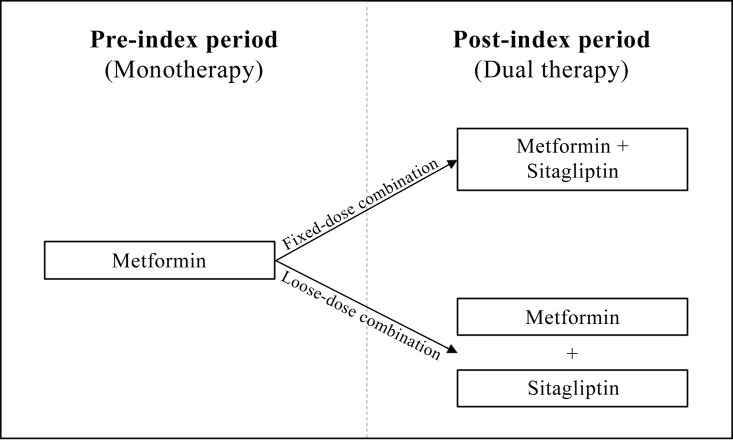
Background: Suboptimal patient adherence to pharmacological therapy of type 2 diabetes may be due in part to pill burden. One way to reduce pill burden in patients who need multiple medications is to use fixed-dose combinations. Our study aimed to compare the effects of fixed-dose combination versus loose-dose combination therapy on medication adherence and persistence, health care utilization, therapeutic safety, morbidities, and treatment modification in patients with type 2 diabetes over three years.
Methods: Using administrative data, we conducted a retrospective controlled cohort study comparing type 2 diabetes patients who switched from monotherapy to either a fixed-dose combination or a loose-dose combination. Adherence was assessed as the primary endpoint and calculated as the proportion of days covered with medication. After using entropy balancing to eliminate differences in observable baseline characteristics between the two groups, we applied difference-in-difference estimators for each outcome to account for time-invariant unobservable heterogeneity.
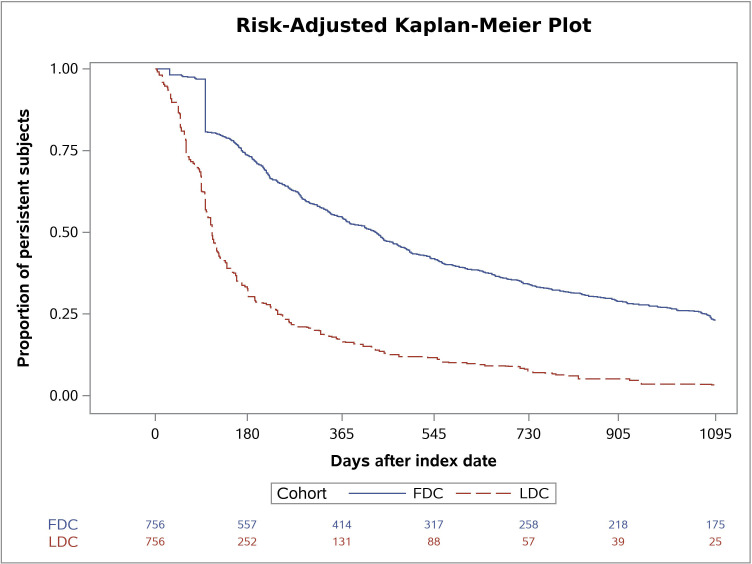
Results: Of the 990 type 2 diabetes patients included in our analysis, 756 were taking a fixed-dose combination and 234 were taking a loose-dose combination. We observed a statistically significantly higher change in adherence (year one: 0.22, p<0.001, year two: 0.25, p<0.001, and year three: 0.29, p<0.001) as well as higher persistence and a smaller change in the number of drug prescriptions in each of the three years in the fixed-dose combination group compared to the loose-dose combination group. The differences were most pronounced in patients who were poorly adherent, had a high pill burden, or did not have a severe concomitant disease.
Conclusion: Our results indicate that taking a fixed-dose combination can lead to a significant improvement in adherence to pharmacological therapy of type 2 diabetes compared to a loose-dose combination. In particular, these findings suggest that reducing pill burden may improve disease management among patients with more complex medication demand and patients who have demonstrated poor medication adherence.
Conflict of interest statement
The authors have declared that no competing interests exist.
Figures
References
-
- Davies MJ, D’Alessio DA, Fradkin J, Kernan WN, Mathieu C, Mingrone G, et al. Management of Hyperglycemia in Type 2 Diabetes, 2018. A Consensus Report by the American Diabetes Association (ADA) and the European Association for the Study of Diabetes (EASD). Diabetes Care. 2018; 41:2669–701. Epub 2018/10/04. 10.2337/dci18-0033 . - DOI - PMC - PubMed
-
- Leichter SB, Thomas S. Combination Medications in Diabetes Care: An Opportunity That Merits More Attention. Clinical Diabetes. 2003; 21:175–8. 10.2337/diaclin.21.4.175 - DOI
Publication types
MeSH terms
Substances
LinkOut - more resources
Full Text Sources
Medical
