


Antifungal Activity of Novel Formulations Based on Terpenoid Prodrugs against C. albicans in a Mouse Model
- PMID: 33946740
- PMCID: PMC8146751
- DOI: 10.3390/pharmaceutics13050633
Antifungal Activity of Novel Formulations Based on Terpenoid Prodrugs against C. albicans in a Mouse Model
Abstract
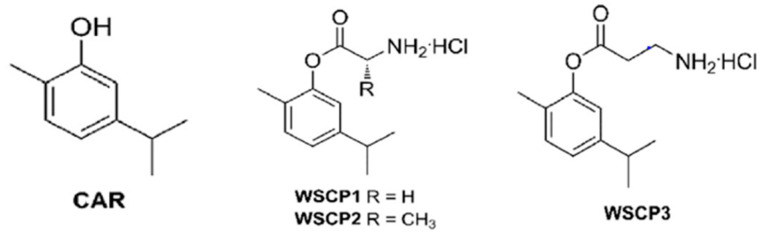
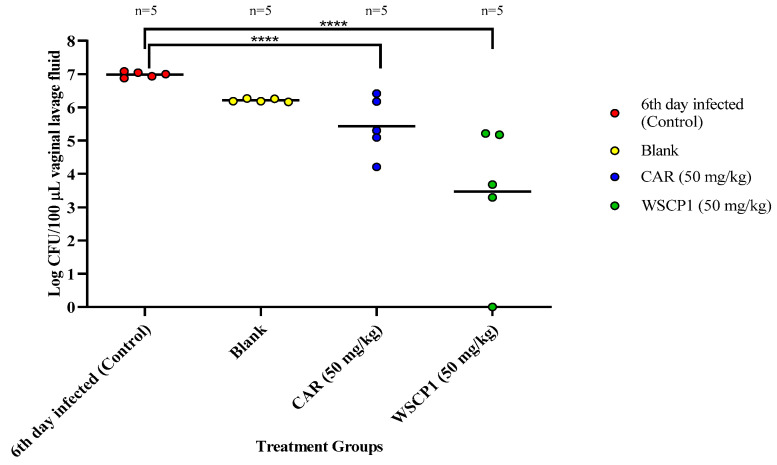
Carvacrol (CAR), a phenolic monoterpenoid, has been extensively investigated for its antimicrobial and antifungal activity. As a result of its poor physicochemical properties, water soluble carvacrol prodrugs (WSCPs) with improved water solubility were previously synthesized and found to possess antimicrobial activity. Here, three novel CAR analogs, WSCP1, WSCP2, and WSCP3, were tested against fluconazole (FLU)-sensitive and -resistant strains where they showed greater antifungal activity than CAR against C. albicans. The probable mechanism by which the CAR prodrugs exert the antifungal activity was studied. Results from medium acidification assays demonstrated that the CAR and its synthetically designed prodrugs inhibit the yeast plasma membrane H+-ATPase (Pma1p), an essential target in fungi. In other words, in vitro data indicated that CAR analogs can prove to be a better alternative to CAR considering their improved water solubility. In addition, CAR and WSCP1 were developed into intravaginal formulations and administered at test doses of 50 mg/kg in a mouse model of vulvovaginal candidiasis (VVC). Whereas the CAR and WSCP1 formulations both exhibited antifungal efficacy in the mouse model of VVC, the WSCP1 formulation was superior to CAR, showing a remarkable decrease in infection by ~120-fold compared to the control (infected, untreated animals). Taken together, a synthetically designed prodrug of CAR, namely WSCP1, proved to be a possible solution for poorly water-soluble drugs, an inhibitor of an essential yeast pump in vitro and an effective and promising antifungal agent in vivo.
Keywords: Candida albicans; antifungal; carvacrol; intravaginal formulations; minimum inhibitory concentration.
Conflict of interest statement
The authors declare no conflict of interest.
Figures
References
Grants and funding
LinkOut - more resources
Full Text Sources
Other Literature Sources
Research Materials
